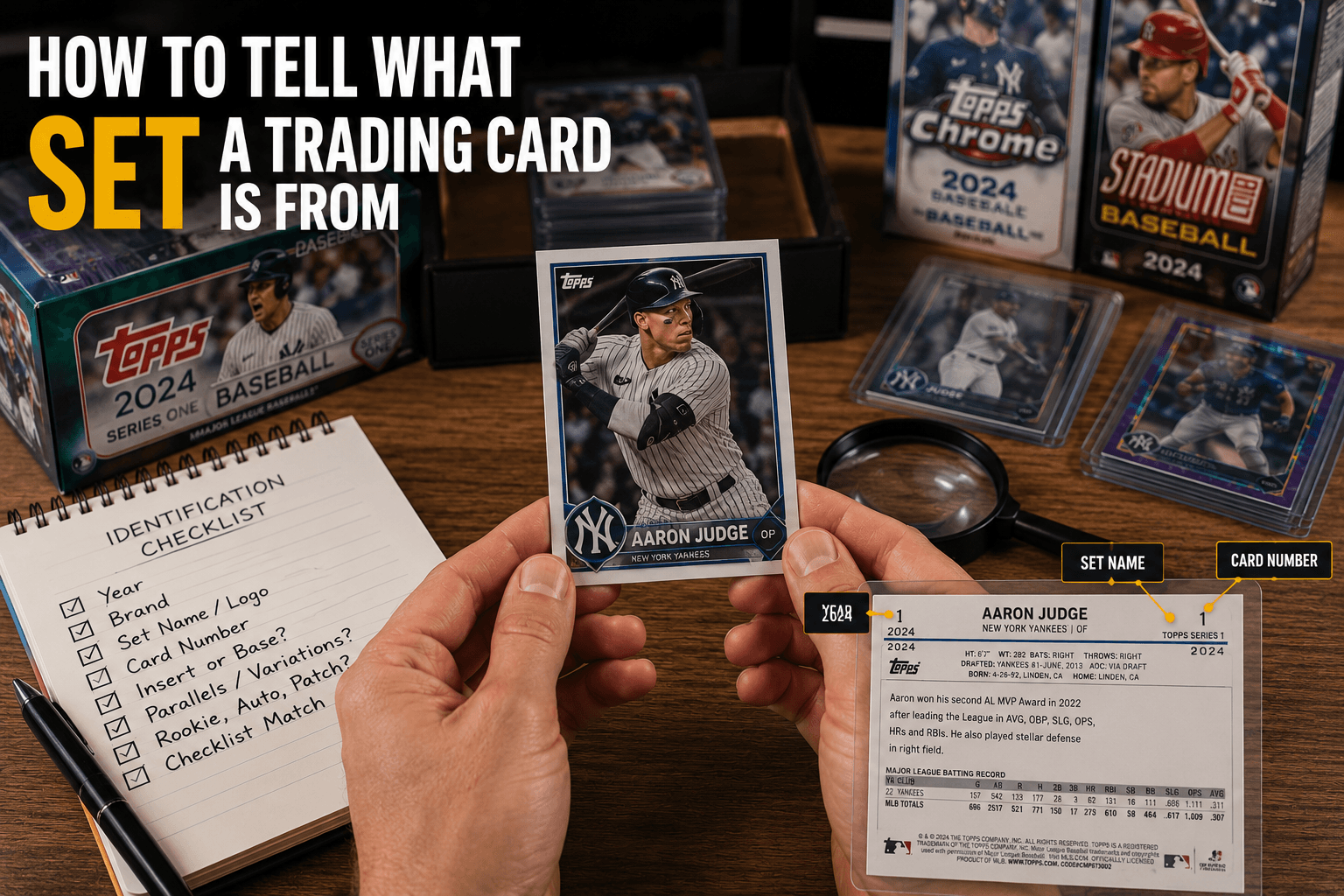
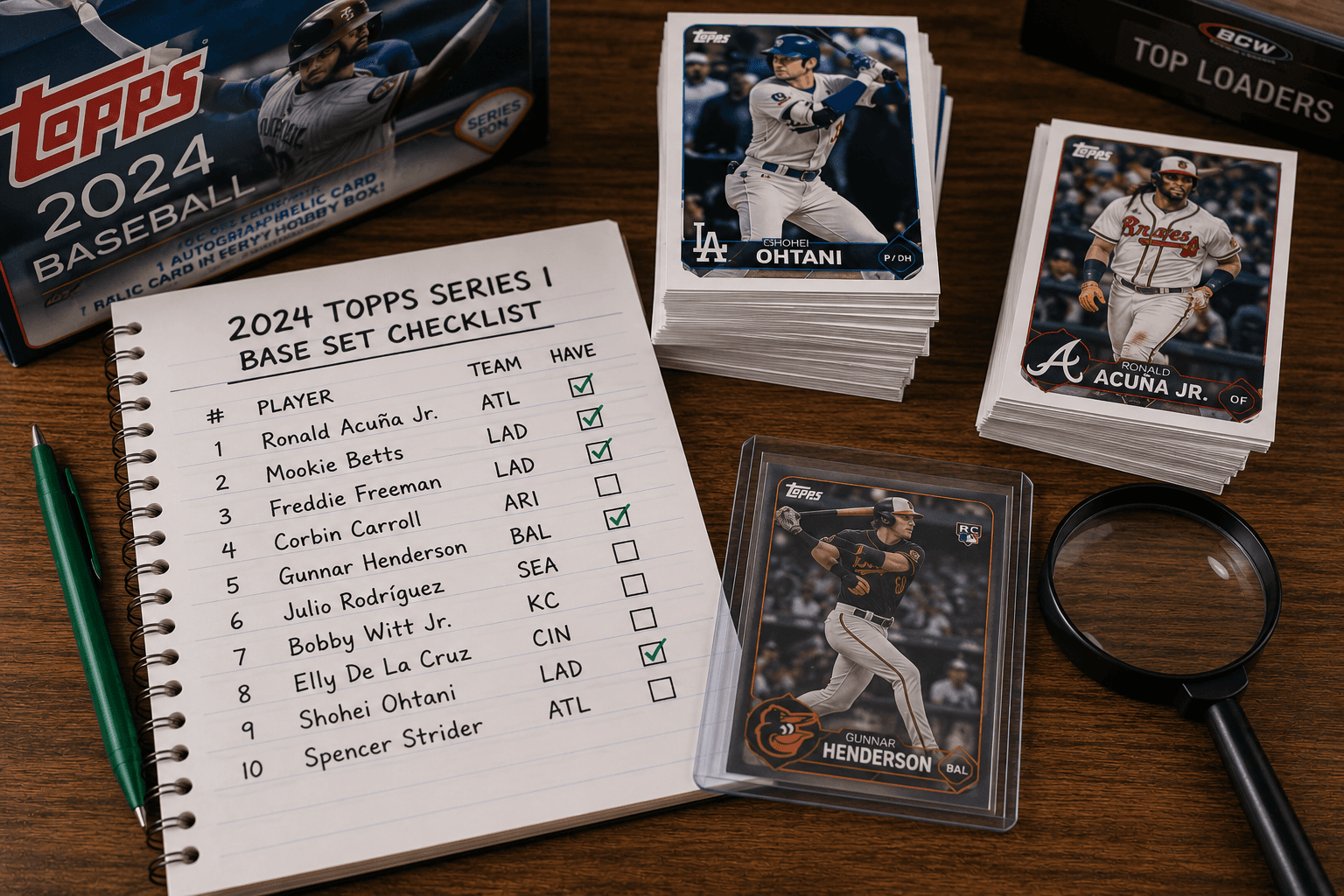
What Is Topps Chrome? Refractors, Sapphire, Logofractor, And Chrome Parallels Explained
Learn what Topps Chrome is, how refractors and Chrome parallels work, and what makes Sapphire and Logofractor cards different.
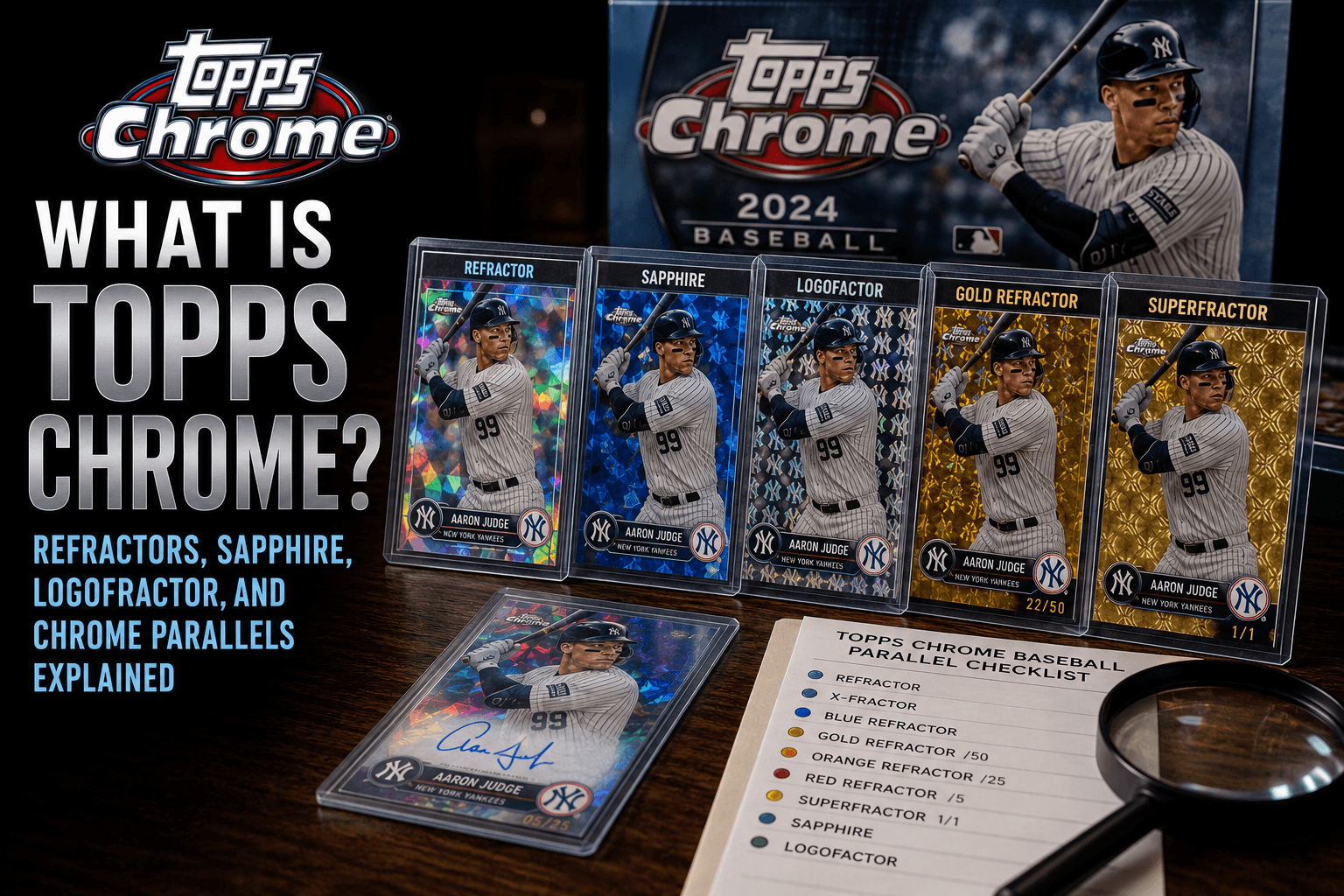
Topps Chrome is one of the most recognizable product families in modern baseball card collecting. Topps releases can work in different ways. So let's dive in.
The cards are shiny. The surfaces reflect light. The parallels come in colors, patterns, waves, and low-numbered versions. Collectors talk about refractors, Superfractors, Sapphire, Logofractor, X-Fractors, and complete rainbows as though the differences should be obvious.
They are not always obvious.
A standard Topps Chrome card can already look reflective. A refractor may look even more colorful when tilted under light. Sapphire has its own jewel-like treatment. Logofractor uses a patterned finish built around team logos. Each release can then add another layer of color and serial numbering.
That creates an important identity problem.
Two cards may feature the same player, photograph, year, and card number while representing completely different versions. One could be a Chrome base card. Another could be a refractor. Another could be a Gold Refractor numbered to 50. Another could be Sapphire. Another could be a Logofractor parallel.
Understanding those distinctions helps collectors identify, organize, compare, and value cards more accurately.
What Is Topps Chrome?
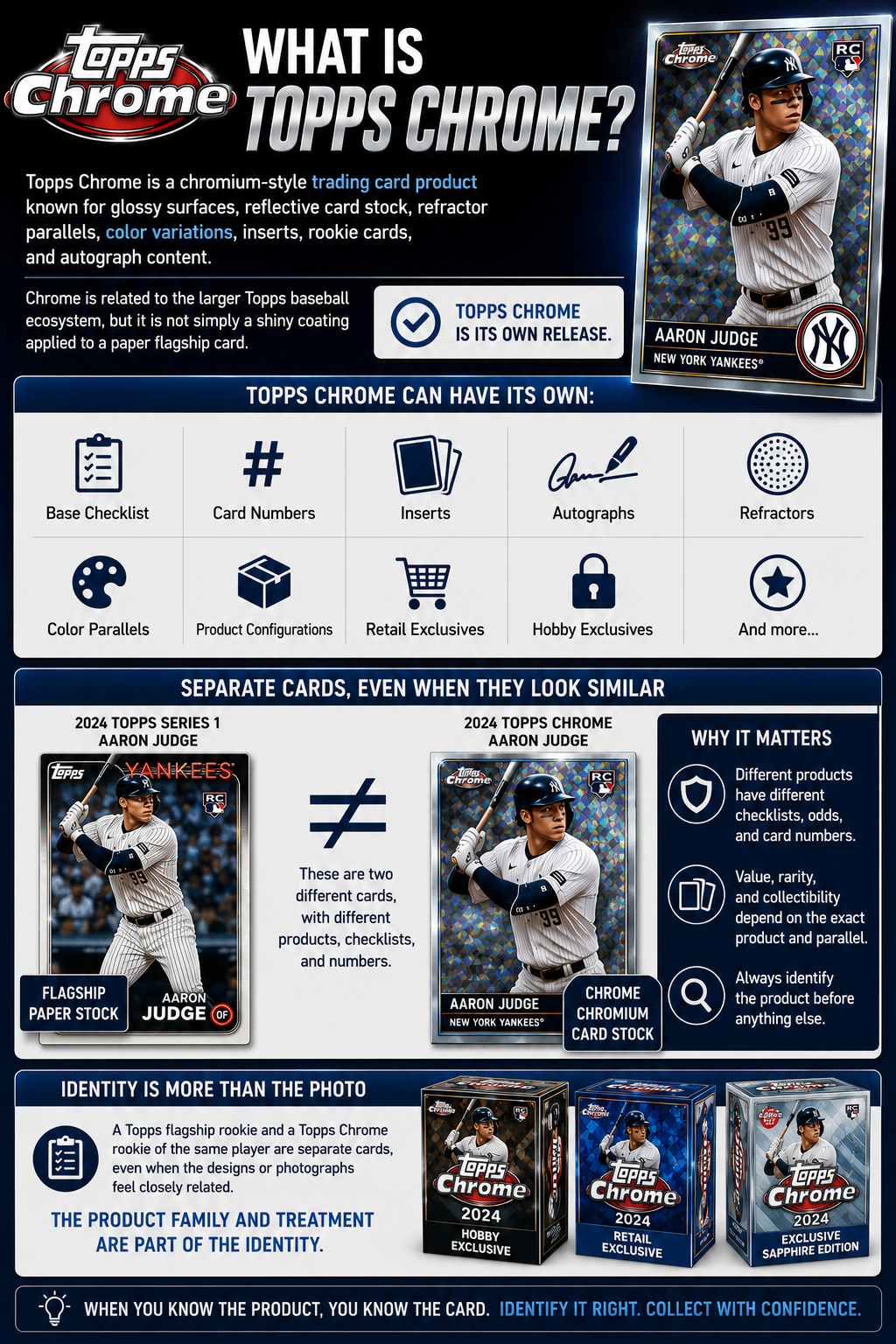
Topps Chrome is a chromium-style trading card product known for glossy surfaces, reflective card stock, refractor parallels, color variations, inserts, rookie cards, and autograph content.
Chrome is related to the larger Topps baseball ecosystem, but it is not simply a shiny coating applied to a paper flagship card.
Topps Chrome is its own release.
It can have its own:
- Base Checklist
- Card Numbers
- Inserts
- Autographs
- Refractors
- Color Parallels
- Product Configurations
- Retail Exclusives
- Hobby Exclusives
A Topps flagship rookie and a Topps Chrome rookie of the same player are separate cards, even when the designs or photographs feel closely related.
The product family and treatment are part of the identity.
Why Topps Chrome Looks Different
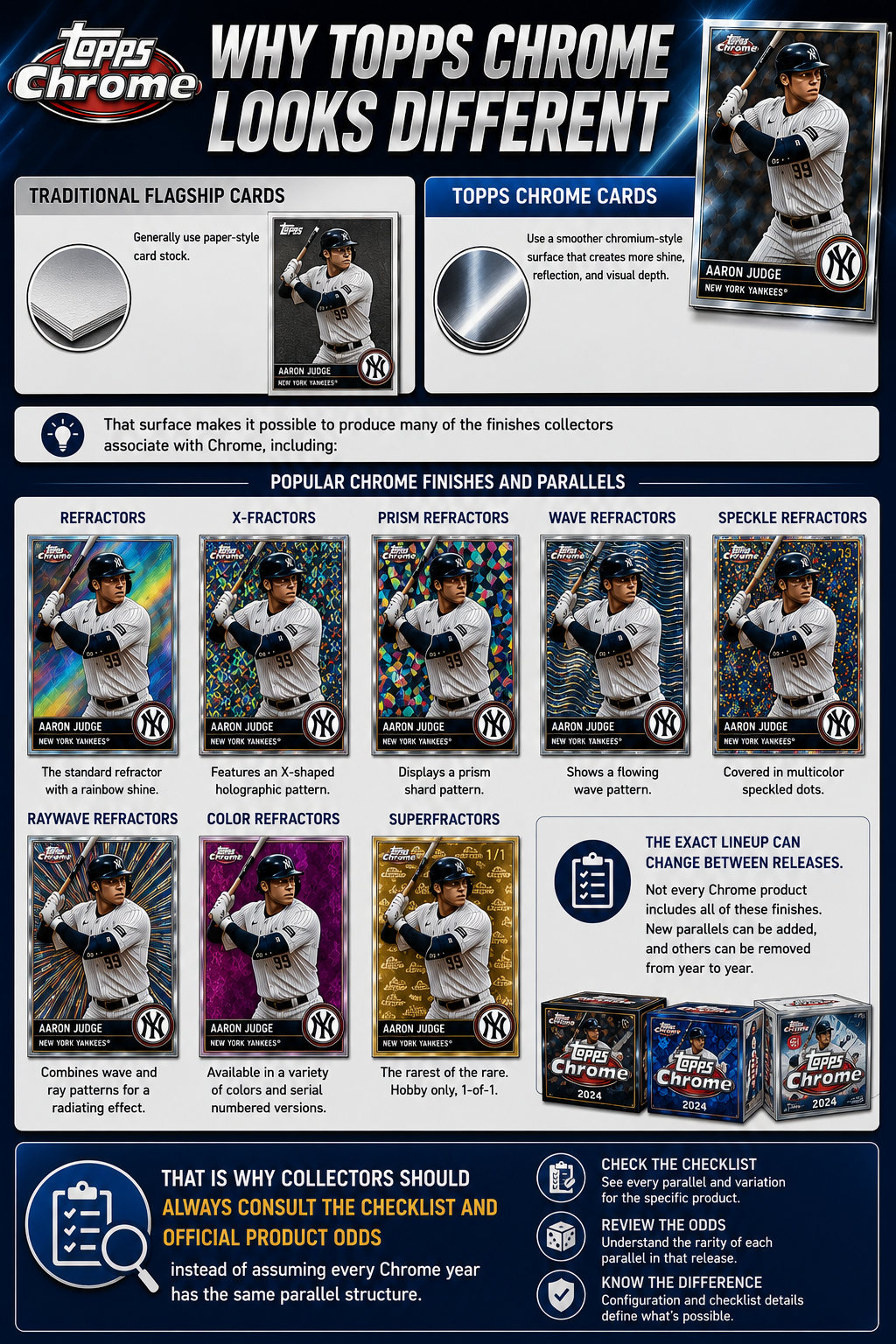
Traditional flagship cards generally use paper-style card stock.
Topps Chrome cards use a smoother chromium-style surface that creates more shine, reflection, and visual depth.
That surface makes it possible to produce many of the finishes collectors associate with Chrome, including:
- Refractors
- X-Fractors
- Prism Refractors
- Wave Refractors
- Speckle Refractors
- RayWave Refractors
- Color Refractors
- Superfractors
The exact lineup can change between releases.
That is why collectors should always consult the checklist and official product odds instead of assuming every Chrome year has the same parallel structure.
Is Every Topps Chrome Card A Refractor?
No.
This is one of the most common beginner mistakes.
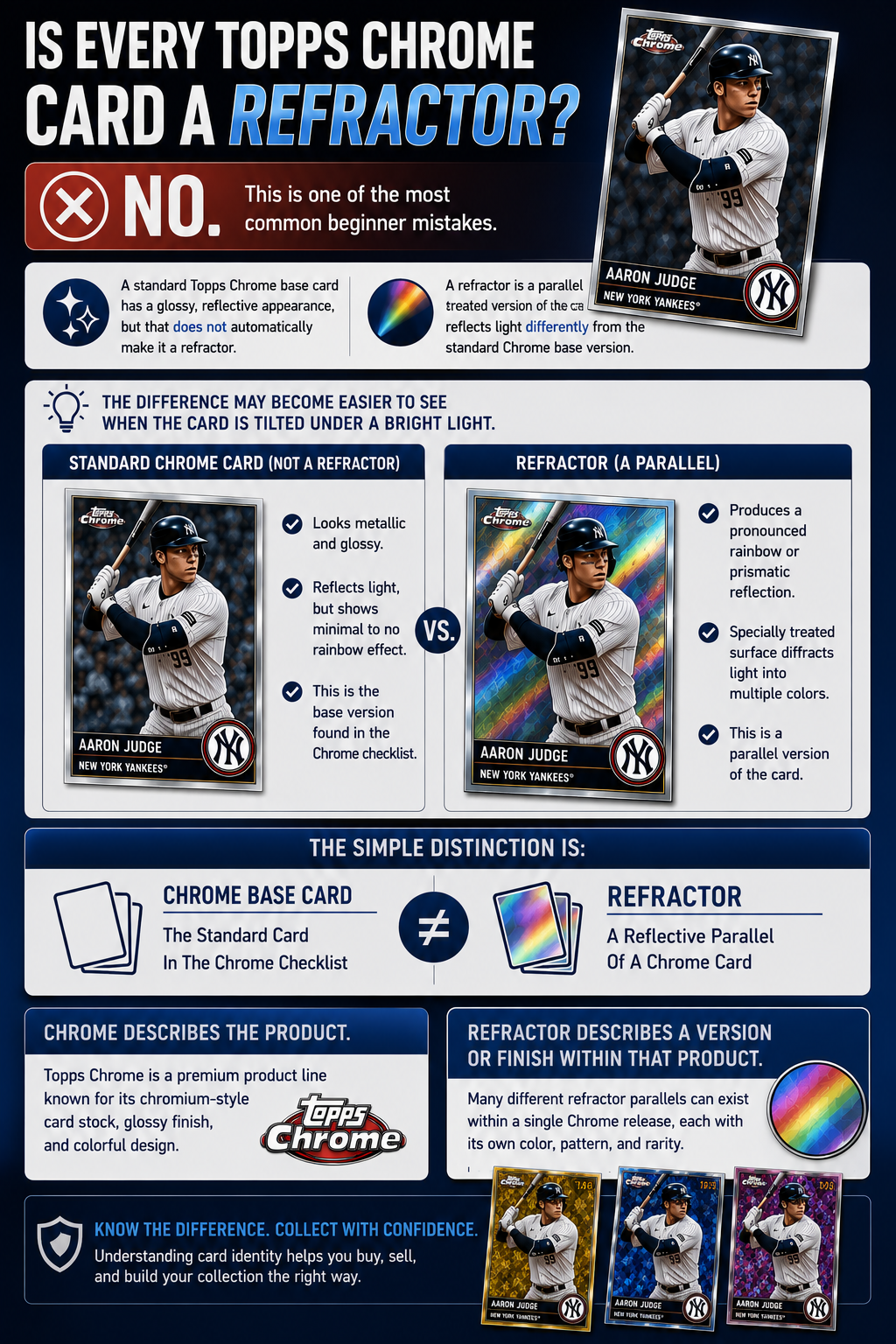
A standard Topps Chrome base card has a glossy, reflective appearance, but that does not automatically make it a refractor.
A refractor is a parallel or specially treated version of the card that reflects light differently from the standard Chrome base version.
The difference may become easier to see when the card is tilted under a bright light.
A standard Chrome card may look metallic and glossy.
A refractor often produces a more pronounced rainbow or prismatic reflection.
The simple distinction is:
- Chrome Base Card: The Standard Card In The Chrome Checklist
- Refractor: A Reflective Parallel Of A Chrome Card
Chrome describes the product.
Refractor describes a version or finish within that product.
What Is A Topps Chrome Refractor?
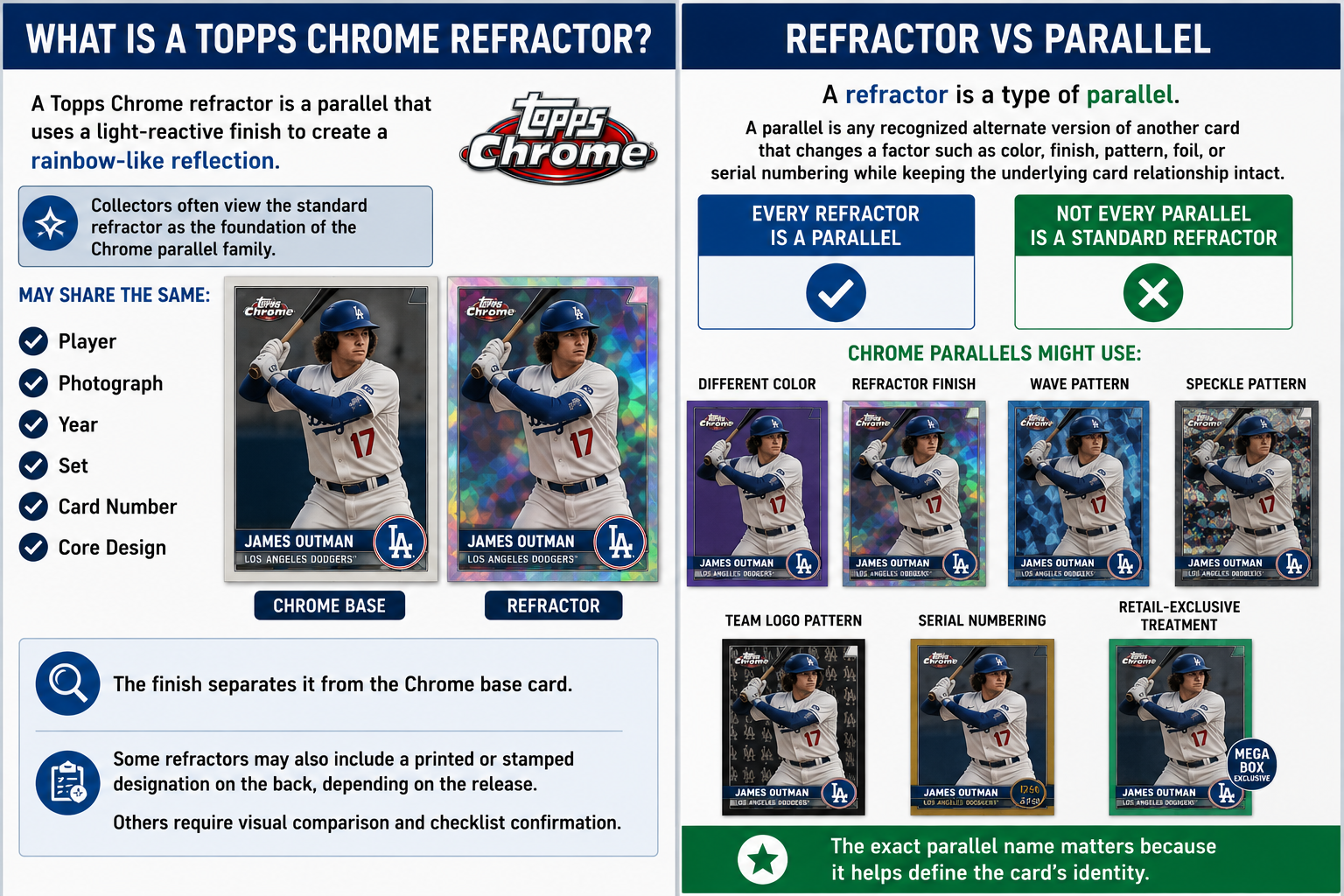
A Topps Chrome refractor is a parallel that uses a light-reactive finish to create a rainbow-like reflection.
Collectors often view the standard refractor as the foundation of the Chrome parallel family.
A refractor may share the same:
- Player
- Photograph
- Year
- Set
- Card Number
- Core Design
The finish separates it from the Chrome base card.
Some refractors may also include a printed or stamped designation on the back, depending on the release. Others require visual comparison and checklist confirmation.
Refractor Vs Parallel
A refractor is a type of parallel.
A parallel is any recognized alternate version of another card that changes a factor such as color, finish, pattern, foil, or serial numbering while keeping the underlying card relationship intact.
That means:
- Every Refractor Is A Parallel
- Not Every Parallel Is A Standard Refractor
A Chrome parallel might use:
- A Different Color
- A Refractor Finish
- A Wave Pattern
- A Speckle Pattern
- A Team Logo Pattern
- Serial Numbering
- A Retail-Exclusive Treatment
The exact parallel name matters because it helps define the card’s identity.
What Are Topps Chrome Parallels?
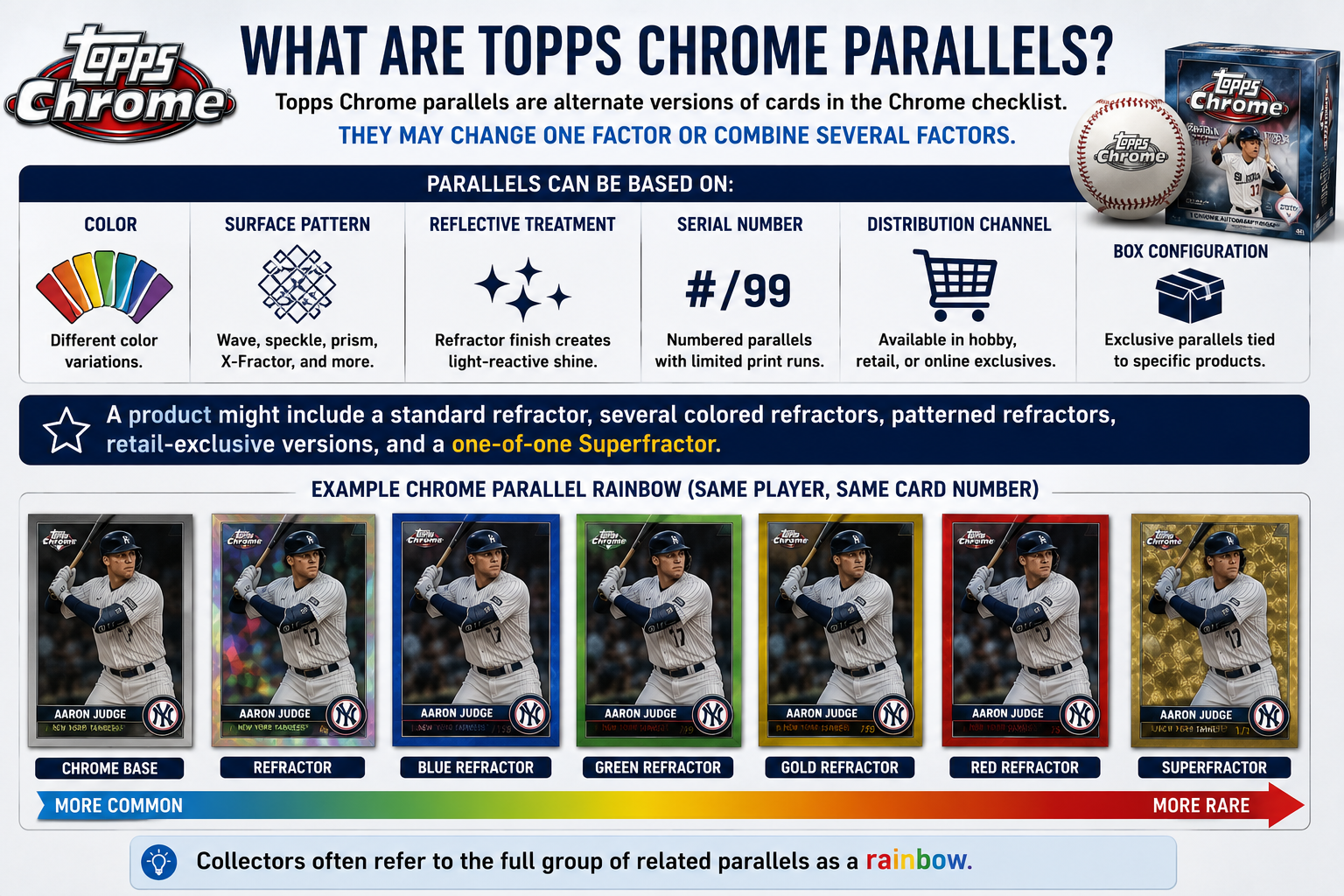
Topps Chrome parallels are alternate versions of cards in the Chrome checklist.
They may change one factor or combine several factors.
Examples can include:
- Color
- Surface Pattern
- Reflective Treatment
- Serial Number
- Distribution Channel
- Box Configuration
A product might include a standard refractor, several colored refractors, patterned refractors, retail-exclusive versions, and a one-of-one Superfractor.
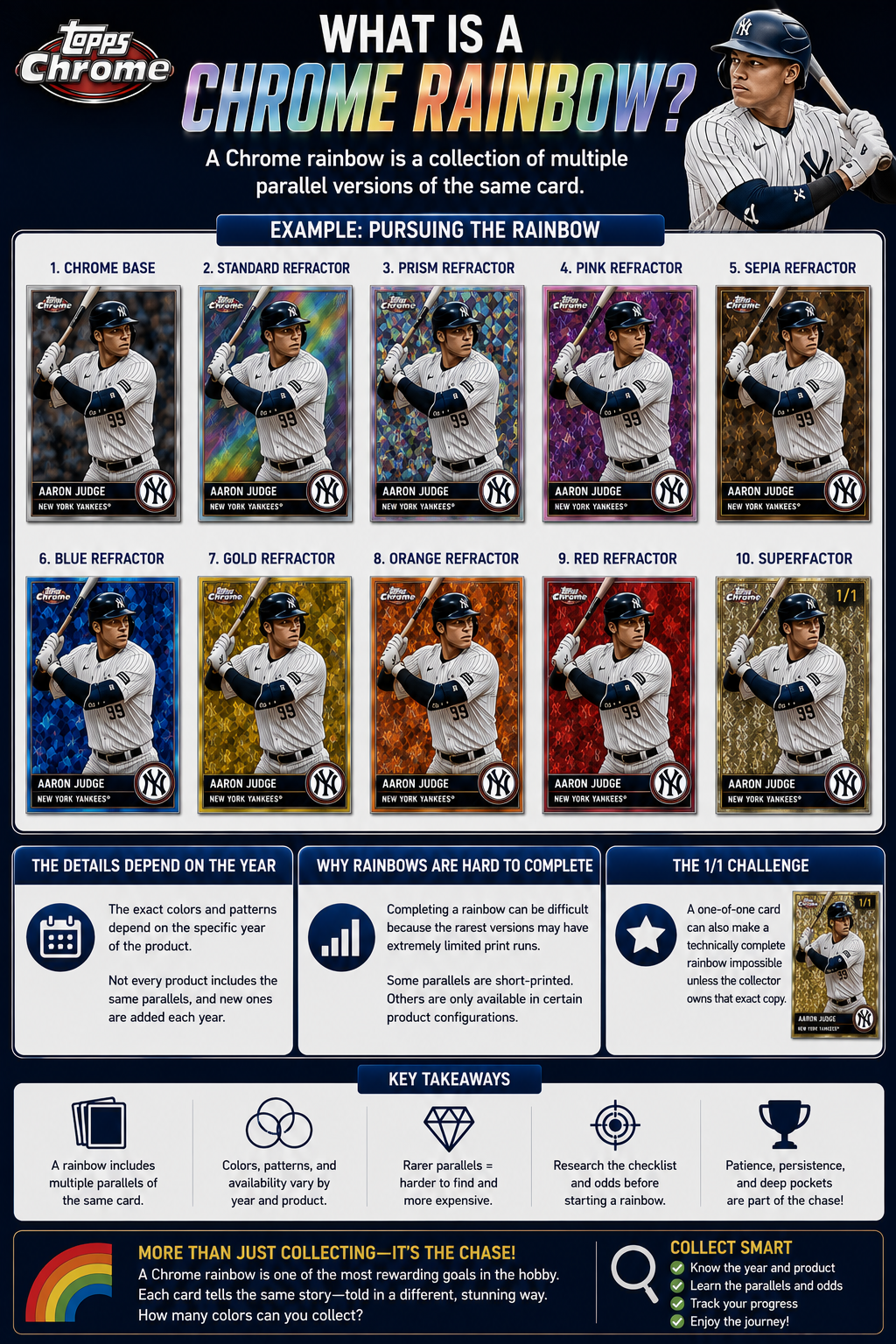
Collectors often refer to the full group of related parallels as a rainbow.
What Is A Chrome Rainbow?
A Chrome rainbow is a collection of multiple parallel versions of the same card.
For example, a collector may pursue:
- Chrome Base
- Standard Refractor
- Prism Refractor
- Pink Refractor
- Sepia Refractor
- Blue Refractor
- Gold Refractor
- Orange Refractor
- Red Refractor
- Superfractor
The exact colors and patterns depend on the specific year of the product.
Completing a rainbow can be difficult because the rarest versions may have extremely limited print runs.
A one-of-one card can also make a technically complete rainbow impossible unless the collector owns that exact copy.
What Is A Color Refractor?
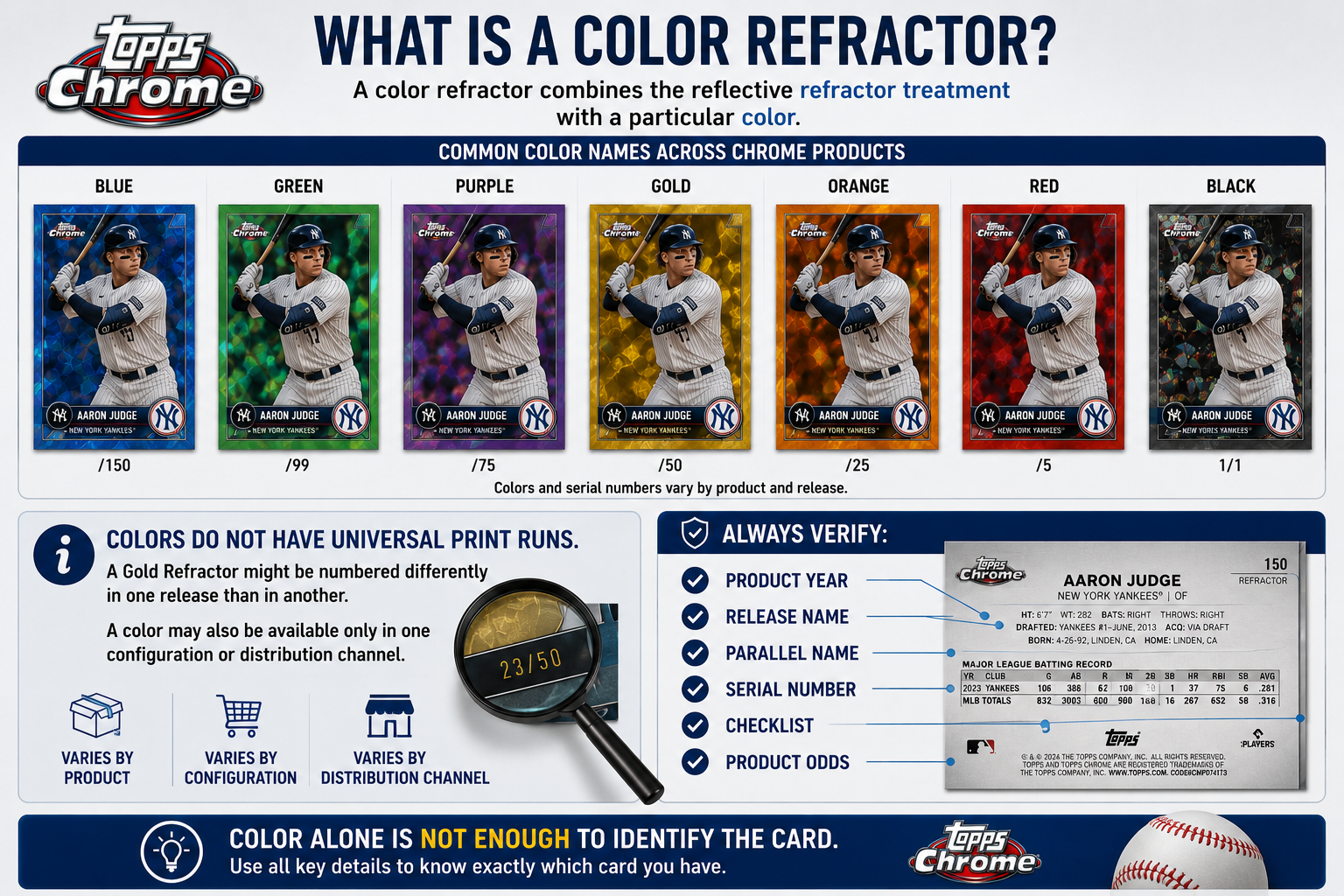
A color refractor combines the reflective refractor treatment with a particular color.
Common color names across Chrome products may include:
- Blue
- Green
- Purple
- Gold
- Orange
- Red
- Black
The colors do not have universal print runs across every product.
A Gold Refractor might be numbered differently in one release than in another. A color may also be available only in one configuration or distribution channel.
Always verify:
- Product Year
- Release Name
- Parallel Name
- Serial Number
- Checklist
- Product Odds
Color alone is not enough to identify the card.
What Is A Superfractor?
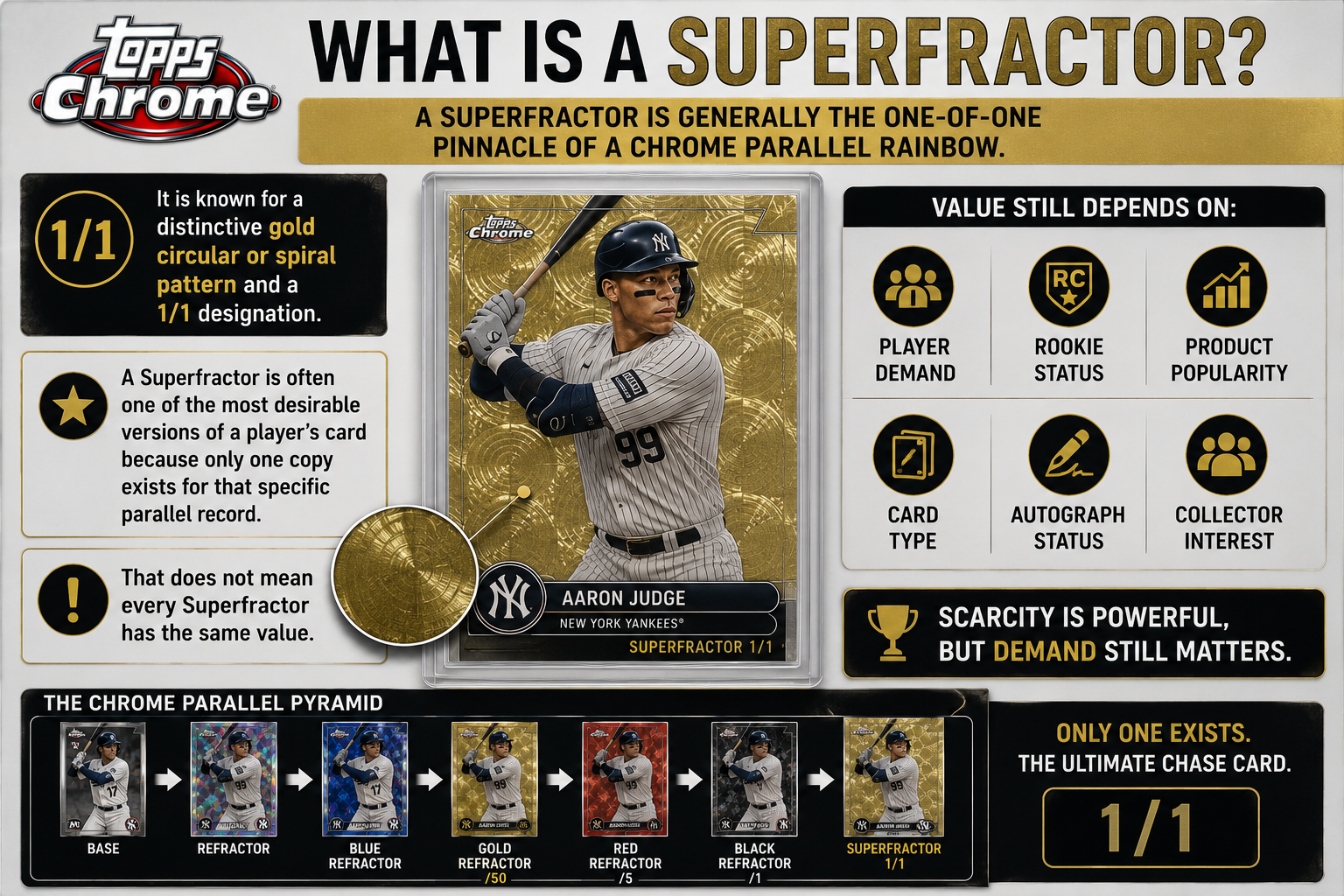
A Superfractor is generally the one-of-one pinnacle of a Chrome parallel rainbow.
It is known for a distinctive gold circular or spiral pattern and a 1/1 designation.
A Superfractor is often one of the most desirable versions of a player’s card because only one copy exists for that specific parallel record.
That does not mean every Superfractor has the same value.
Value still depends on:
- Player Demand
- Rookie Status
- Product Popularity
- Card Type
- Autograph Status
- Collector Interest
Scarcity is powerful, but demand still matters.
What Is An X-Fractor?
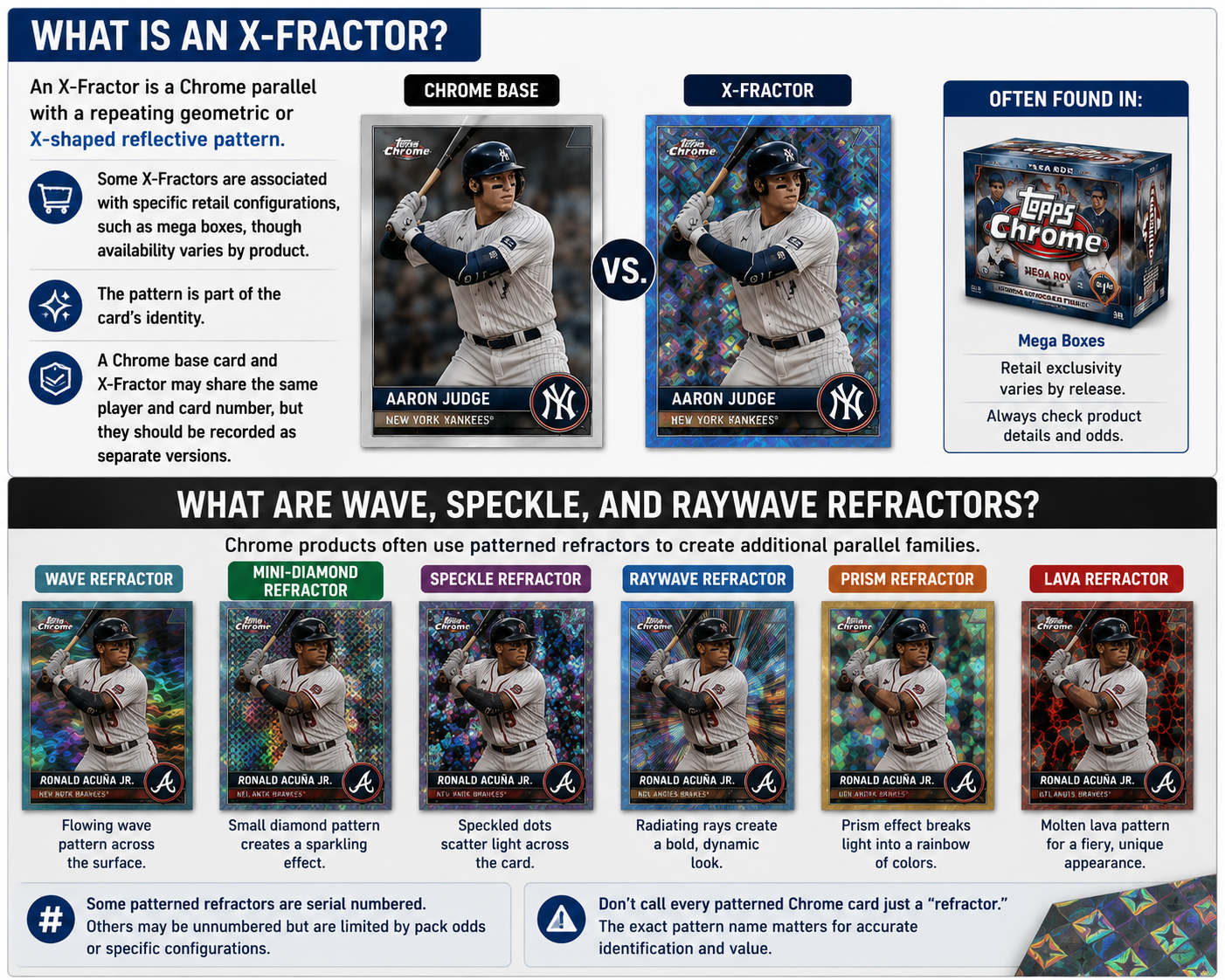
An X-Fractor is a Chrome parallel with a repeating geometric or X-shaped reflective pattern.
Some X-Fractors are associated with specific retail configurations, such as mega boxes, though availability varies by product.
The pattern is part of the card’s identity.
A Chrome base card and X-Fractor may share the same player and card number, but they should be recorded as separate versions.
What Are Wave, Speckle, And RayWave Refractors?
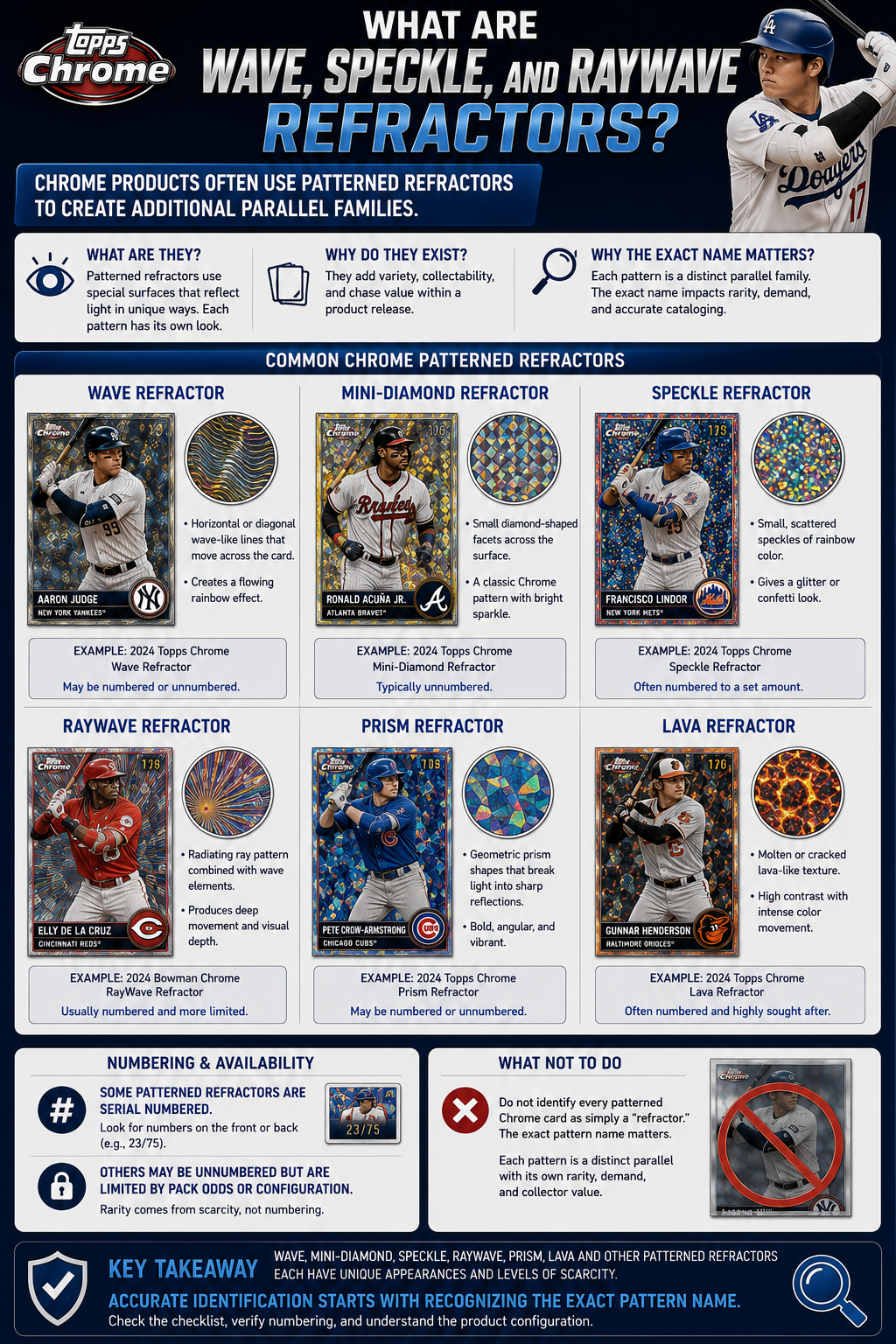
Chrome products often use patterned refractors to create additional parallel families.
Examples may include:
- Wave Refractor
- Mini-Diamond Refractor
- Speckle Refractor
- RayWave Refractor
- Prism Refractor
- Lava Refractor
These names usually describe the visual pattern or way the surface reflects light.
Some are serial numbered.
Others may be unnumbered but limited through pack odds or specific configurations.
Collectors should not identify every patterned Chrome card as simply a refractor. The exact pattern name matters.
What Does Topps Sapphire Mean?
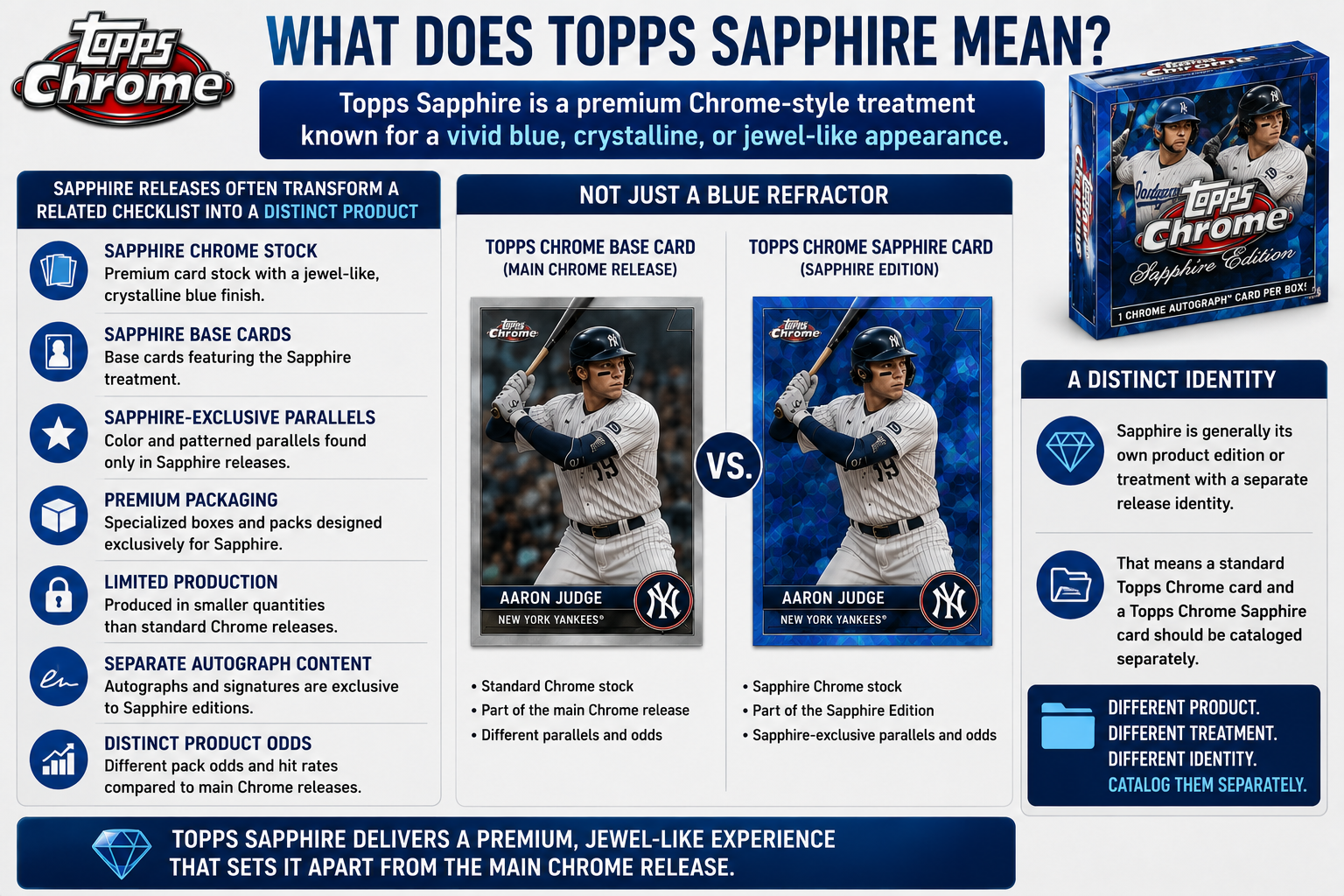
Topps Sapphire is a premium Chrome-style treatment known for a vivid blue, crystalline, or jewel-like appearance.
Sapphire releases often transform a related checklist into a distinct product with:
- Sapphire Chrome Stock
- Sapphire Base Cards
- Sapphire-Exclusive Parallels
- Premium Packaging
- Limited Production
- Separate Autograph Content
- Distinct Product Odds
A Sapphire card is not merely a blue refractor from the main Chrome release.
Sapphire is generally its own product edition or treatment with a separate release identity.
That means a standard Topps Chrome card and a Topps Chrome Sapphire card should be cataloged separately.
Is Sapphire A Parallel Or A Separate Set?
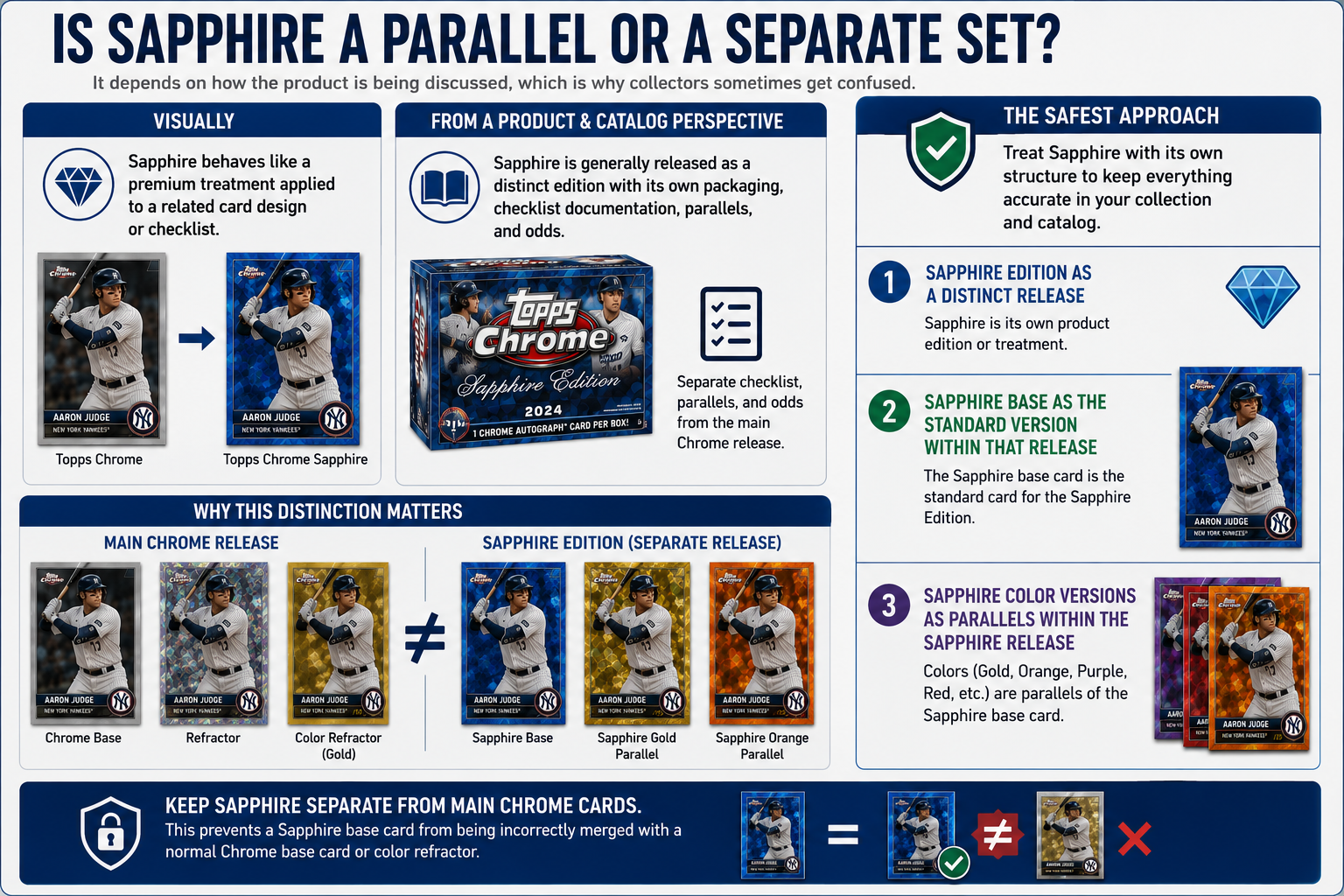
This depends on how the product is being discussed, which is why collectors sometimes get confused.
Visually, Sapphire behaves like a premium treatment applied to a related card design or checklist.
From a product and catalog perspective, however, Sapphire is generally released as a distinct edition with its own packaging, checklist documentation, parallels, and odds.
The safest approach is to treat:
- Sapphire Edition As A Distinct Release
- Sapphire Base As The Standard Version Within That Release
- Sapphire Color Versions As Parallels Within The Sapphire Release
This prevents a Sapphire base card from being incorrectly merged with a normal Chrome base card or color refractor.
What Are Sapphire Parallels?
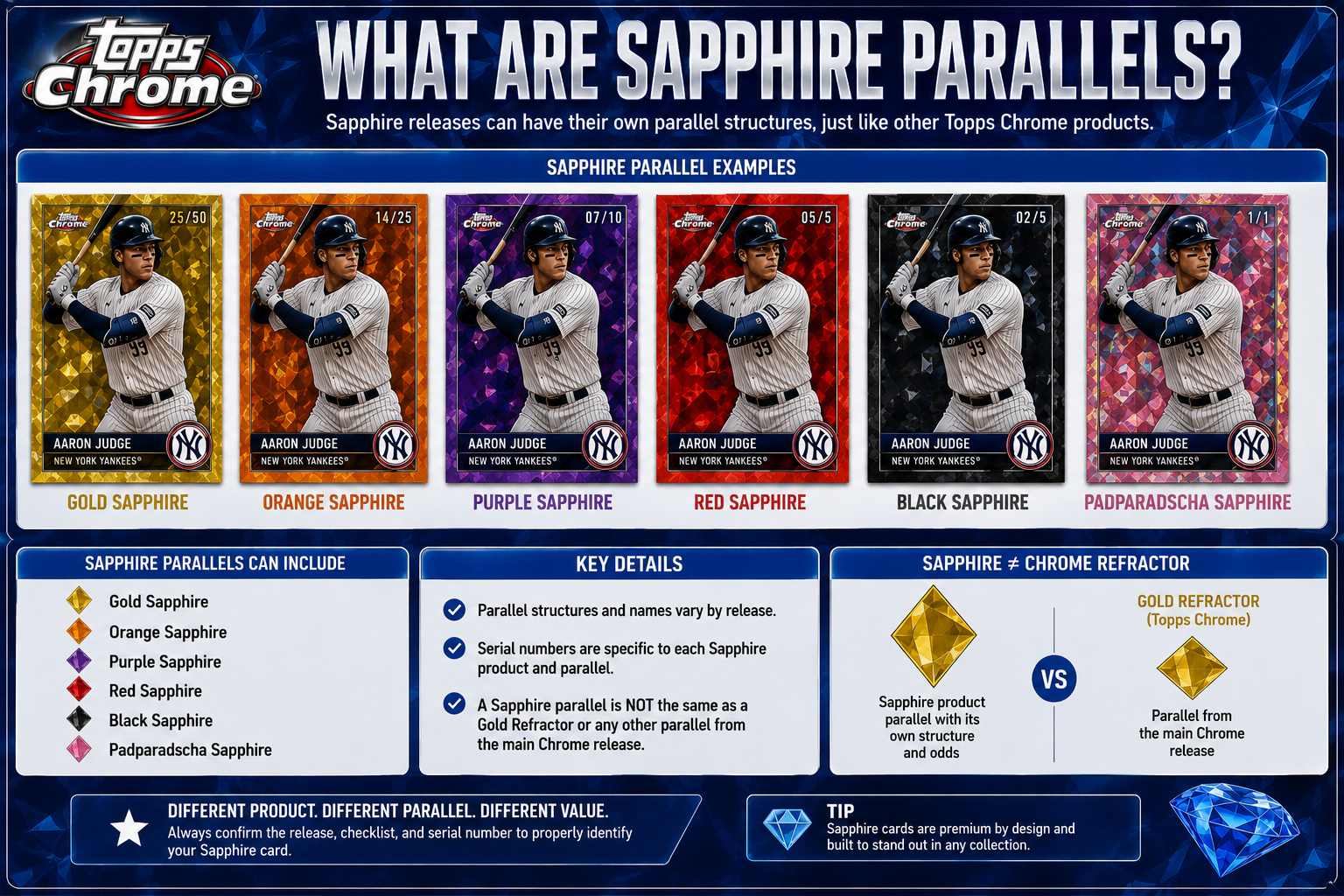
Sapphire releases can have their own parallel structures.
These may include colors such as:
- Gold Sapphire
- Orange Sapphire
- Purple Sapphire
- Red Sapphire
- Black Sapphire
- Padparadscha Sapphire
The exact names and serial numbers vary by release.
A Gold Sapphire card is not the same as a Gold Refractor from the main Topps Chrome release.
Both may use gold coloring, and both may be serial numbered, but they belong to different product structures.
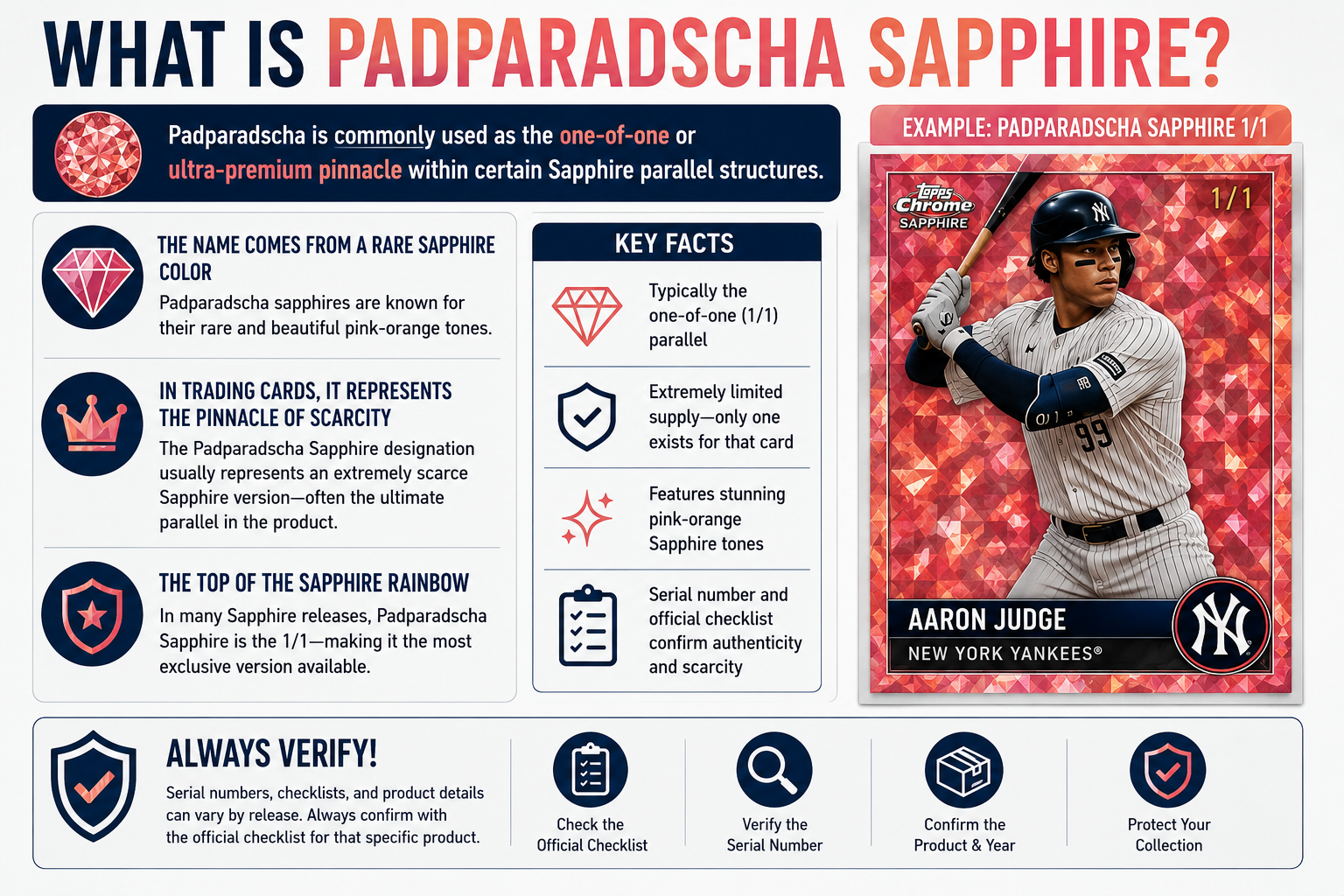
What Is Padparadscha Sapphire?
Padparadscha is commonly used as the one-of-one or ultra-premium pinnacle within certain Sapphire parallel structures.
The name comes from a rare sapphire color associated with pink-orange tones.
In trading cards, the designation usually represents an extremely scarce Sapphire version.
As always, collectors should verify the serial number and official checklist for the exact release.
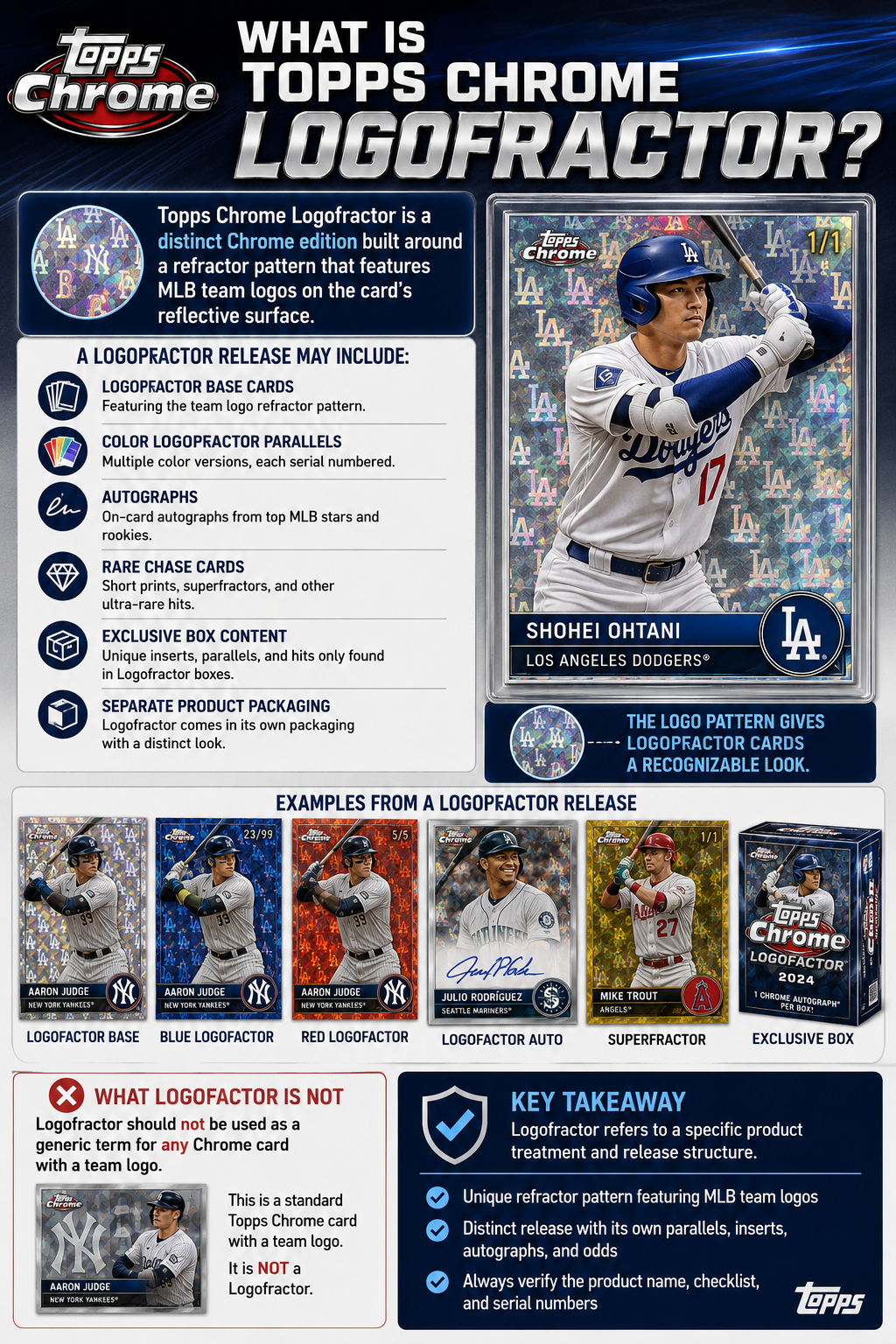
What Is Topps Chrome Logofractor?
Topps Chrome Logofractor is a distinct Chrome edition built around a refractor pattern that features MLB team logos on the card’s reflective surface.
The logo pattern gives Logofractor cards a recognizable look.
A Logofractor release may include:
- Logofractor Base Cards
- Color Logofractor Parallels
- Autographs
- Rare Chase Cards
- Exclusive Box Content
- Separate Product Packaging
Logofractor should not be used as a generic term for any Chrome card with a team logo.
It refers to a specific product treatment and release structure.
Logofractor Vs Refractor
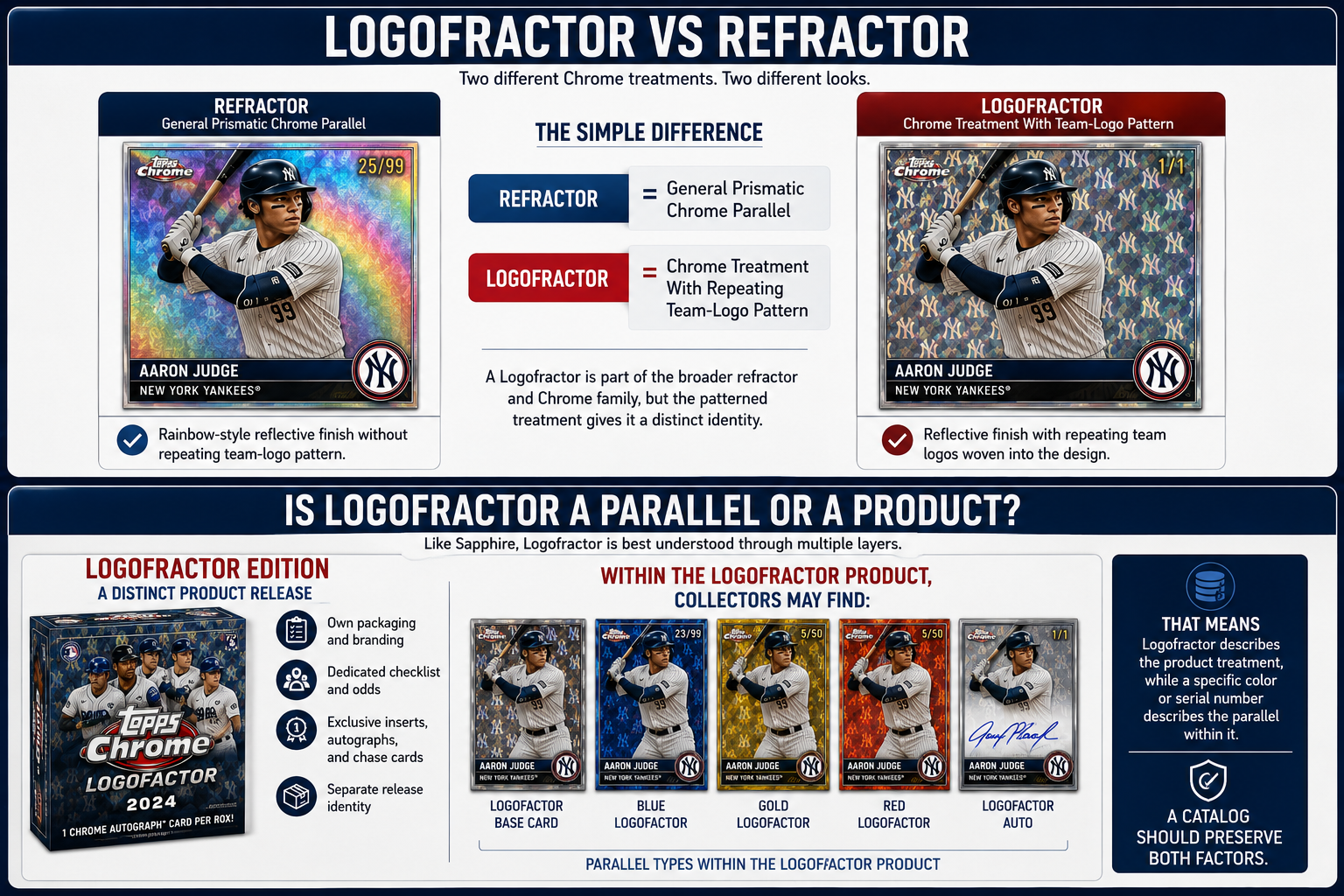
A standard refractor usually has a rainbow-style reflective finish without the repeating team-logo pattern.
A Logofractor uses a reflective finish with team logos woven into the design.
The simple difference is:
- Refractor: General Prismatic Chrome Parallel
- Logofractor: Chrome Treatment With Repeating Team-Logo Pattern
A Logofractor is part of the broader refractor and Chrome family, but the patterned treatment gives it a distinct identity.
Is Logofractor A Parallel Or A Product?
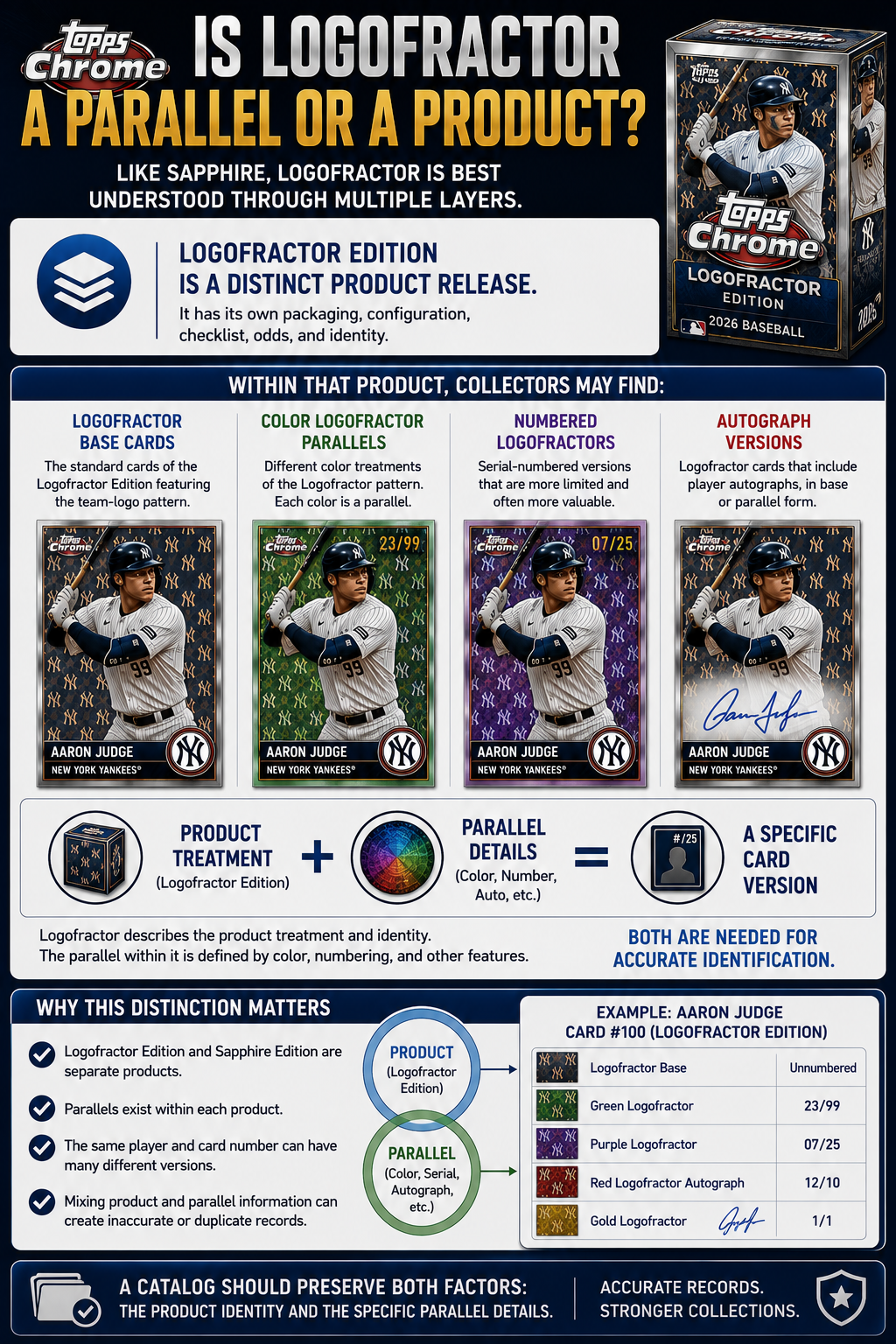
Like Sapphire, Logofractor is best understood through multiple layers.
Logofractor Edition is a distinct product release.
Within that product, collectors may find:
- Logofractor Base Cards
- Color Logofractor Parallels
- Numbered Logofractors
- Autograph Versions
That means Logofractor can describe the product treatment, while a specific color or serial number describes the parallel within it.
A catalog should preserve both factors.
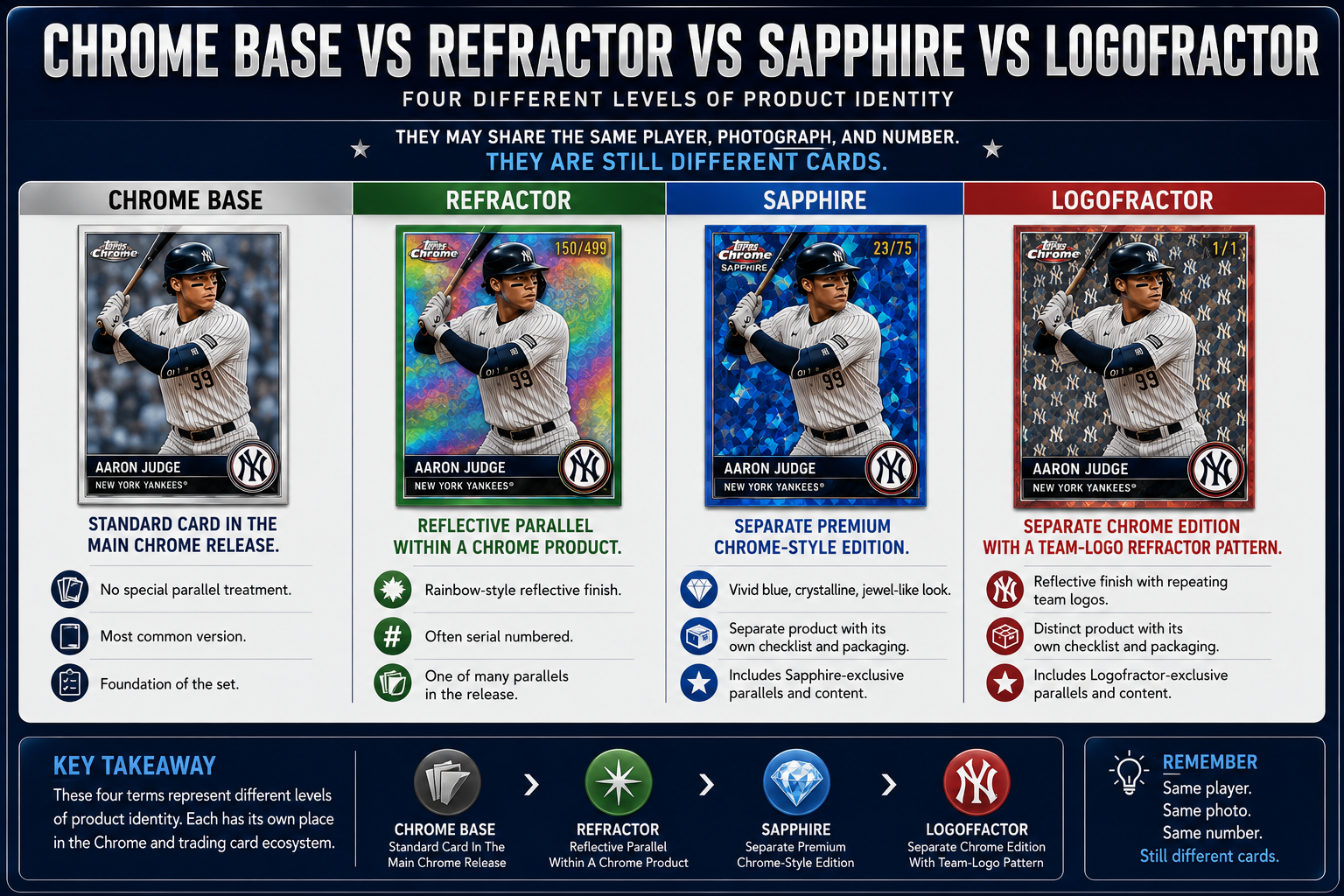
Chrome Base Vs Refractor Vs Sapphire Vs Logofractor
These four terms represent different levels of product identity.
- Chrome Base: Standard Card In The Main Chrome Release
- Refractor: Reflective Parallel Within A Chrome Product
- Sapphire: Separate Premium Chrome-Style Edition
- Logofractor: Separate Chrome Edition With A Team-Logo Refractor Pattern
They may share the same player, photograph, and number.
They are still different cards.
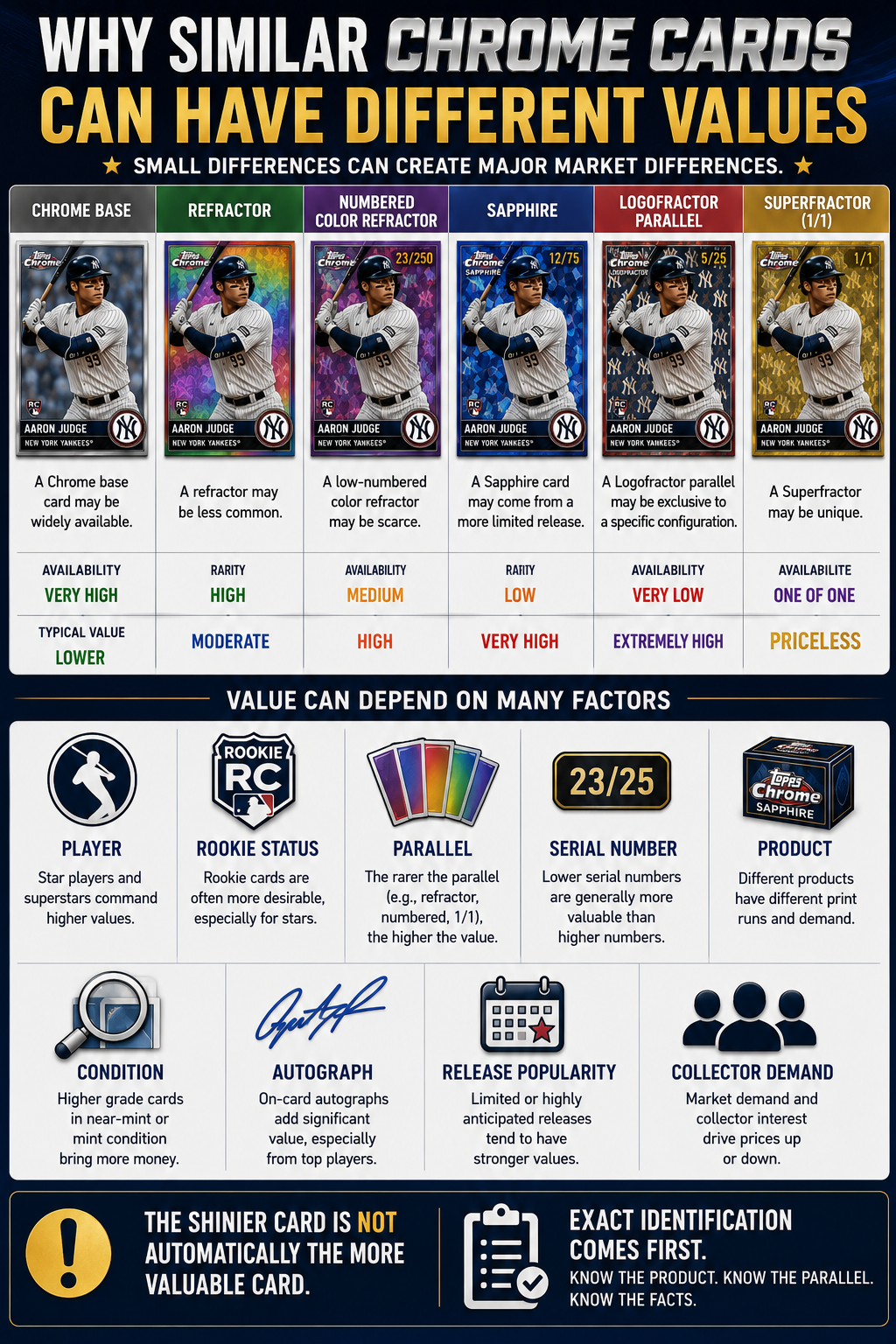
Why Similar Chrome Cards Can Have Different Values
Small differences can create major market differences.
A Chrome base card may be widely available.
A refractor may be less common.
A low-numbered color refractor may be scarce.
A Sapphire card may come from a more limited release.
A Logofractor parallel may be exclusive to a specific configuration.
A Superfractor may be unique.
- Player
- Rookie Status
- Parallel
- Serial Number
- Product
- Condition
- Autograph
- Release Popularity
- Collector Demand
The shinier card is not automatically the more valuable card.
Exact identification comes first.
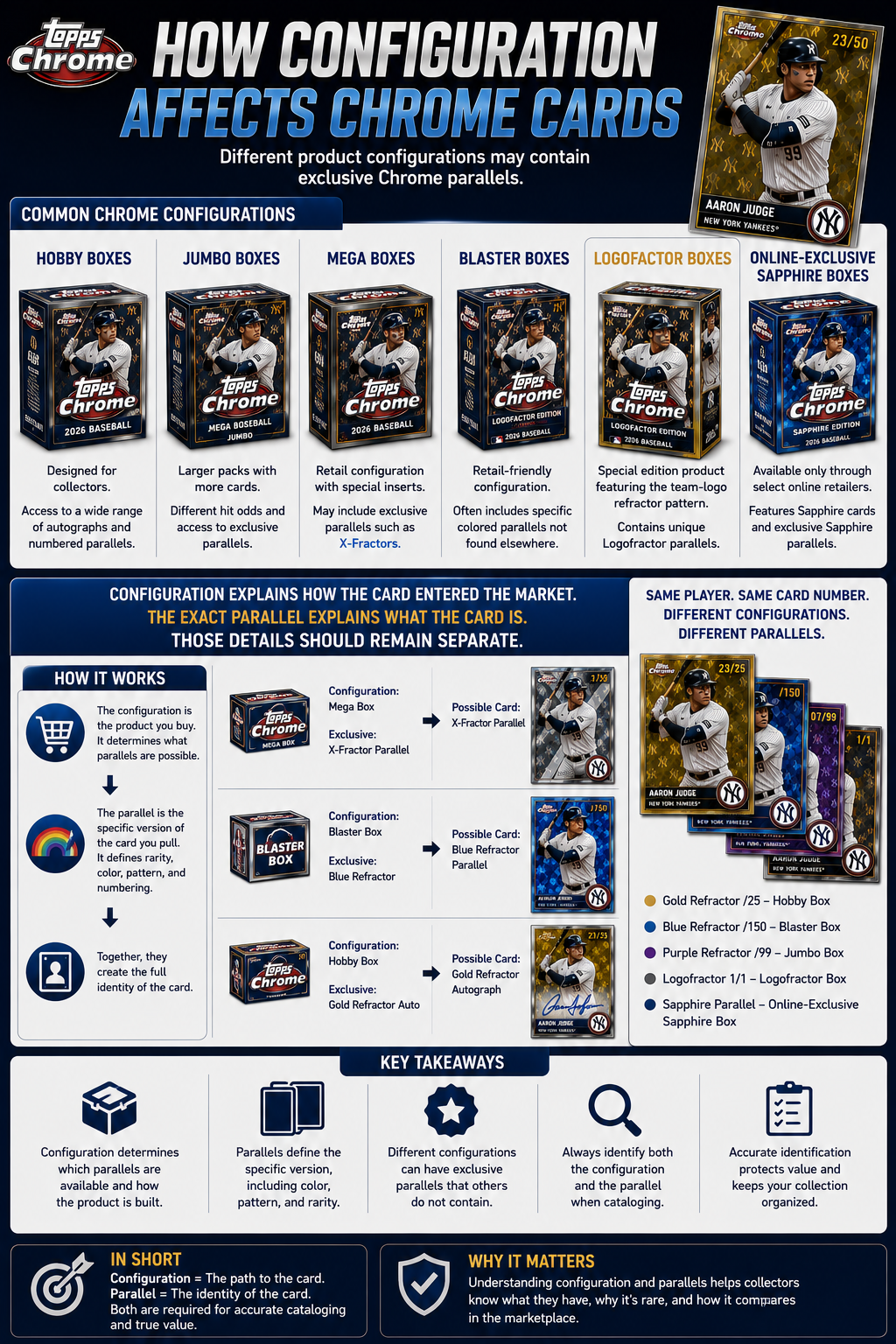
How Configuration Affects Chrome Cards
Different product configurations may contain exclusive Chrome parallels.
Examples may include:
- Hobby Boxes
- Jumbo Boxes
- Mega Boxes
- Blaster Boxes
- Logofractor Boxes
- Online-Exclusive Sapphire Boxes
A mega box might advertise an exclusive X-Fractor. A retail product may include a particular color. Hobby configurations may provide access to different autographs or numbered parallels.
Configuration explains how the card entered the market.
The exact parallel explains what the card is.
Those details should remain separate.
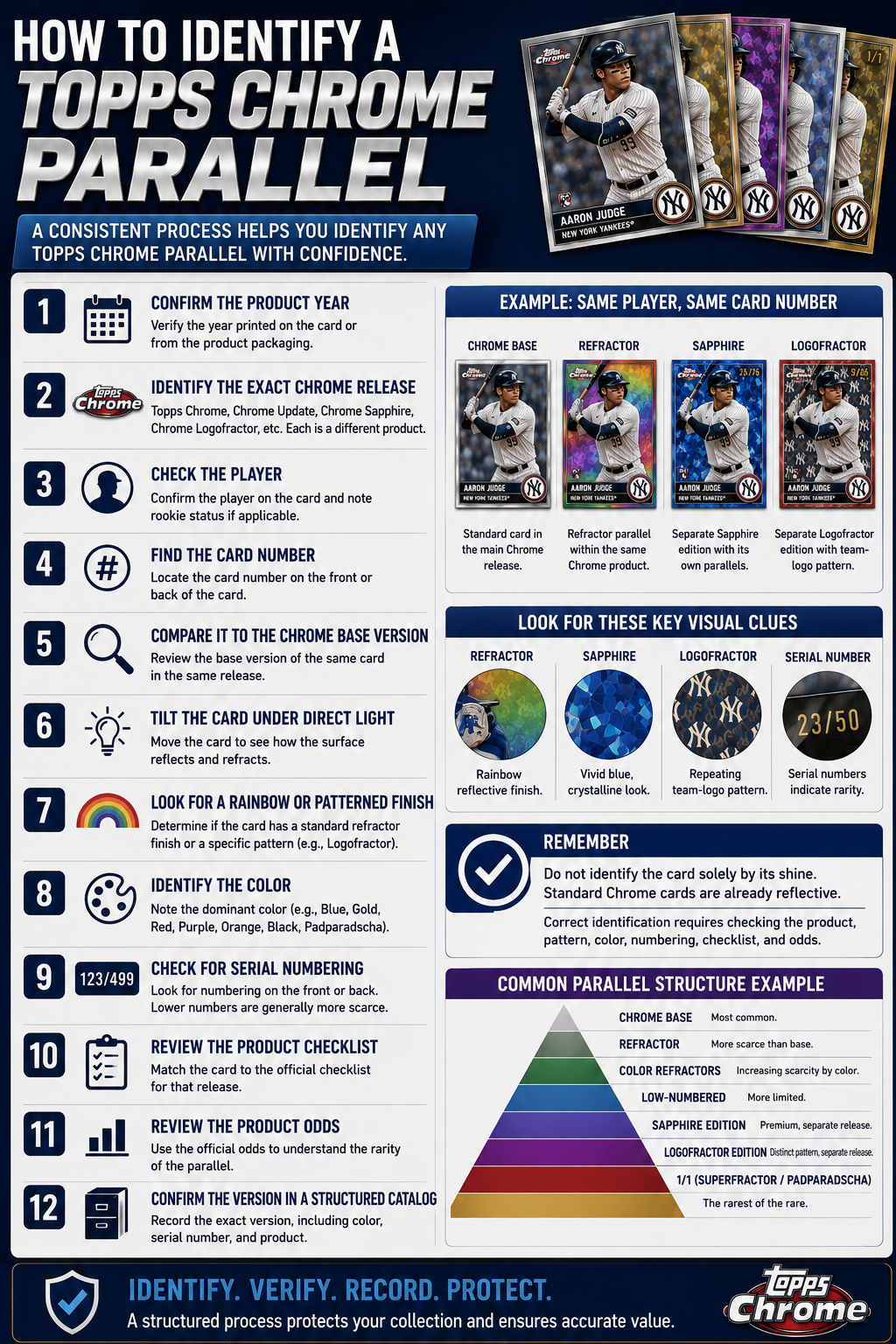
How To Identify A Topps Chrome Parallel
Use a consistent process when examining a Chrome card.
- Confirm The Product Year
- Identify The Exact Chrome Release
- Check The Player
- Find The Card Number
- Compare It To The Chrome Base Version
- Tilt The Card Under Direct Light
- Look For A Rainbow Or Patterned Finish
- Identify The Color
- Check For Serial Numbering
- Review The Product Checklist
- Review The Product Odds
- Confirm The Version In A Structured Catalog
Do not identify the card solely by its shine.
Standard Chrome cards are already reflective.
Common Beginner Mistakes With Topps Chrome
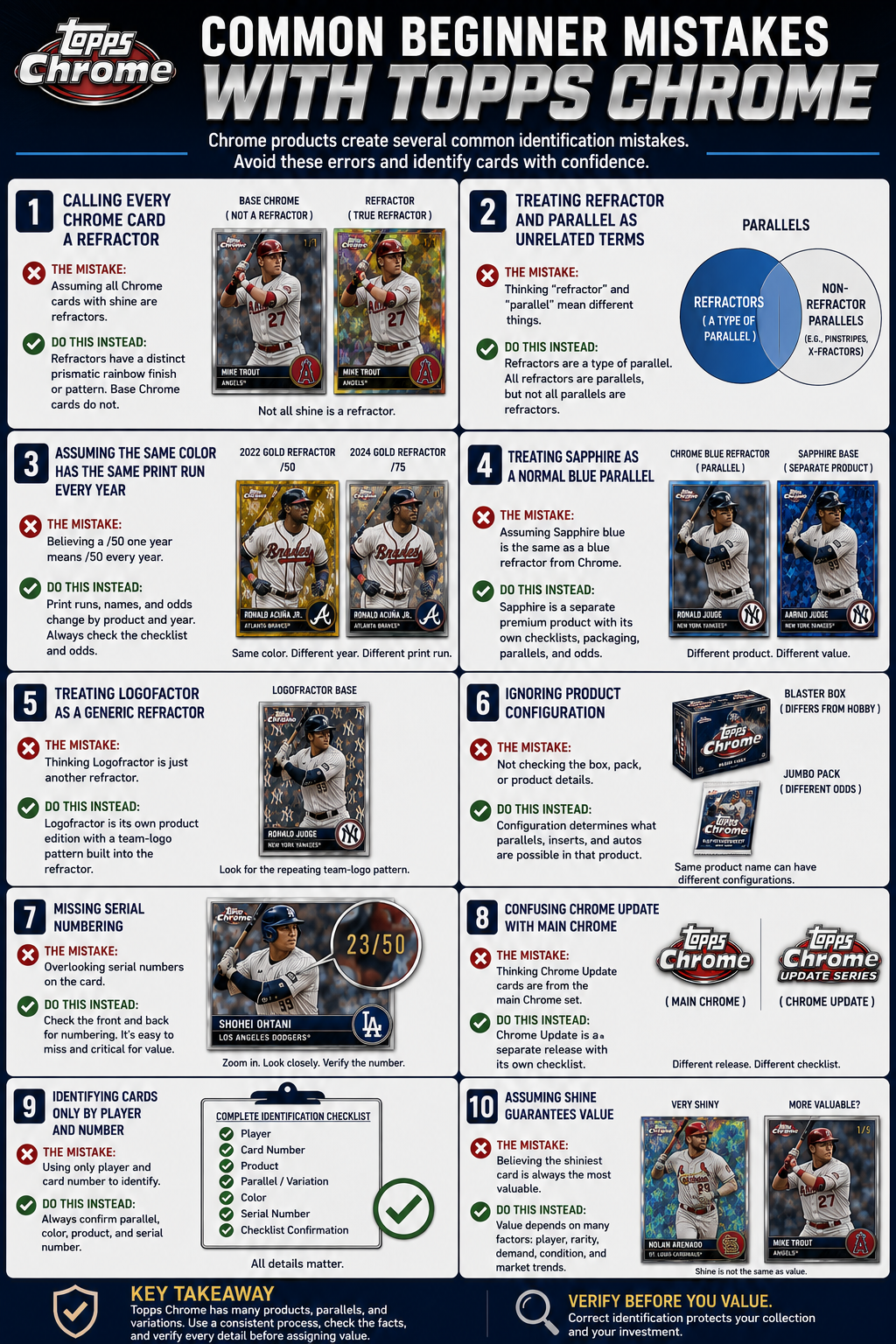
Chrome products create several common identification mistakes.
These include:
- Calling Every Chrome Card A Refractor
- Treating Refractor And Parallel As Unrelated Terms
- Assuming The Same Color Has The Same Print Run Every Year
- Treating Sapphire As A Normal Blue Parallel
- Treating Logofractor As A Generic Refractor
- Ignoring Product Configuration
- Missing Serial Numbering
- Confusing Chrome Update With Main Chrome
- Identifying Cards Only By Player And Number
- Assuming Shine Guarantees Value
The exact release and finish matter.
Why Chrome Identity Matters To CardWiki
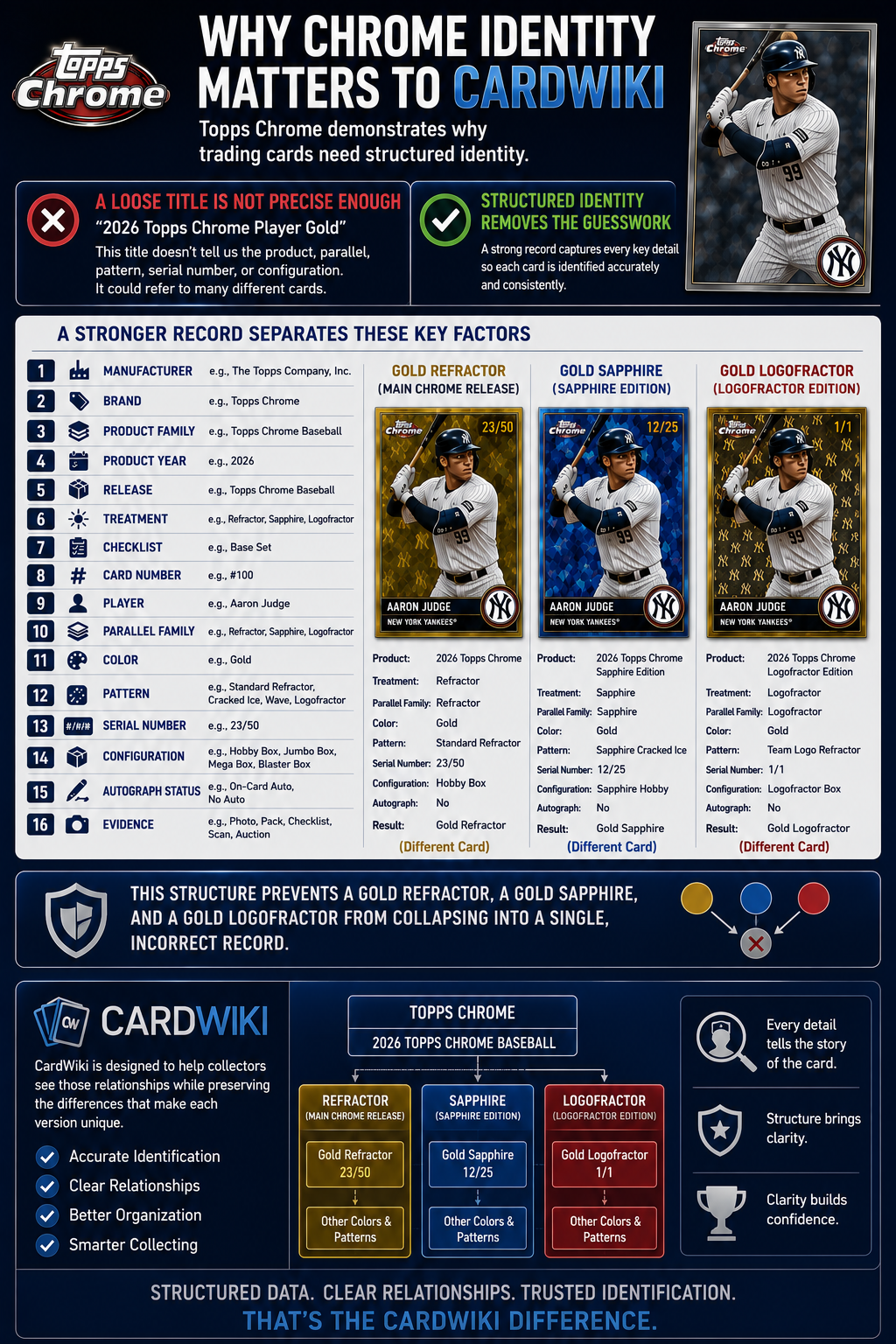
Topps Chrome demonstrates why trading cards need structured identity.
A loose title such as “2026 Topps Chrome Player Gold” may not be precise enough.
A stronger record separates:
- Manufacturer
- Brand
- Product Family
- Product Year
- Release
- Treatment
- Checklist
- Card Number
- Player
- Parallel Family
- Color
- Pattern
- Serial Number
- Configuration
- Autograph Status
- Evidence
This structure prevents a Gold Refractor, a Gold Sapphire, and a Gold Logofractor from collapsing into a single incorrect record.
CardWiki is designed to help collectors see those relationships while preserving the differences that make each version unique.
Final Thoughts
Topps Chrome is a chromium-style product family built around glossy cards, reflective surfaces, refractors, color parallels, autographs, and rainbow collecting.
A refractor is a parallel within a Chrome product.
Sapphire is a distinct premium Chrome-style edition with its own jewel-like treatment and parallel structure.
Logofractor is a distinct Chrome edition featuring repeating MLB team logos within the reflective finish.
These products are connected but not interchangeable.
Understanding the differences helps collectors identify exact versions, compare the right cards, avoid pricing mistakes, and organize their collections with greater confidence.
Trying to identify a Chrome base card, refractor, Sapphire card, or Logofractor? CardWiki helps collectors compare structured card records, understand parallel families, and track the exact versions they own.
FAQs
What Is Topps Chrome?
Topps Chrome is a chromium-style trading card product known for reflective card stock, refractors, color parallels, inserts, rookies, and autographs.
Is Every Topps Chrome Card A Refractor?
No. A standard Chrome base card is reflective, but a refractor is a separate parallel with a stronger prismatic finish.
What Is A Topps Chrome Refractor?
A Topps Chrome refractor is a reflective parallel that produces a rainbow-like appearance when tilted under light.
What Is The Difference Between A Refractor And A Parallel?
A refractor is one type of parallel. Parallel is the broader category for alternate versions involving color, finish, pattern, or numbering.
What Does Topps Sapphire Mean?
Topps Sapphire is a premium Chrome-style edition known for its blue crystalline treatment, distinct packaging, limited feel, and Sapphire-exclusive parallels.
Is Sapphire The Same As A Blue Refractor?
No. Sapphire is generally a separate product edition, while a Blue Refractor is a parallel within another Chrome release.
What Is A Logofractor Card?
A Logofractor card uses a Chrome refractor treatment with repeating MLB team logos woven into the reflective pattern.
Is Logofractor The Same As A Refractor?
No. A standard refractor uses a general prismatic finish, while a Logofractor uses a specific team-logo pattern.
What Is A Topps Chrome Rainbow?
A Chrome rainbow is a collection of multiple parallel versions of the same card, ranging from common refractors to rare colors and one-of-one versions.