What Is A Card Set? How Releases Actually Work
What is a card set? Learn how trading card releases actually work, including base sets, parallels, inserts, and modern product structure.

If you are new to trading cards, one of the first phrases you will hear over and over is “card set.” It sounds simple enough, but it carries a lot more meaning than most beginners realize. A set is not just a group of cards with the same branding. It is the structure that helps collectors understand what a card is, where it came from, and how it fits into the hobby's bigger picture.
At CardWiki, this matters because modern collecting has become layered and sometimes confusing. There is no shortage of information, but there is often a lack of structure. That becomes obvious once you start dealing with base cards, parallels, inserts, autographs, patch cards, and multiple versions of what looks like the same card. A clear understanding of sets helps bring order to that complexity.
So let’s break it down in a way that actually makes sense.
What Is A Card Set?
A card set is a group of cards released together as part of a product. That is the cleanest definition, and the one most collectors rely on. When people refer to a set, they usually mean the main checklist tied to a specific release.
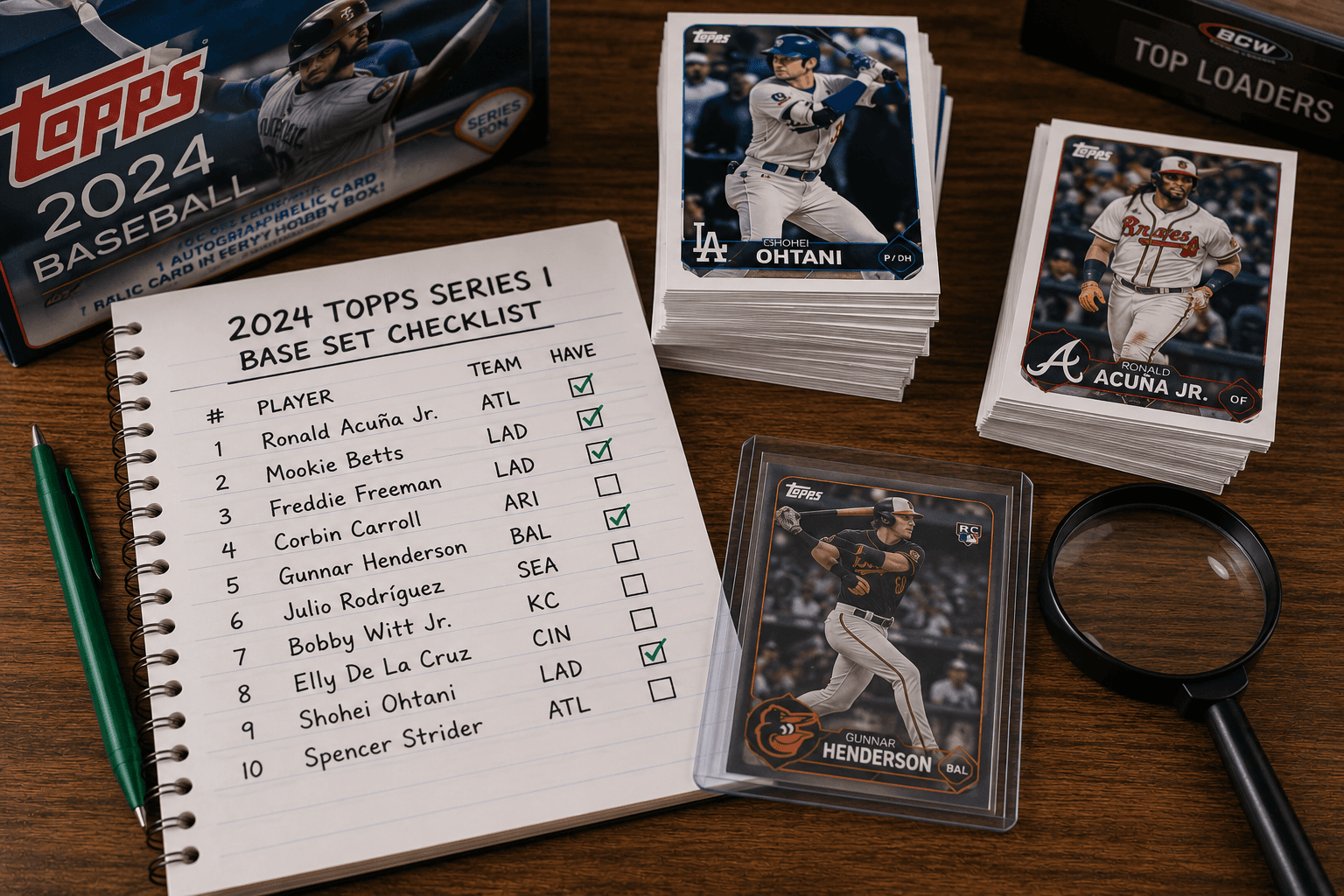
For example, a product might have a 200-card base set. Each card in that set has a number, a player, and a place within the checklist. That structure is what makes it a set instead of just a random collection of cards.
In many cases, collectors focus on the base set first. That is the product's foundation. From there, the hobby adds layers such as parallels, inserts, and premium cards that expand on that base.
Why Card Sets Matter To Collectors
A card on its own can be interesting, but a card in a set has context. That context is what gives it meaning within the hobby.
Collectors use sets to:
- Understand where a card belongs
- Track what they own
- Identify missing cards
- Compare versions of the same card
- Build collections with a clear goal
- Understand how card pricing works
Some collectors try to complete full sets. Others collect one player across a set. Some focus only on certain subsets or parallel versions. No matter the approach, the set is the framework that keeps everything organized.
Without that structure, collecting becomes a matter of guesswork.
How A Release Actually Works
The word “release” refers to the product launch, while the set refers to the group of cards inside that product. This distinction helps clear up a lot of confusion early on.
A typical release includes:
- Manufacturer
- Brand
- Year
- Product name
- Base set checklist
- Additional card types
For example, a release might be structured as a 2026 baseball product with a 200-card base set, plus inserts, parallels, and autograph cards.
Modern releases often include multiple layers beyond the base set. CardWiki focuses heavily on this structure because understanding how these layers connect is one of the biggest challenges collectors face today.
What Usually Lives Inside A Card Set
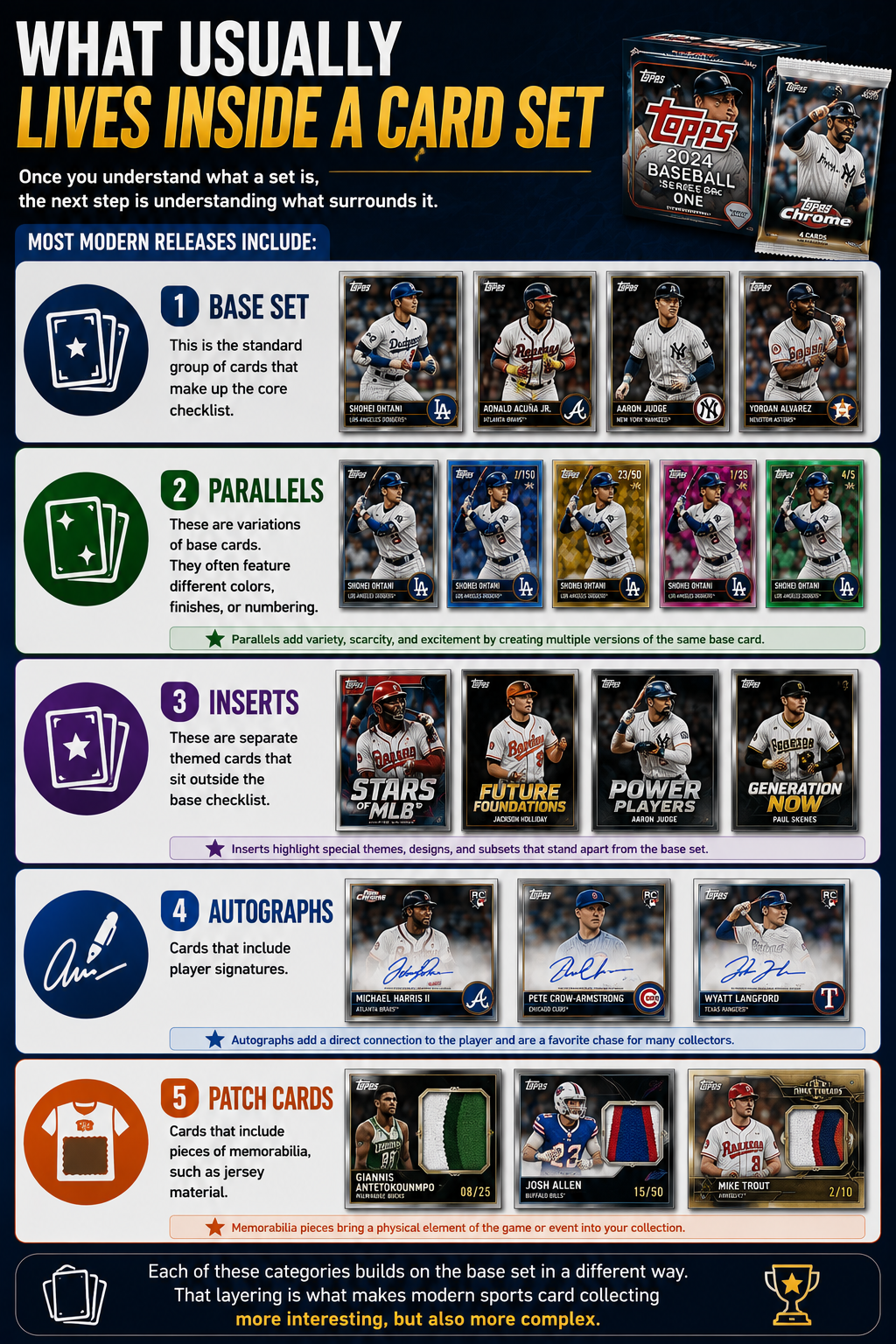
Once you understand what a set is, the next step is understanding what surrounds it.
Most modern releases include:
Base Set
This is the standard group of cards that make up the core checklist.
Parallels
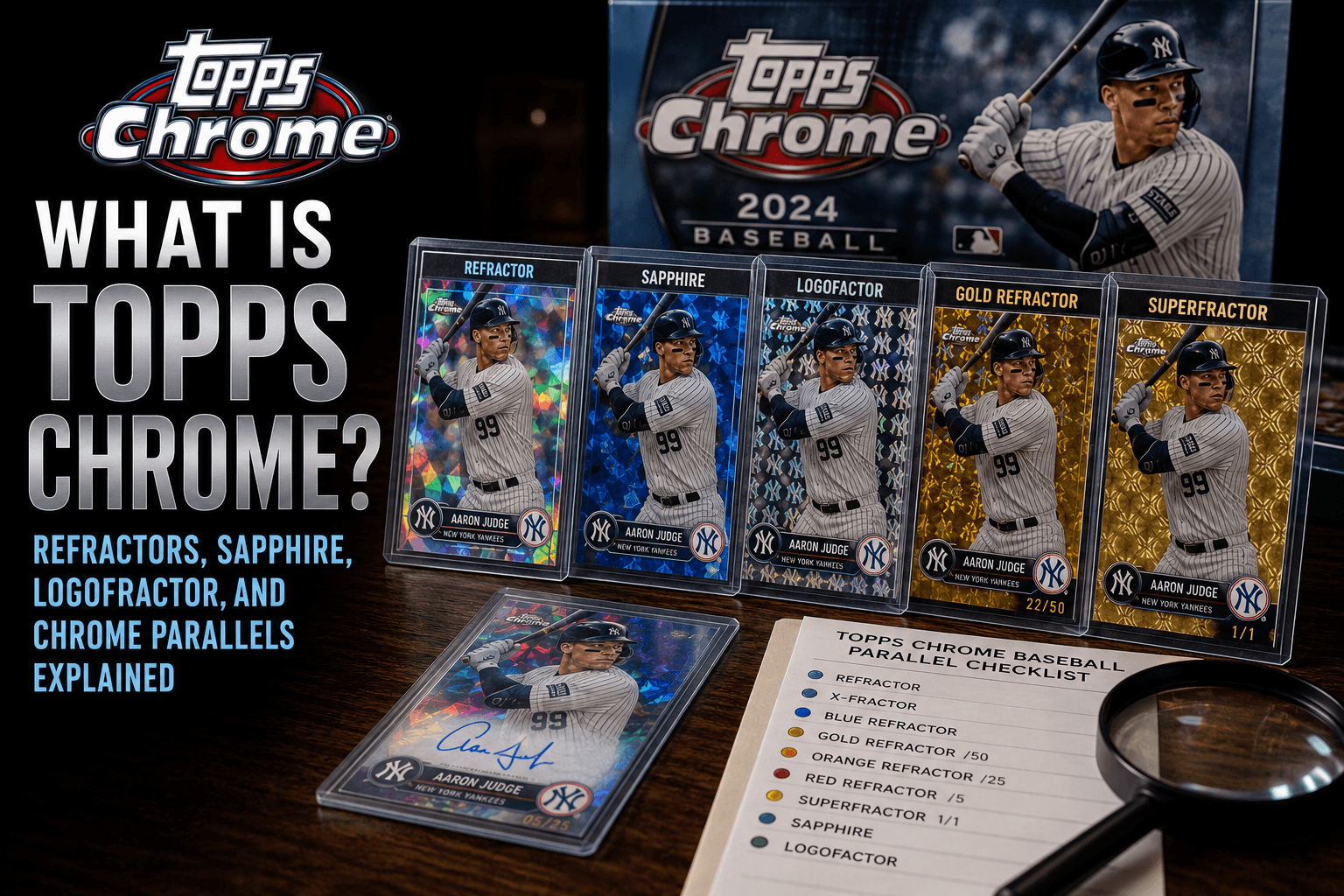
These are variations of base cards. They often feature different colors, finishes, or numbering.
Inserts
These are separate themed cards that sit outside the base checklist.
Autographs
Cards that include player signatures.
Patch Cards
Cards that include pieces of memorabilia, such as jersey material.
Each of these categories builds on the base set in a different way. That layering is what makes modern sports card collecting more interesting, but also more complex.
Base Set Vs Full Product Checklist
One of the most common beginner mistakes is assuming that a “set” includes every card in a release.
That is not always the case.
The base set is usually the numbered checklist that defines the product. The full product includes everything else layered on top, including inserts, parallels, autographs, and memorabilia cards.
Some collectors aim to complete only the base set. Others go after what is sometimes called a master set, which can include multiple versions and variations. The difference matters because it changes what “completion” actually means.
Why Modern Releases Feel So Complicated
Older card sets were often more straightforward. Modern releases are not built that way.
Today, you will run into:
- Multiple series in the same year
- Parallel versions of the same card
- Box-exclusive content
- Short prints and variations
- Different configurations depending on where the product was purchased
This is one of the biggest challenges in the hobby. Information exists, but it is not always structured in a way that makes it easy to understand.
CardWiki addresses this by focusing on clear card identity and structured catalog data so collectors can actually see how everything connects.
How Collectors Usually Approach Sets
There is no single right way to collect, and sets can be approached in different ways.
Some common approaches include:
- Completing the base set
- Collecting one player across a set
- Focusing on a team within a set
- Chasing rare parallels
- Collecting inserts only
The key is to pick a direction that feels manageable. Trying to collect everything in a modern release can get overwhelming fast.
What Makes One Set Different From Another
Not all sets are built the same. They can differ based on:
- Design
- Size of the checklist
- Sport or category
- Brand identity
- Level of rarity
- Type of cards included
Some sets are known for clean, classic designs. Others are built around premium materials or limited runs. Some are entry-level. Others are designed for high-end collectors.
Understanding these differences helps you decide which sets you actually want to collect.
Why Set Structure Matters For Tracking And Organization
As your collection grows, structure becomes more important.
Knowing the set helps you:
- Identify cards correctly
- Track duplicates
- Understand variations
- Compare cards more accurately
CardWiki is built around this idea. The platform focuses on structured catalog data that connects cards to their sets, variations, and supporting information. That makes it easier to organize a collection and understand what you actually own.
Common Beginner Mistakes Around Card Sets
Most beginners run into similar issues early on.
Some common mistakes include:
- Thinking that a set includes every card in a product
- Confusing base cards with parallels
- Ignoring small differences between similar cards
- Not checking the full structure of a release
- Collecting without a clear focus
These mistakes are part of the learning process. The important thing is recognizing them early so you can adjust your approach.
Final Thoughts
So what is a card set?
It is the structured group of cards that defines a release. It is the foundation on which everything else builds. Once you understand how sets work, the rest of the hobby starts to make a lot more sense.
Modern collecting can feel complicated, but it becomes much easier when you understand how base sets, parallels, inserts, and premium cards all fit together. That structure turns a random stack of cards into an organized, meaningful one.
If you are starting to learn how sets and releases work, you can track your collection for free on CardWiki and explore a catalog built to make sense of modern trading cards.
FAQs About Card Sets
What Is A Card Set?
A card set is a group of cards released together as part of a product, usually organized as a checklist.
What Is The Difference Between A Card Set And A Release?
A release is the product launch, while the set is the group of cards inside that product.
What Is A Base Set?
The base set is the standard numbered checklist that forms the foundation of a product.
Are Parallels Part Of The Set?
Parallels are variations of base cards and are related to the set, though they are often treated separately.
What Is A Checklist In Card Collecting?
A checklist is a list of cards included in a set or product.
Why Do Modern Card Sets Feel So Complicated?
Modern sets include multiple layers such as parallels, inserts, and variations, which add complexity.
Do You Need To Complete A Full Set?
No, many collectors focus on specific players, teams, or card types rather than on full sets.
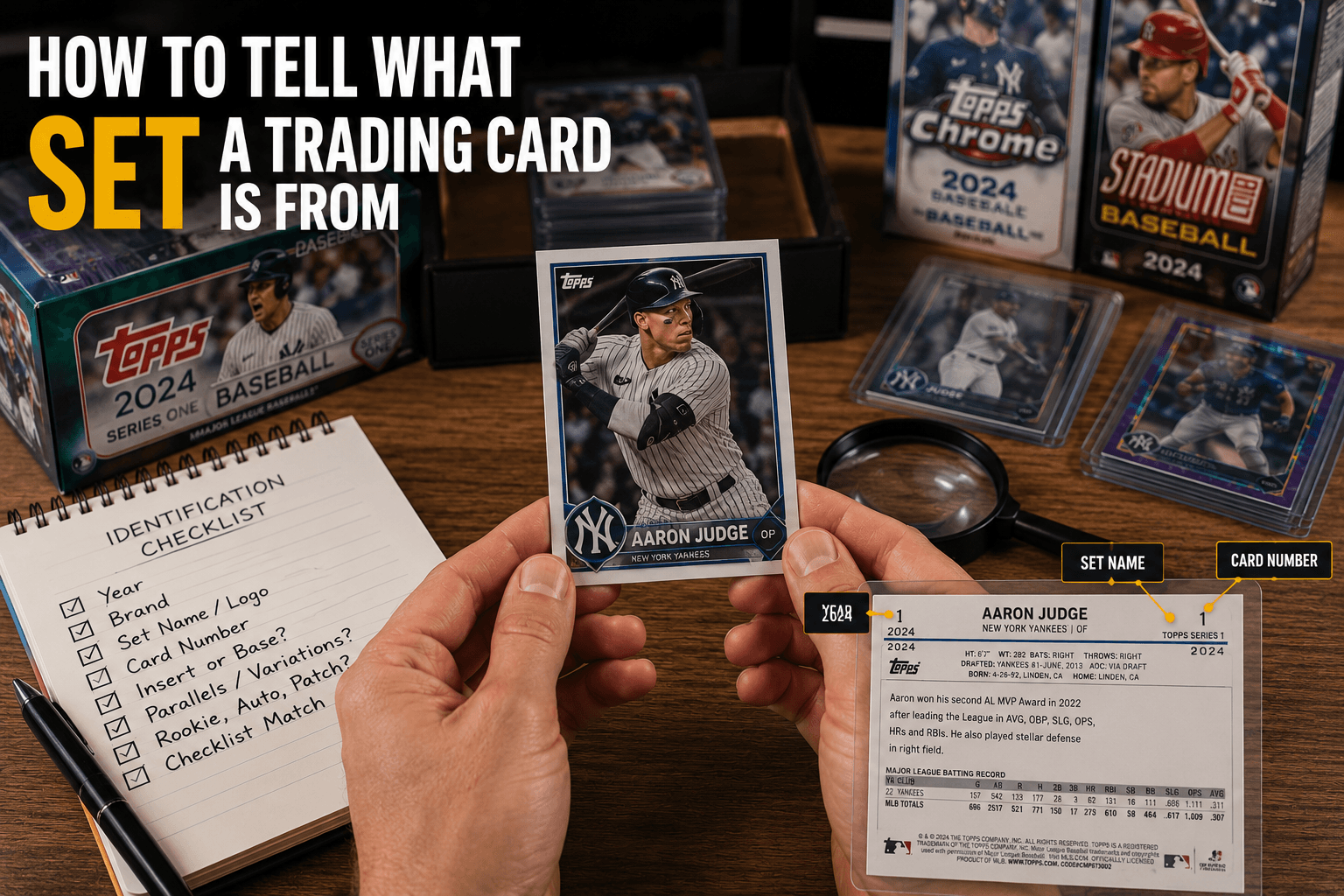
How Can I Identify What Set My Card Is From?
Look at the brand, year, design, and card number to determine the set.
Why Is Understanding Sets Important?
Understanding sets helps you organize your collection, identify cards correctly, and make better decisions about collecting.