What Is A Checklist In Trading Cards?
Learn the trading card checklist meaning, why checklists matter, and how collectors use them to track sets, cards, inserts, parallels, and missing pieces.
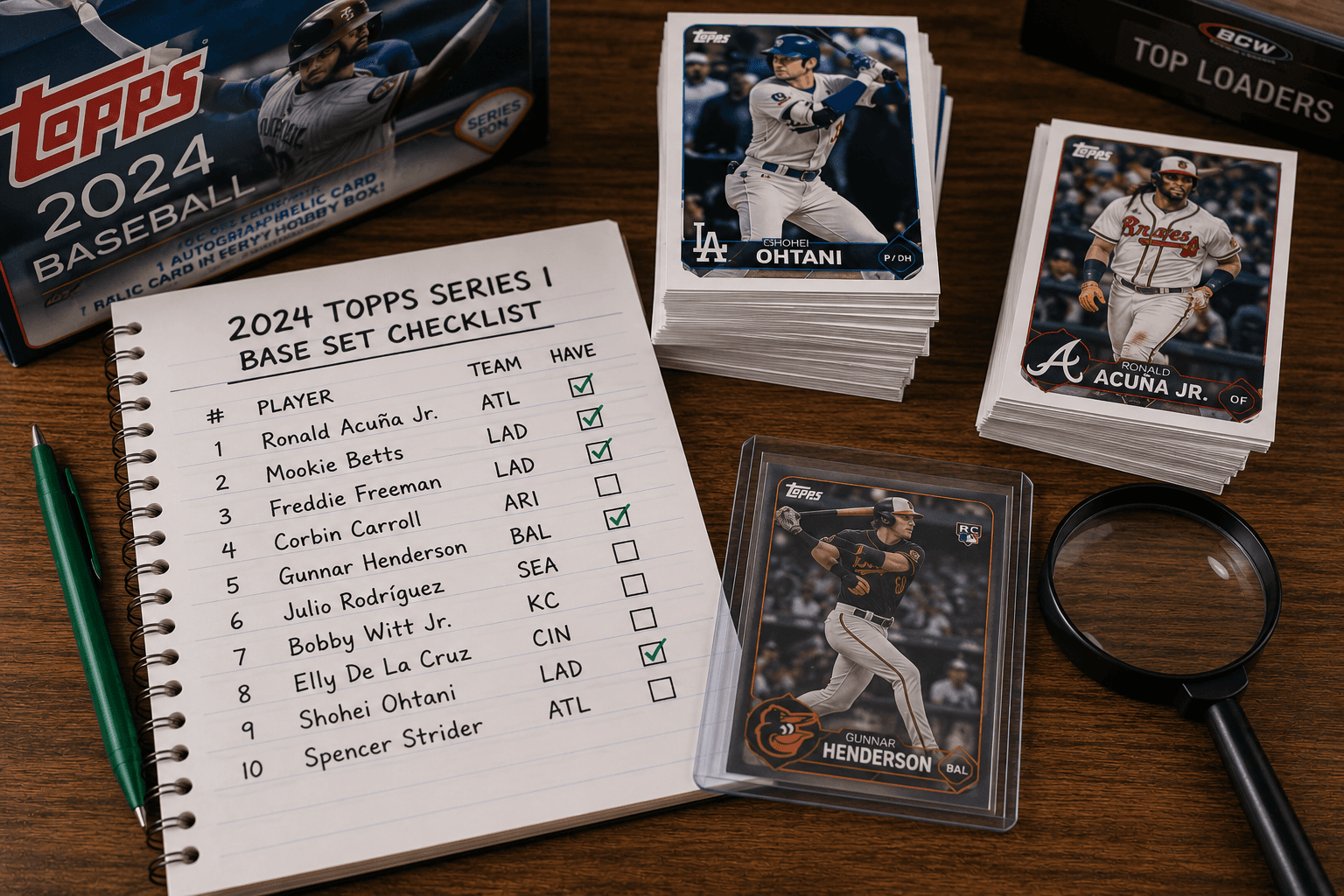
A trading card checklist is a list of cards included in a set, release, insert group, or product. It tells collectors what cards exist, where they belong, and what they may still need to complete a goal.
That sounds simple, but checklists are one of the most important parts of collecting. Without a checklist, it is hard to know whether you have the full base set, which inserts belong to the release, which rookie cards are included, or how many parallels exist for a specific card.
A checklist gives structure to the hobby. It turns a box of cards into something organized.
What Is A Trading Card Checklist?
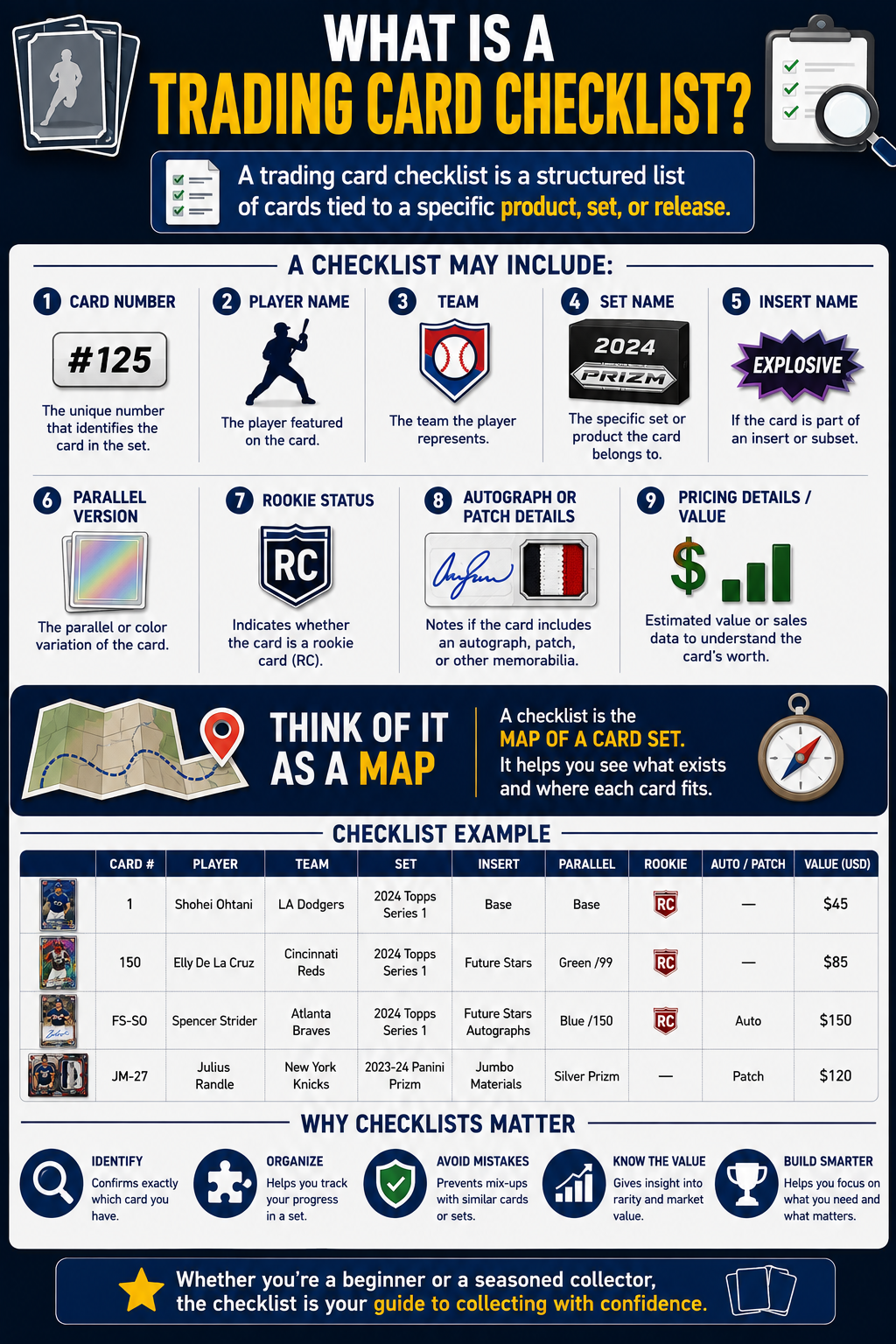
A trading card checklist is a structured list of cards tied to a specific product, set, or release.
A checklist may include:
- Card Number
- Player Name
- Team
- Set Name
- Insert Name
- Parallel Version
- Rookie Status
- Autograph Or Patch Details
- Pricing Details / Value
For beginners, the easiest way to think about it is this: a checklist is the map of a card set. It helps you see what exists and where each card fits.
Why Checklists Matter To Collectors
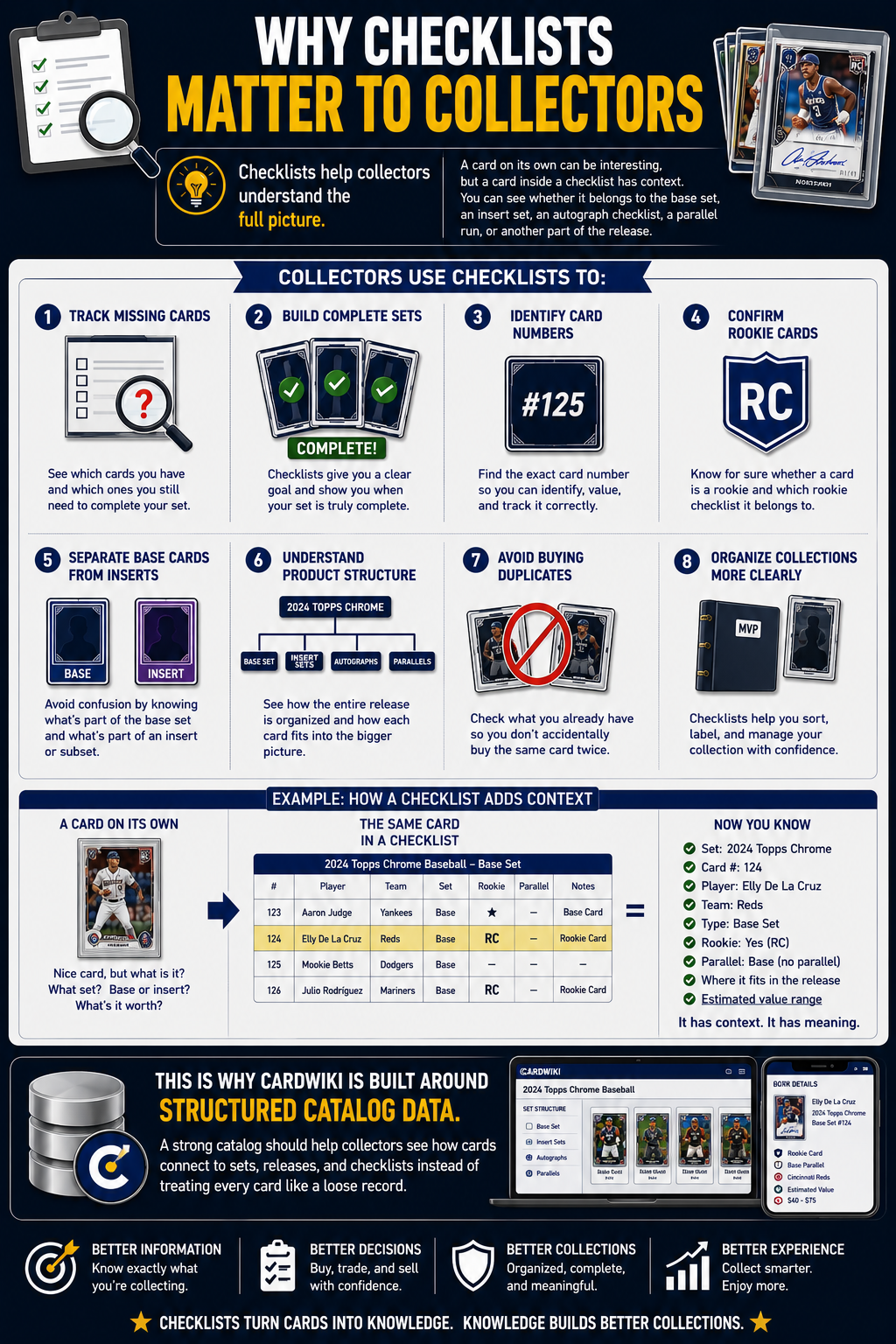
Checklists help collectors understand the full picture.
A card on its own can be interesting, but a card inside a checklist has context. You can see whether it belongs to the base set, an insert set, an autograph checklist, a parallel run, or another part of the release.
Collectors use checklists to:
- Track Missing Cards
- Build Complete Sets
- Identify Card Numbers
- Confirm Rookie Cards
- Separate Base Cards From Inserts
- Understand Product Structure
- Avoid Buying Duplicates
- Organize Collections More Clearly
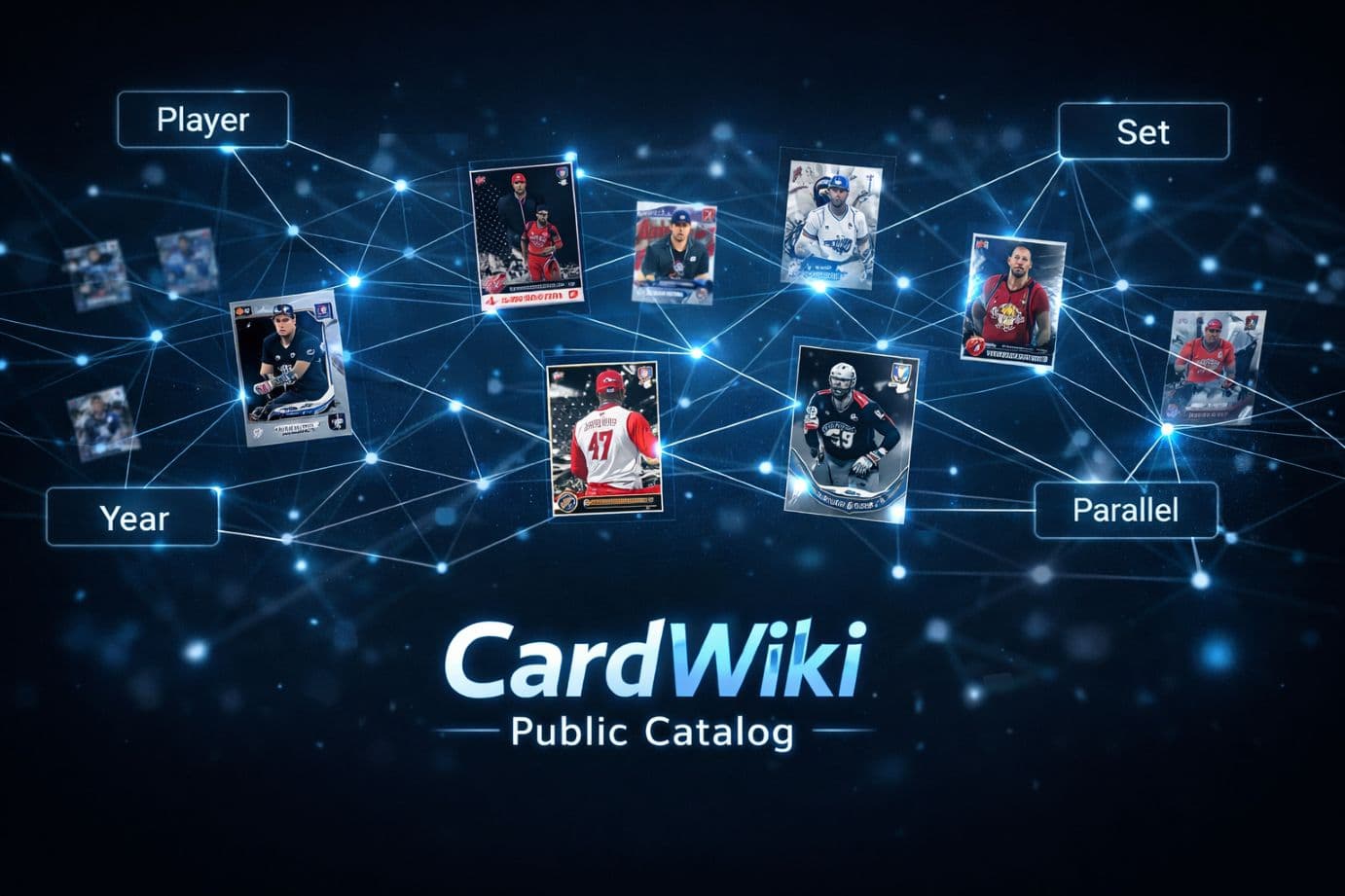
This is why CardWiki is built around structured catalog data. A strong catalog should help collectors see how cards connect to sets, releases, and checklists instead of treating every card like a loose record.
Base Checklist Vs Full Product Checklist
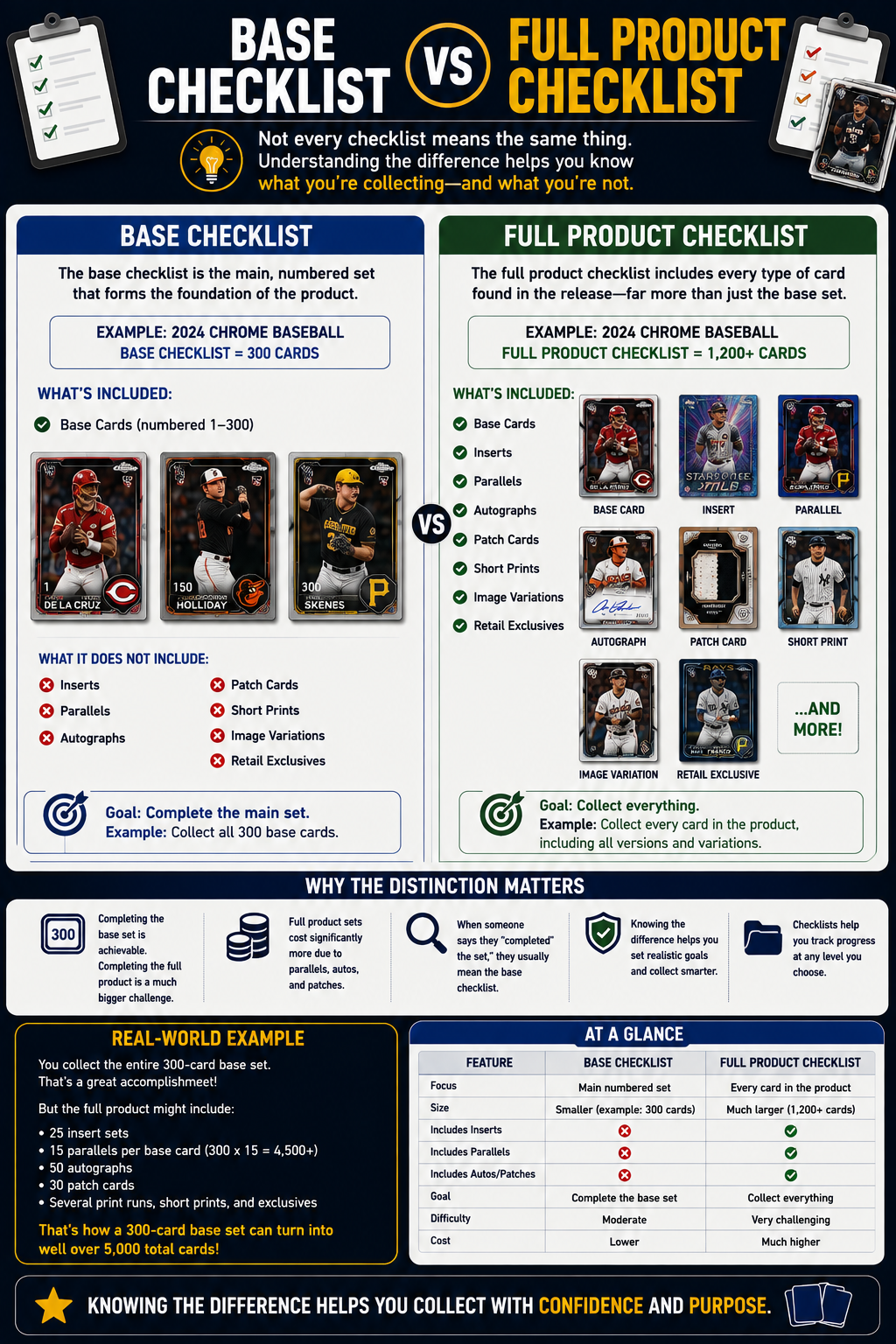
One thing beginners should know is that not every checklist means the same thing.
A base checklist usually refers to the main numbered set. For example, a product may have a 300-card base checklist.
A full product checklist may include much more, such as:
- Base Cards
- Inserts
- Parallels
- Autographs
- Patch Cards
- Short Prints
- Image Variations
- Retail Exclusives
This distinction matters. When someone says they completed a set, they may only mean the base checklist. They usually do not mean they collected every parallel, insert, auto, and patch card in the entire product.
How Card Numbers Work In A Checklist
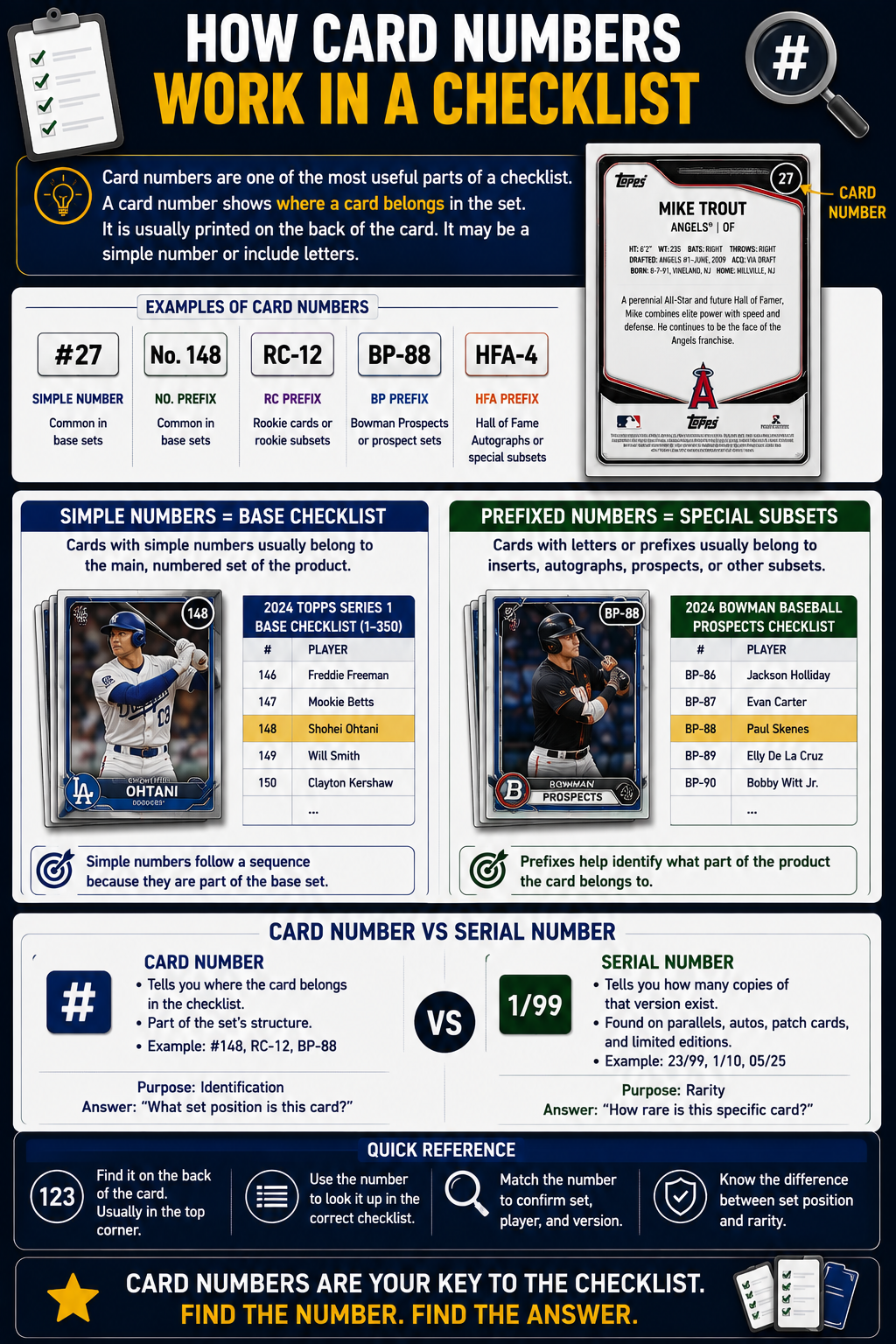
Card numbers are one of the most useful parts of a checklist.
A card number shows where a card belongs in the set. It is usually printed on the back of the card. It may be a simple number or include letters.
Examples include:
- #27
- No. 148
- RC-12
- BP-88
- HFA-4
- AU-15
Simple numbers often belong to the base checklist. Lettered prefixes often point to inserts, autographs, prospects, or special subsets.
A card number is not the same as a serial number. A card number tells you where the card belongs in the checklist. A serial number tells you how many copies of that version exist.
How Collectors Use Checklists
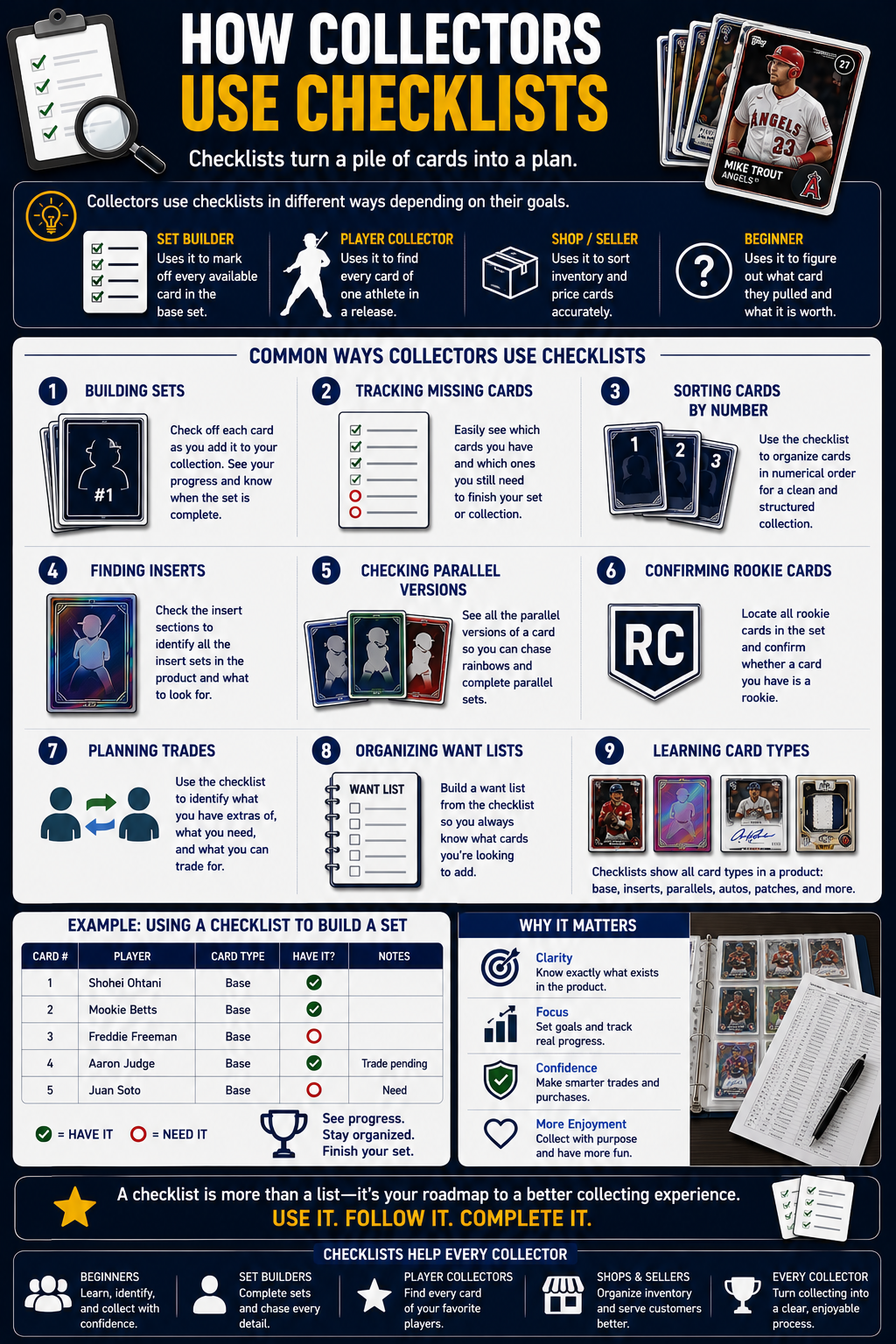
Collectors use checklists in different ways depending on their goals.
A set builder may use a checklist to mark off every available card in the base set. A player collector may use it to find every card of one athlete in a release. A shop may use it to sort inventory. A beginner may use it to figure out what card they pulled.
Common uses include:
- Building Sets
- Tracking Missing Cards
- Sorting Cards By Number
- Finding Inserts
- Checking Parallel Versions
- Confirming Rookie Cards
- Planning Trades
- Organizing Want Lists
- Types of Trading Cards
A checklist is useful because it helps turn sports collecting into a clear process.
Why Modern Checklists Can Get Complicated
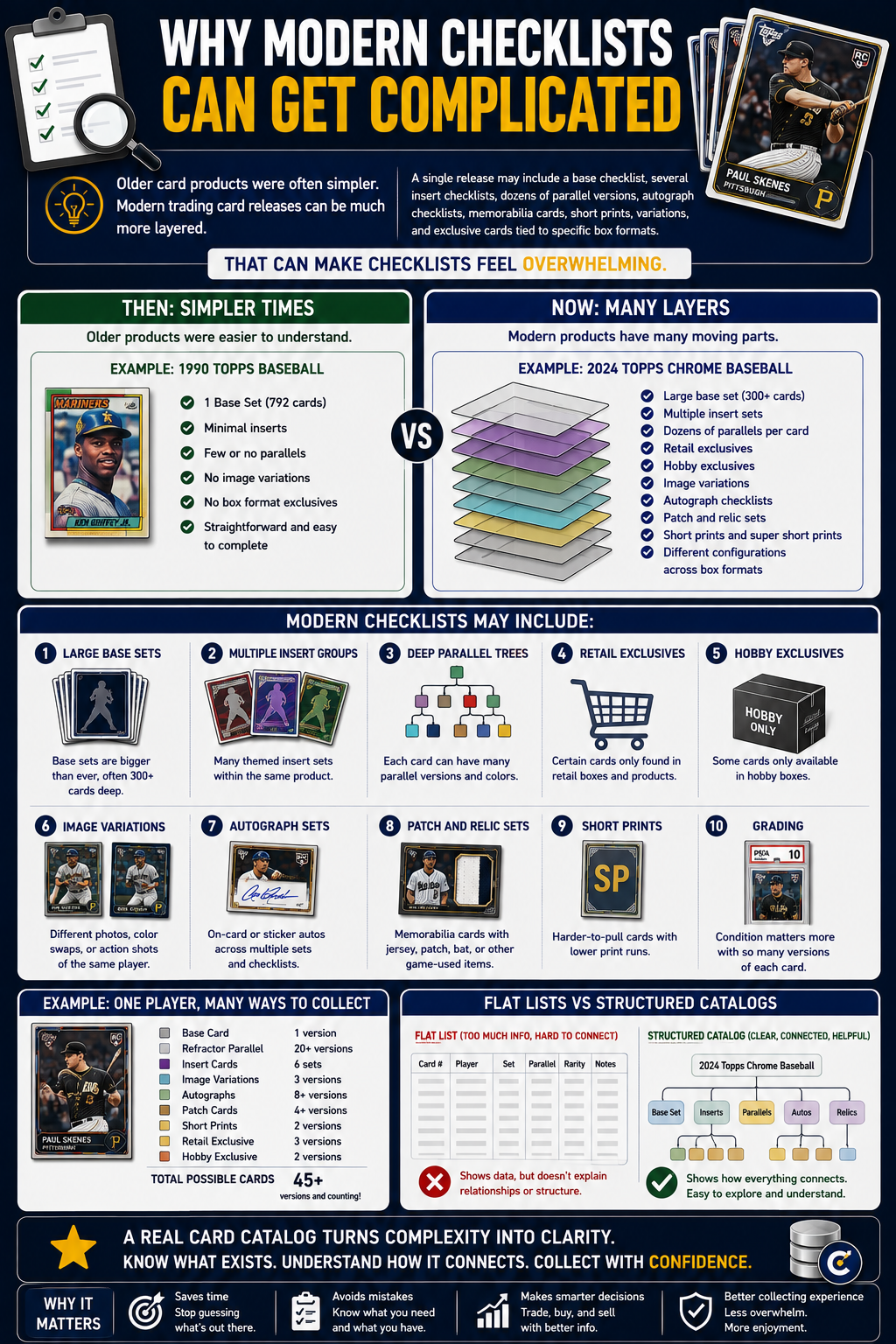
Older card products were often simpler. Modern trading card releases can be much more layered.
A single release may include a base checklist, several insert checklists, dozens of parallel versions, autograph checklists, memorabilia cards, short prints, variations, and exclusive cards tied to specific box formats.
That can make checklists feel overwhelming.
Modern checklists may include:
- Large Base Sets
- Multiple Insert Groups
- Deep Parallel Trees
- Retail Exclusives
- Hobby Exclusives
- Image Variations
- Autograph Sets
- Patch And Relic Sets
- Short Prints
- Grading
This is why a real card catalog matters. A flat list may show what cards exist, but a structured catalog helps explain how those cards relate to each other.
What Is An Insert Checklist?
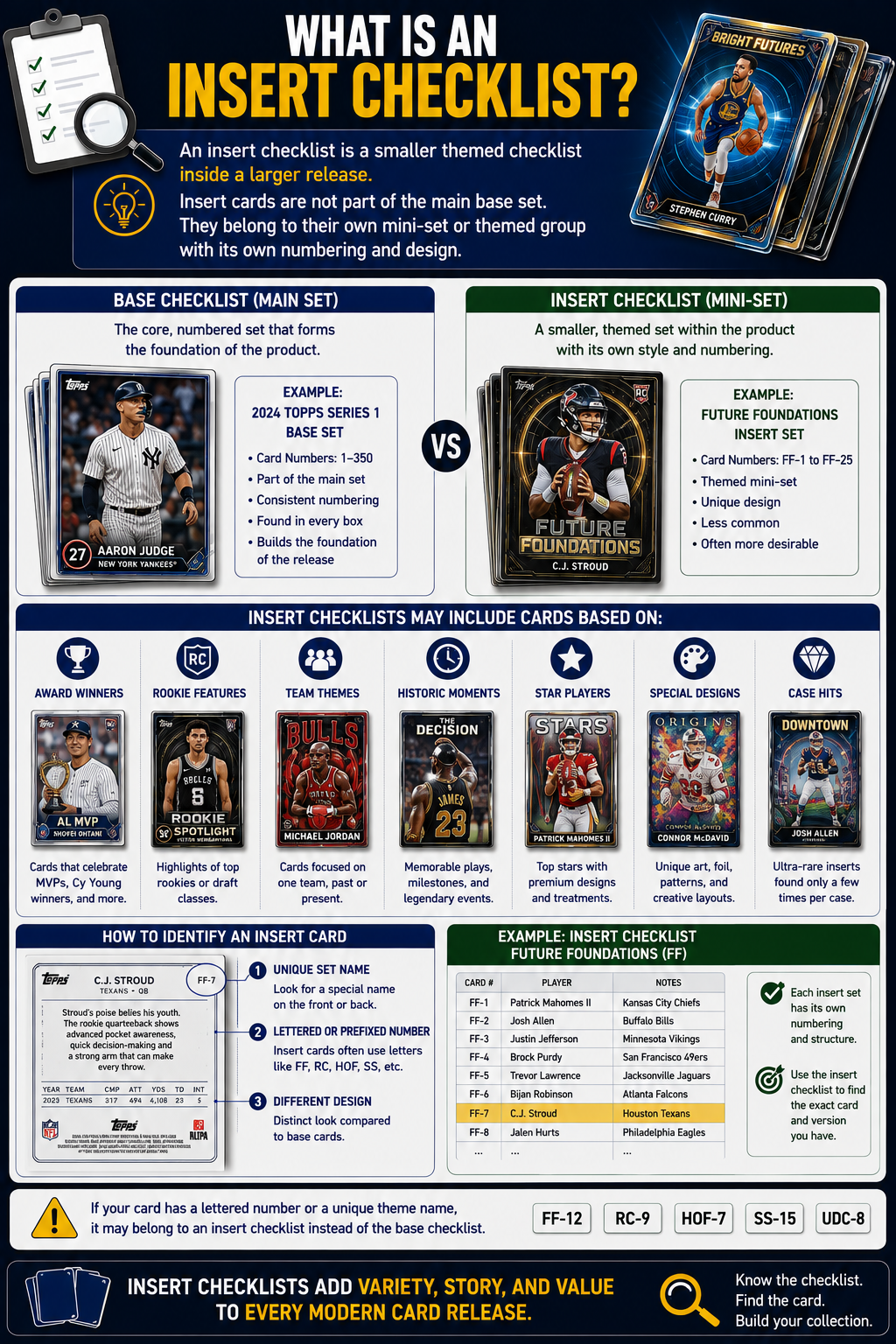
An insert checklist is a smaller themed checklist inside a larger release.
An insert card is not usually part of the main base set. It belongs to its own mini-set or themed group. Insert checklists often have special names, designs, and card numbering.
An insert checklist may include cards based on:
- Award Winners
- Rookie Features
- Team Themes
- Historic Moments
- Star Players
- Special Designs
- Case Hits
If your card has a lettered number or a unique theme name, it may belong to an insert checklist rather than the base checklist.
What Is A Parallel Checklist?
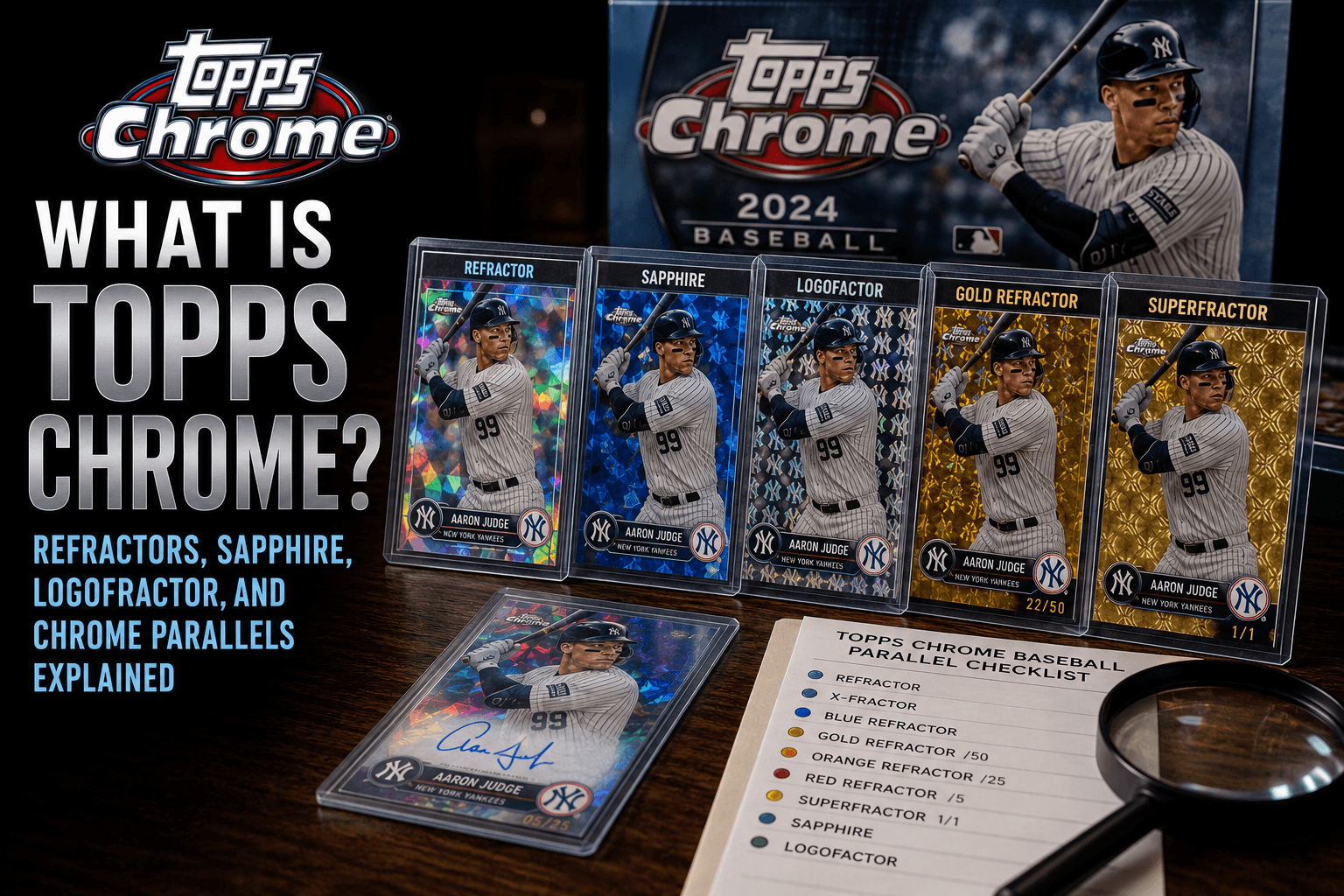
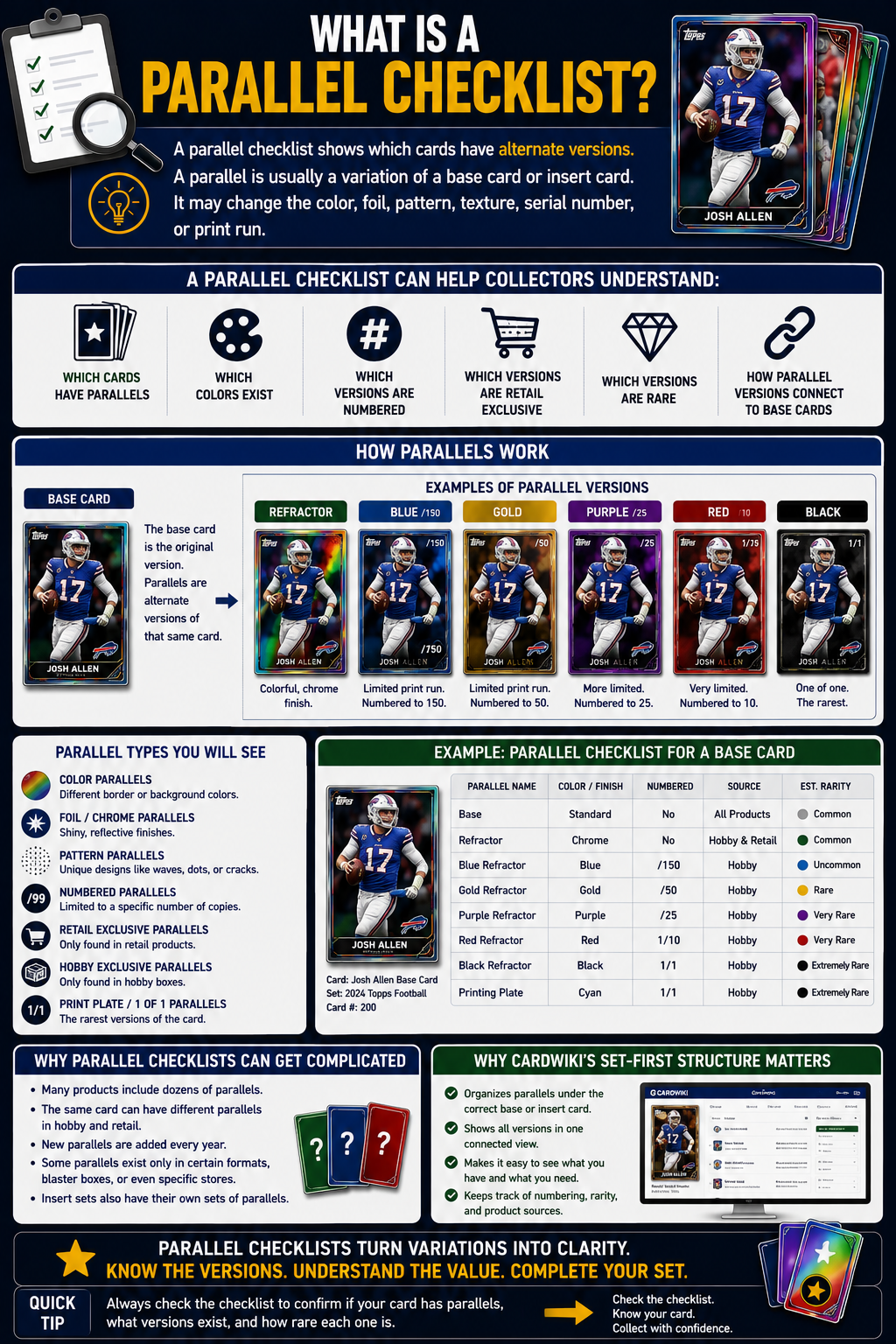
A parallel checklist shows which cards have alternate versions.
A parallel is usually a variation of a base card or insert card. It may change the color, foil, pattern, texture, serial number, or print run.
A parallel checklist can help collectors understand:
- Which Cards Have Parallels
- Which Colors Exist
- Which Versions Are Numbered
- Which Versions Are Retail Exclusive
- Which Versions Are Rare
- How Parallel Versions Connect To Base Cards
Parallel checklists can get complicated because modern products often include many color and finish variations. That is one reason CardWiki’s set-first structure is so useful for collectors.
What Is An Autograph Or Patch Checklist?
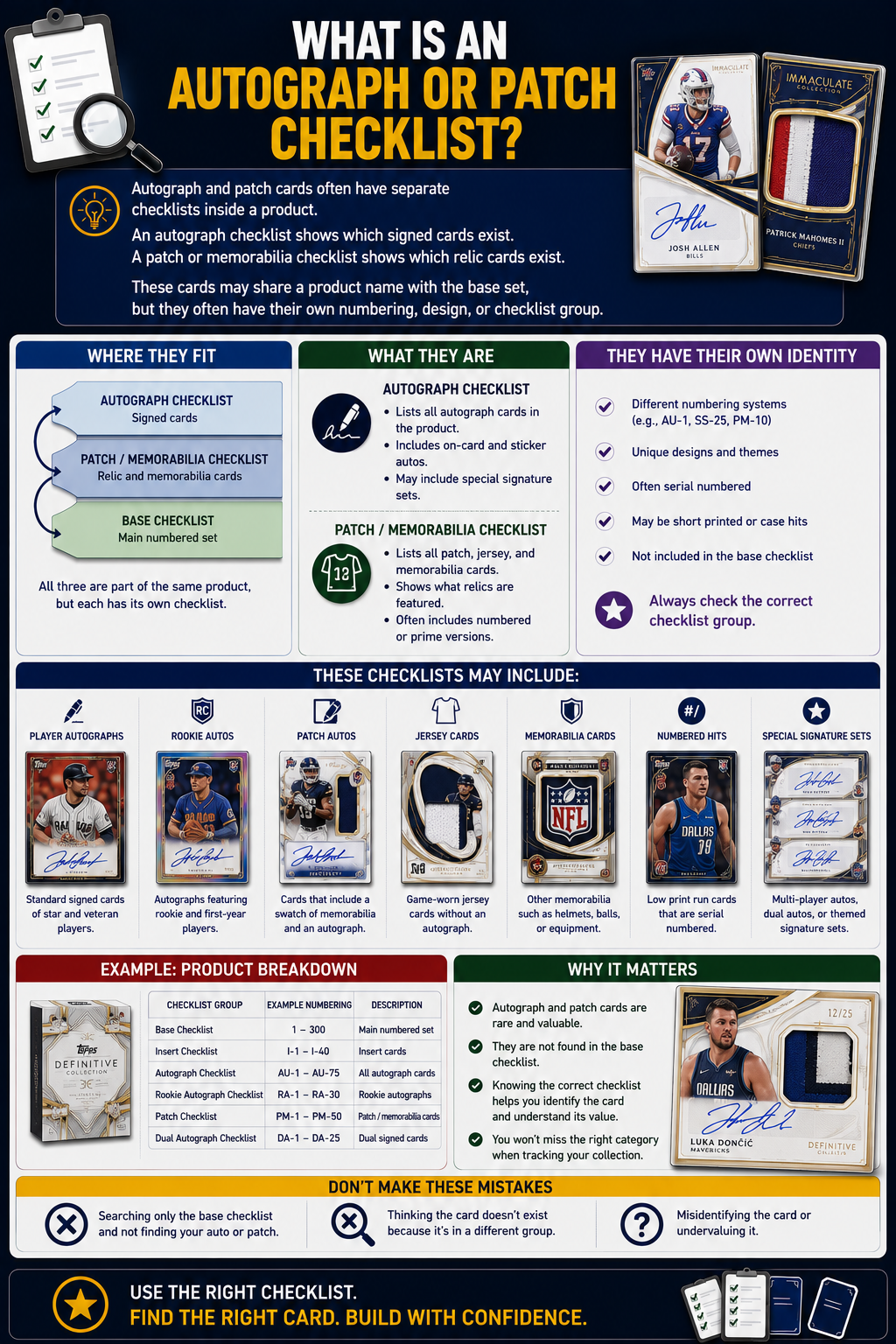
Autograph and patch cards often have separate checklists inside a product.
An autograph checklist shows which signed cards exist. A patch or memorabilia checklist shows which relic cards exist. These cards may share a product name with the base set, but they often have their own numbering, design, or checklist group.
These checklists may include:
- Player Autographs
- Rookie Autos
- Patch Autos
- Jersey Cards
- Memorabilia Cards
- Numbered Hits
- Special Signature Sets
This matters because an autograph card may not be listed in the base checklist. If you only search the base set, you may miss the correct category.
Checklist Vs Catalog: What Is The Difference?
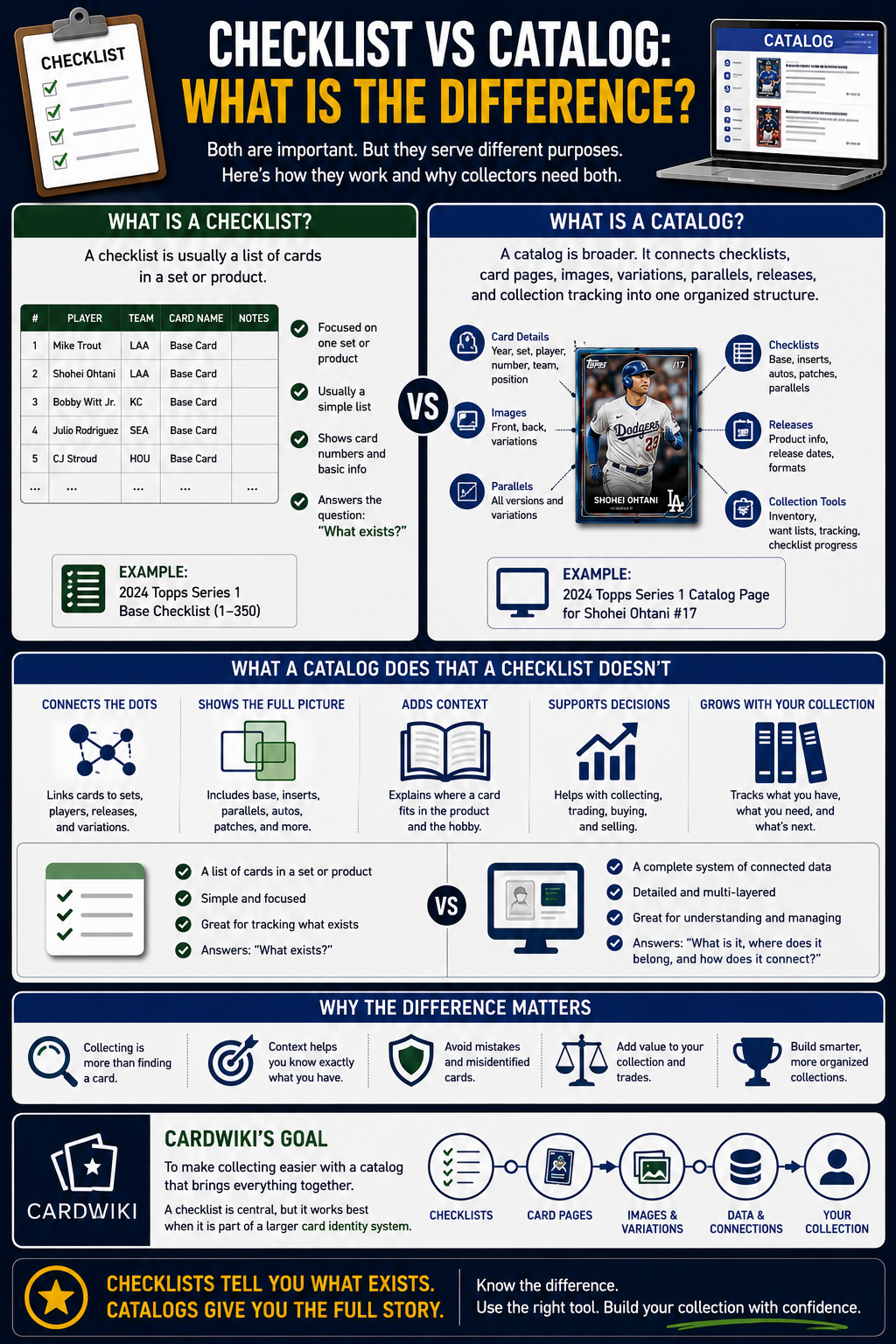
A checklist is usually a list of cards in a set or product.
A catalog is broader. It should connect checklists, card pages, images, variations, parallels, releases, and collection tracking into one organized structure.
A checklist tells you what exists. A catalog helps you understand what it is, where it belongs, and how it connects.
That difference matters because collectors need more than names and numbers. They need context.
CardWiki’s goal is to make that context easier to use. A checklist is central, but it works best when it is part of a larger card identity system.
How To Use A Checklist To Organize Your Collection
A checklist can make organization much easier.
Start with the product or set you are working on. Then compare your cards against the checklist and mark what you own.
A simple workflow looks like this:
- Identify The Set
- Find The Correct Checklist
- Match The Card Number
- Confirm The Player
- Separate Base Cards From Inserts
- Check For Parallels Or Variations
- Mark Cards You Own
- Create A Missing Cards List
- Track The Cards In Your Collection
This works whether you are building a full set, sorting a box, or trying to figure out what cards you pulled from a pack.
Common Beginner Mistakes With Checklists
Checklists are helpful, but beginners can still run into confusion.
Common mistakes include:
- Assuming The Base Checklist Includes Every Card
- Confusing Inserts With Base Cards
- Mixing Up Card Numbers And Serial Numbers
- Ignoring Parallel Checklists
- Missing Autograph Or Patch Checklists
- Using The Wrong Product Year
- Searching Only By Player Name
- Forgetting To Track Missing Cards
These mistakes are normal. The key is to slow down and use the checklist as a guide instead of guessing.
Why Checklists Are Central To CardWiki
CardWiki is built around the idea that collectors need structure.
A checklist is one of the clearest forms of structure in the hobby. It shows what belongs in a release, how cards are numbered, and where each card fits. But CardWiki takes that further by connecting checklists to card records, set pages, variations, scans, holdings, and collector tools.
That helps collectors answer bigger questions:
- What Cards Exist In This Set?
- Which Ones Do I Own?
- Which Ones Am I Missing?
- Is This Card Base, Insert, Parallel, Auto, Or Patch?
- How Does This Card Connect To Other Versions?
That is the difference between a simple checklist and a living catalog.
Final Thoughts
So, what is a checklist in trading cards?
It is the organized list of cards in a set, release, insert group, or product. It helps collectors know what exists, what they own, what they are missing, and how each card fits into the bigger picture.
For beginners, learning how to use a checklist is one of the simplest ways to become a more confident collector. It helps you identify cards, build sets, avoid duplicates, and understand modern product structure.
CardWiki is built around that same idea: when cards have structure, collectors have clarity.
If you want a cleaner way to understand sets, checklists, and what you own, CardWiki can help you explore structured catalog pages and track your collection with more confidence.
FAQs
What Is A Trading Card Checklist?
A trading card checklist is a list of cards included in a set, release, product, insert group, or card category.
What Does Trading Card Checklist Meaning Refer To?
Trading card checklist meaning refers to the organized list that shows what cards exist in a specific set or release.
Is A Checklist The Same As A Set?
Not exactly. A set is the group of cards, while the checklist is the list that shows which cards are included.
What Is A Base Checklist?
A base checklist is the main numbered list of standard cards in a product.
What Is An Insert Checklist?
An insert checklist is a separate themed list of cards inside a larger release.
What Is A Parallel Checklist?
A parallel checklist shows which cards have alternate versions with different colors, finishes, numbering, or rarity levels.
Why Do Collectors Use Checklists?
Collectors use checklists to track what they own, identify missing cards, build sets, compare versions, and organize collections.
Can CardWiki Help With Trading Card Checklists?
Yes. CardWiki is built to connect cards to sets, releases, checklists, variations, and collection tracking.