Why Some Trading Cards Are Valuable (And Others Aren’t)
Learn why some trading cards become valuable while others stay common. A beginner-friendly guide to rarity, demand, condition, player significance, and more.

If you are new to collecting, one of the first things you notice is that two cards can look almost the same and have wildly different prices. One might sell for a few dollars. Another might sell for hundreds, thousands, or even more. That can feel confusing at first, especially when both cards feature the same player, the same team, or even the same photo.
The truth is that card value is not random. It usually comes down to a mix of factors working together. Rarity matters. Demand matters. Condition matters. The player matters. The card’s place in the hobby matters too. Some cards become centerpieces because they sit at the intersection of scarcity, popularity, and meaning. Others stay common because there are too many of them, not enough demand, or not enough significance attached to that specific card.
That is also why collecting gets more interesting the more you learn. Value is not only about cardboard. It is about context. Once you understand what collectors actually look for, the hobby starts making a lot more sense.
Why Card Value Is Not Just About The Player
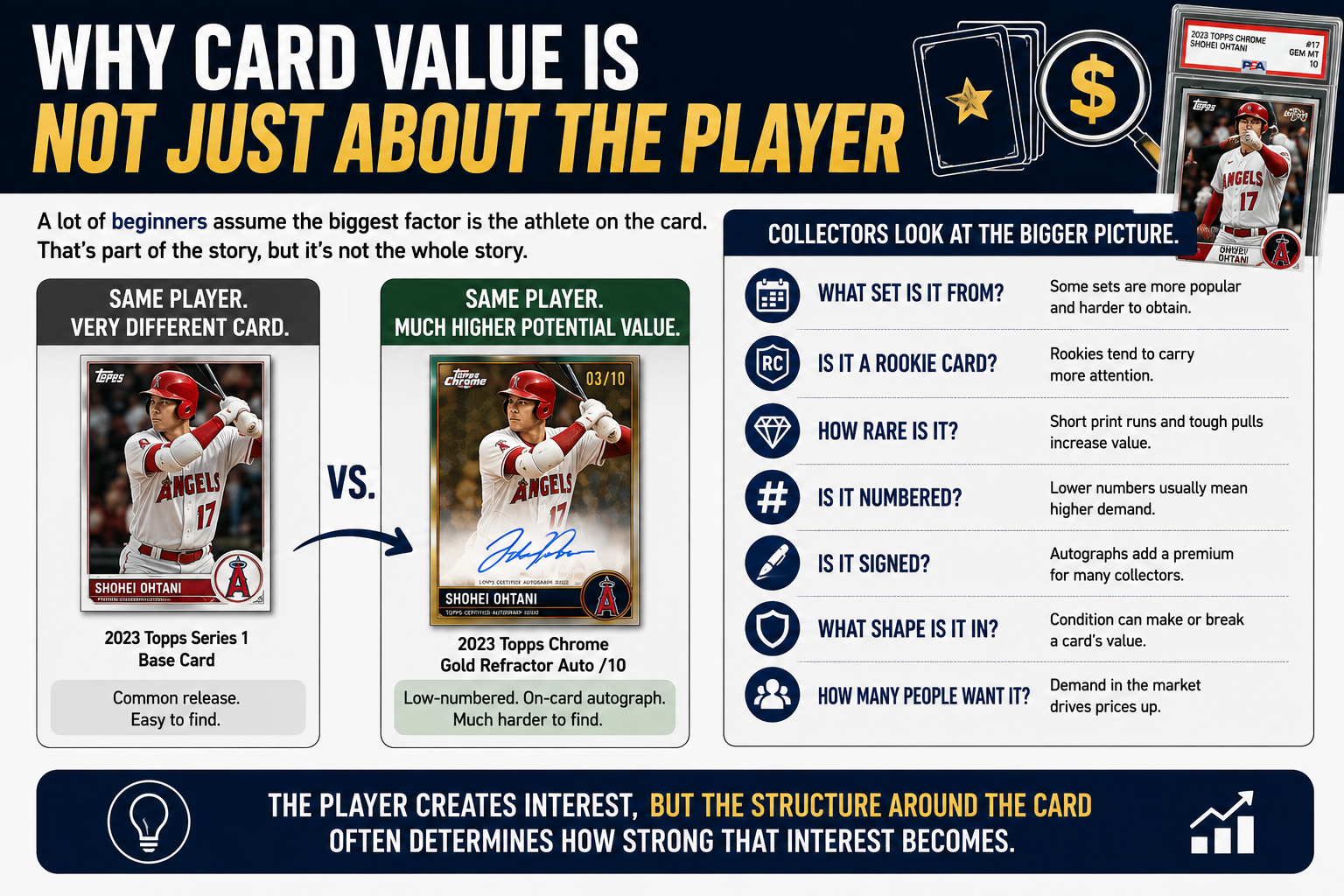
A lot of beginners assume the biggest factor is the athlete on the card. That is part of the story, but it is not the whole story.
A popular player can appear on hundreds of different cards. Not all of them will be valuable. One base card from a common release may be easy to find. Another card of the same player might be a low-numbered parallel, an on-card autograph, or a key rookie card from an important set. Same athlete, very different card.
That is why collectors do not only ask, “Who is on the card?” They also ask:
- What Set Is It From?
- Is It A Rookie Card?
- How Rare Is It?
- Is It Numbered?
- Is It Signed?
- What Shape Is It In?
- How Many People Want It?
The player creates interest, but the structure around the card often determines how strong that interest becomes.
Rarity Is One Of The Biggest Drivers Of Value
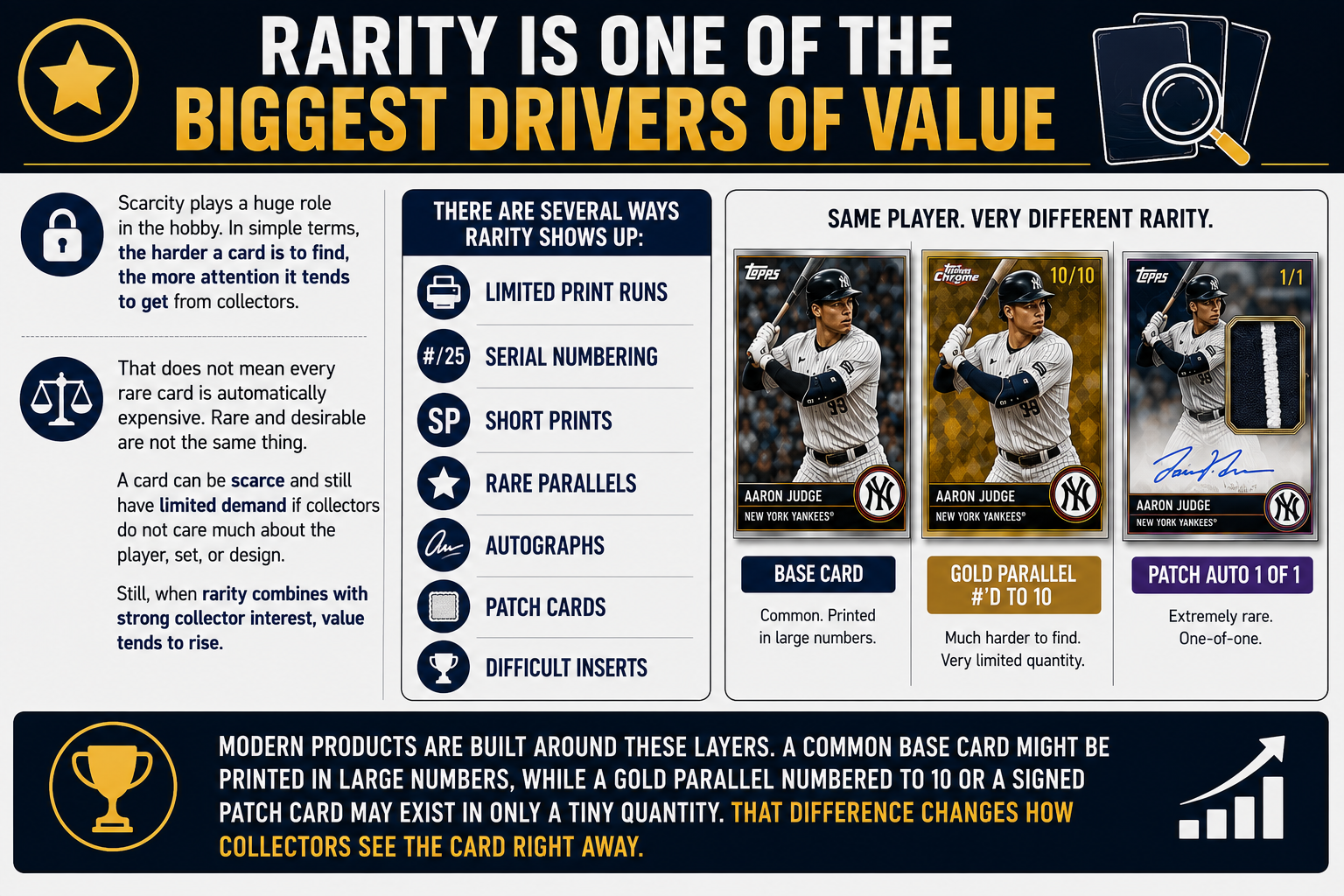
Scarcity plays a huge role in the hobby. In simple terms, the harder a card is to find, the more attention it tends to get from collectors.
That does not mean every rare card is automatically expensive. Rare and desirable are not the same thing. A card can be scarce and still have limited demand if collectors do not care much about the player, set, or design. Still, when rarity combines with strong collector interest, value tends to rise.
There are several ways rarity shows up:
- Limited Print Runs
- Serial Numbering
- Short Prints
- Rare Parallels
- Autographs
- Patch Cards
- Difficult Inserts
Modern products are built around these layers. A common base card might be printed in large numbers, while a gold parallel numbered to 10 or a signed patch card may exist in only a tiny quantity. That difference changes how collectors see the card right away.
Demand Is What Turns Rarity Into Real Value
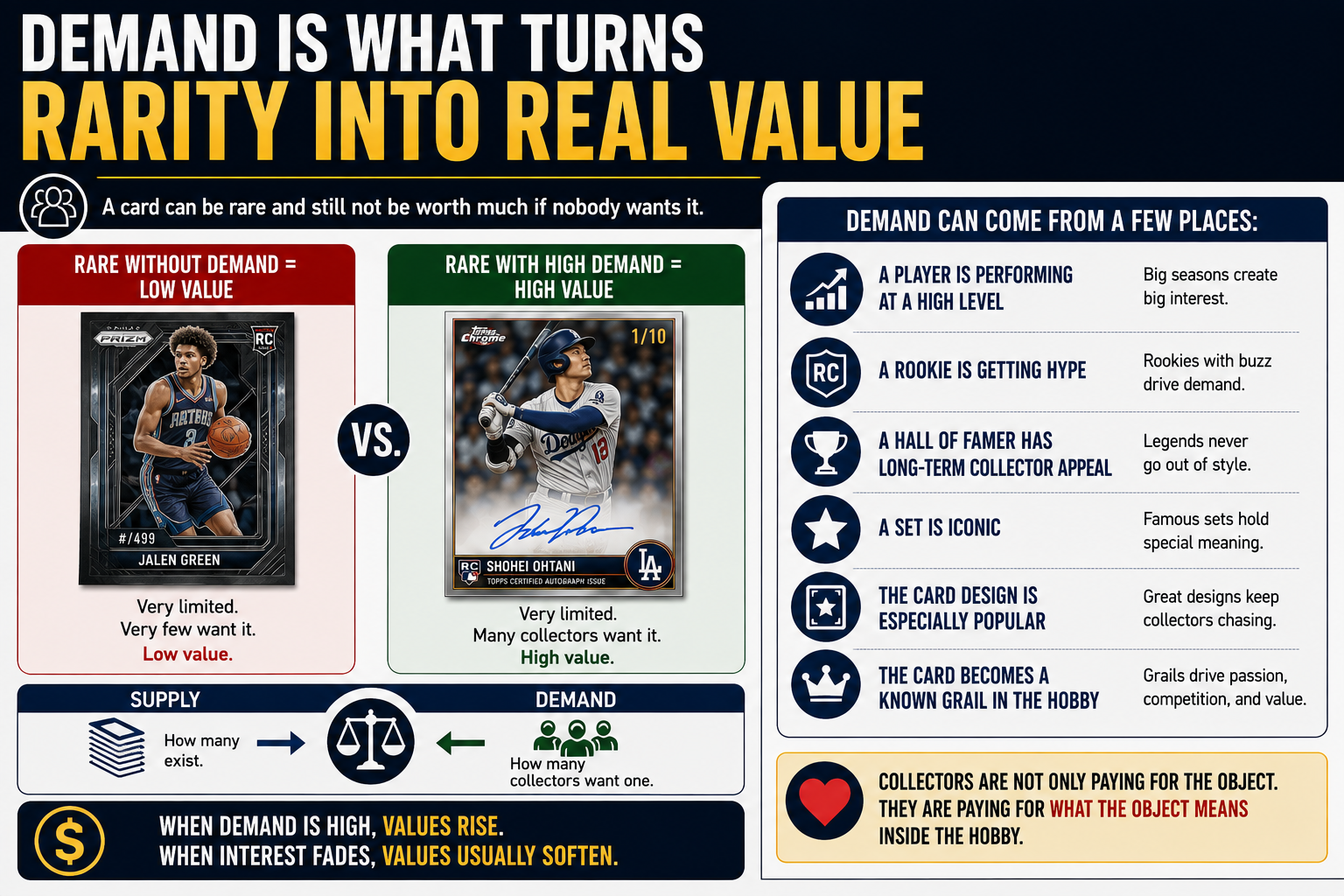
A card can be rare and still not be worth much if nobody wants it.
That is one of the most important lessons in sports card collecting. Value comes from the relationship between supply and demand. Supply tells you how many exist. Demand tells you how many collectors want one.
When demand is high, values rise. When interest fades, values usually soften. That is why star players, iconic rookies, all-time greats, and culturally important cards tend to stay relevant longer than random low-print cards from forgettable releases.
Demand can come from a few places:
- A Player Is Performing At A High Level
- A Rookie Is Getting Hype
- A Hall Of Famer Has Long-Term Collector Appeal
- A Set Is Iconic
- The Card Design Is Especially Popular
- The Card Becomes A Known Grail In The Hobby
Collectors are not only paying for the object. They are paying for what the object means inside the hobby.
Rookie Cards Usually Get More Attention
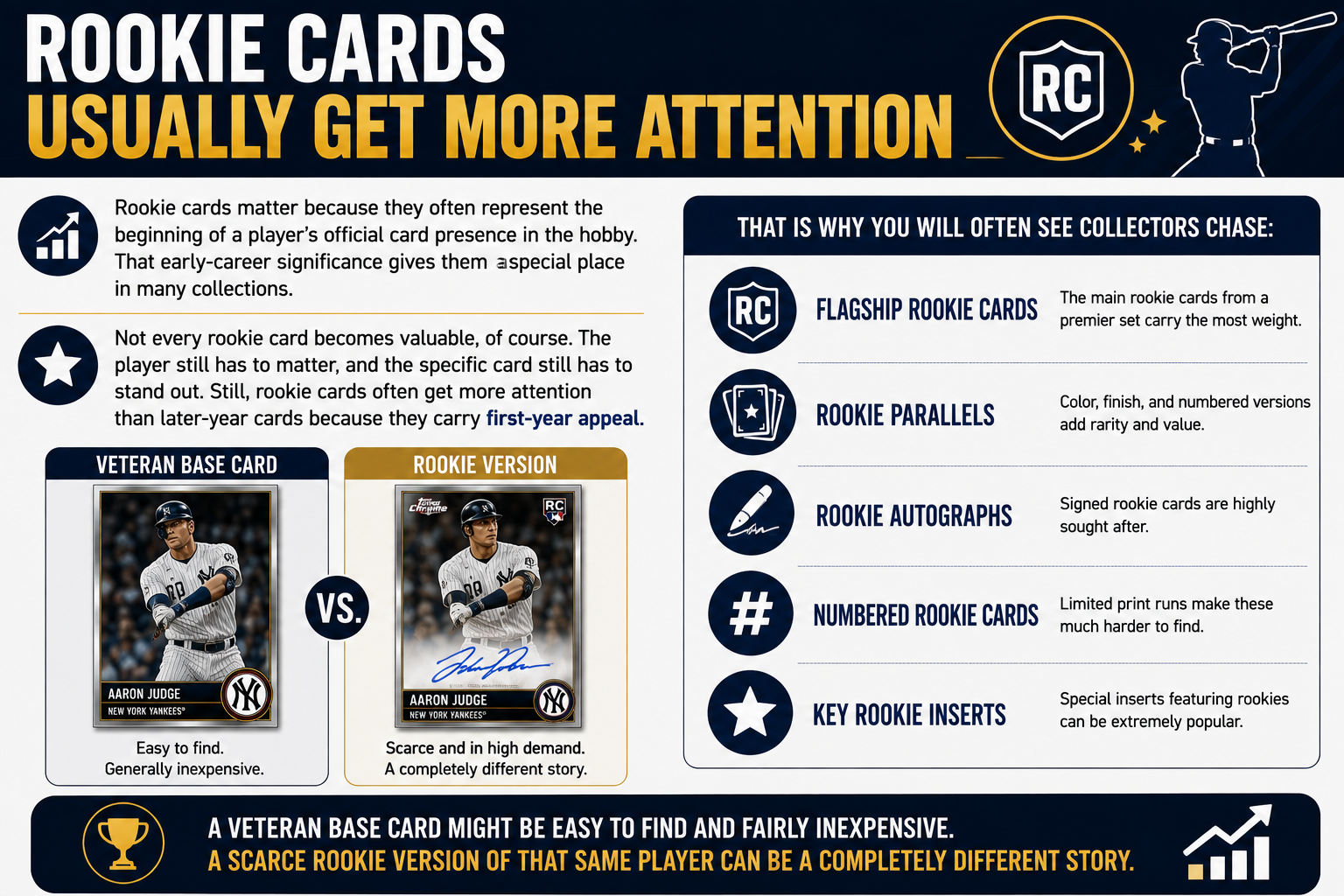
Rookie cards matter because they often represent the beginning of a player’s official card presence in the hobby. That early-career significance gives them a special place in many collections.
Not every rookie card becomes valuable, of course. The player still has to matter, and the specific card still has to stand out. Still, rookie cards often get more attention than later-year cards because they carry first-year appeal.
That is why you will often see collectors chase:
- Flagship Rookie Cards
- Rookie Parallels
- Rookie Autographs
- Numbered Rookie Cards
- Key Rookie Inserts
A veteran base card might be easy to find and fairly inexpensive. A scarce rookie version of that same player can be a completely different story.
Condition Changes Everything
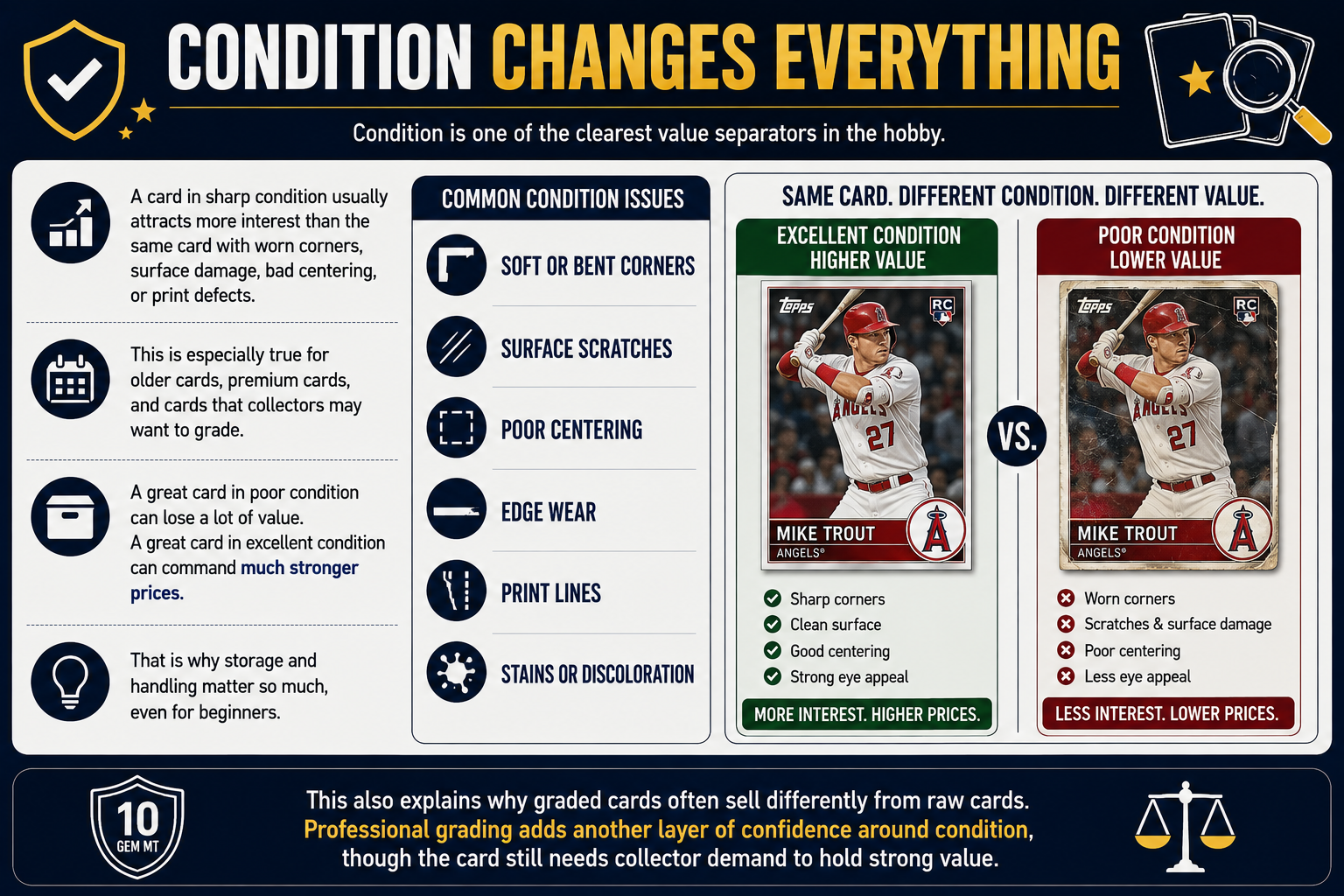
Condition is one of the clearest value separators in the hobby.
A card in sharp condition usually attracts more interest than the same card with worn corners, surface damage, bad centering, or print defects. This is especially true for older cards, premium cards, and cards that collectors may want to grade.
Common condition issues include:
- Soft Or Bent Corners
- Surface Scratches
- Poor Centering
- Edge Wear
- Print Lines
- Stains Or Discoloration
A great card in poor condition can lose a lot of value. A great card in excellent condition can command much stronger prices. That is why storage and handling matter so much, even for beginners.
This also explains why graded cards often sell differently from raw cards. Professional grading adds another layer of confidence around condition, though the card still needs collector demand to hold strong value.
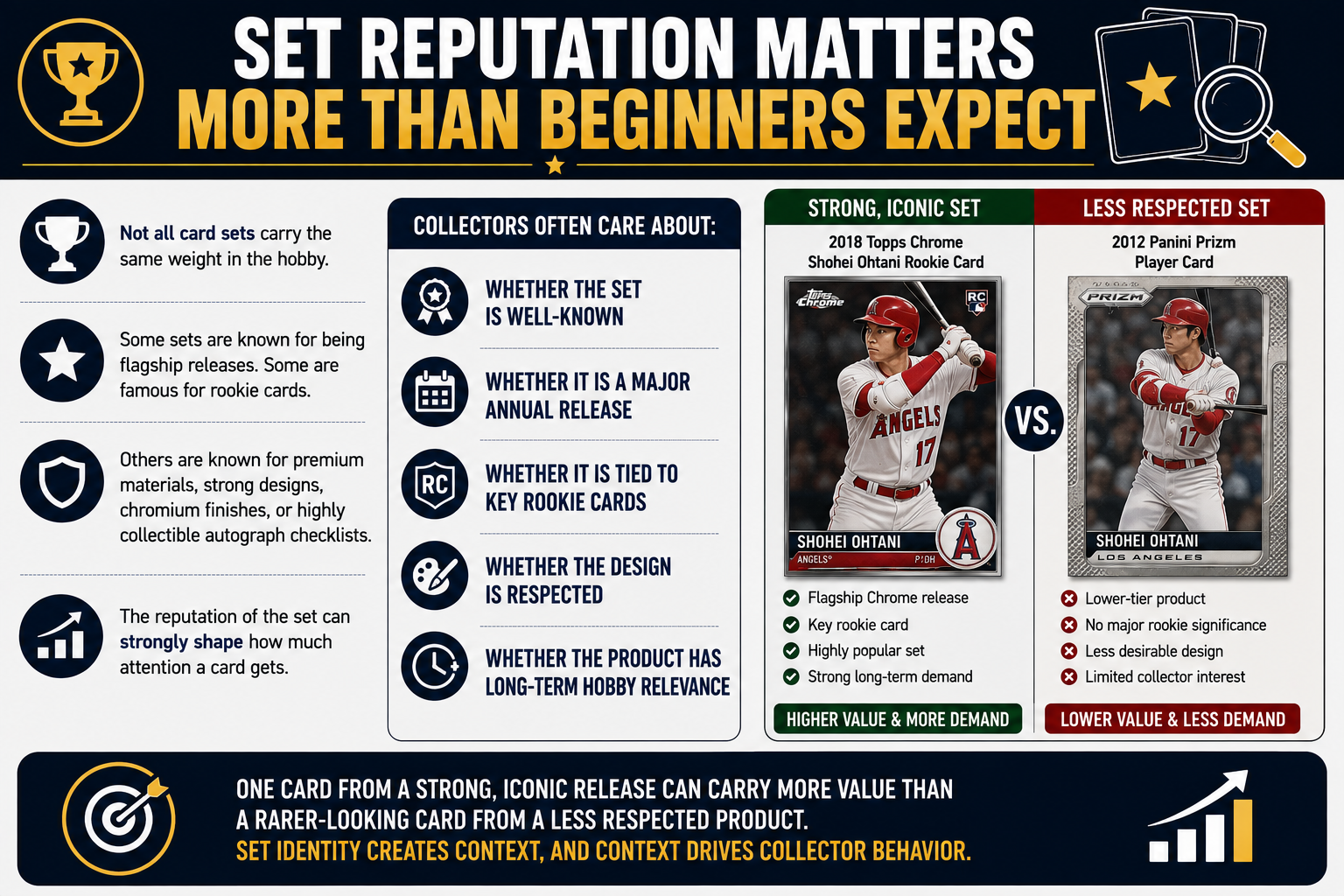
Set Reputation Matters More Than Beginners Expect
Not all card sets carry the same weight in the hobby.
Some sets are known for being flagship releases. Some are famous for rookie cards. Others are known for premium materials, strong designs, chromium finishes, or highly collectible autograph checklists. The reputation of the set can strongly shape how much attention a card gets.
Collectors often care about:
- Whether The Set Is Well-Known
- Whether It Is A Major Annual Release
- Whether It Is Tied To Key Rookie Cards
- Whether The Design Is Respected
- Whether The Product Has Long-Term Hobby Relevance
This is why one card from a strong, iconic release can carry more value than a rarer-looking card from a less respected product. Set identity creates context, and context drives collector behavior.
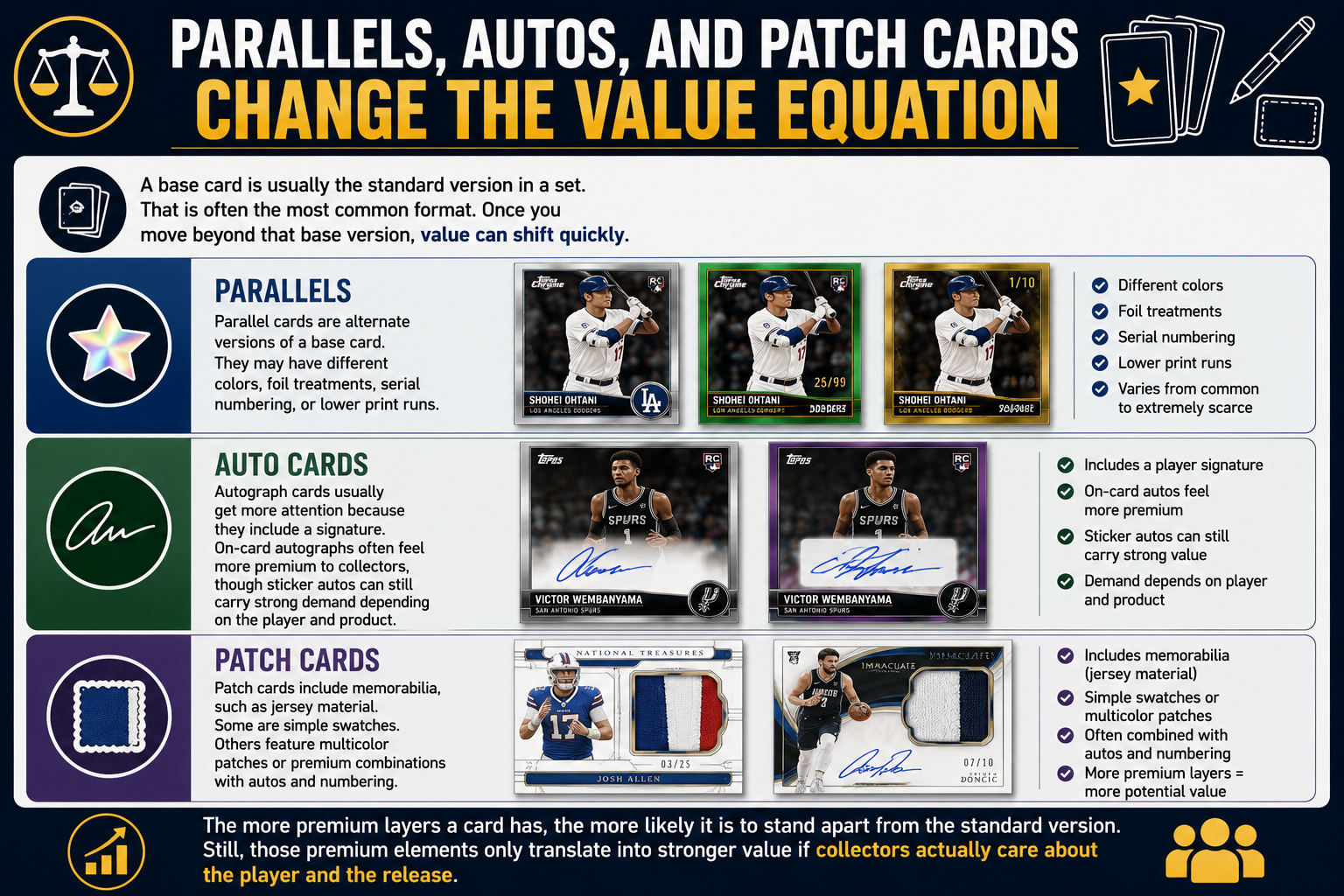
Parallels, Autos, And Patch Cards Change The Value Equation
A base card is usually the standard version in a set. That is often the most common format. Once you move beyond that base version, value can shift quickly.
Parallels
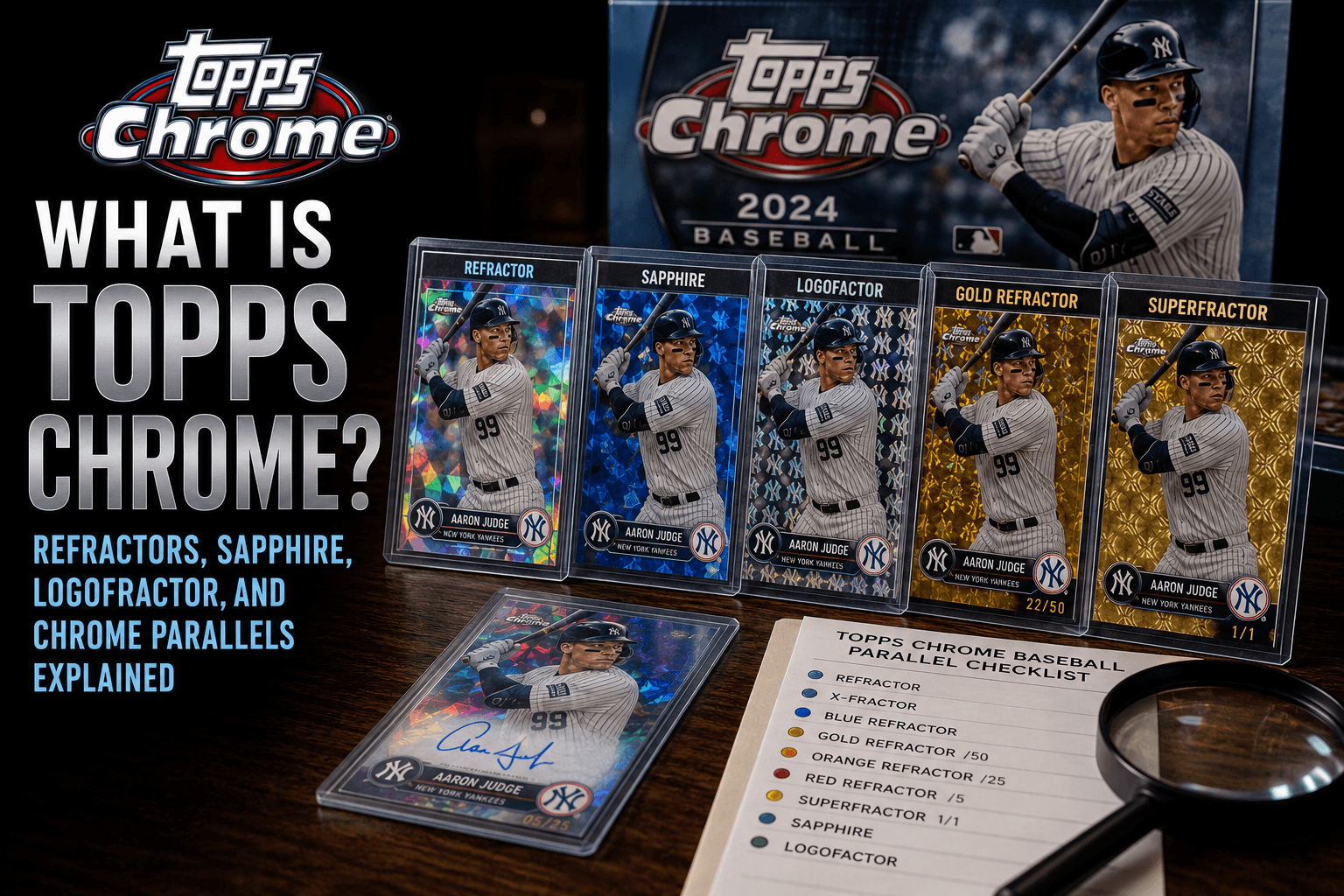
Parallel cards are alternate versions of a base card. They may have different colors, foil treatments, serial numbering, or lower print runs. Some parallels are common. Others are extremely scarce.
Auto Cards
Autograph cards usually get more attention because they include a signature. On-card autographs often feel more premium to collectors, though sticker autos can still carry strong demand depending on the player and product.
Patch Cards
Patch cards include memorabilia, such as jersey material. Some are simple swatches. Others feature multicolor patches or premium combinations with autos and numbering.
The more premium layers a card has, the more likely it is to stand apart from the standard version. Still, those premium elements only translate into stronger value if collectors actually care about the player and the release.
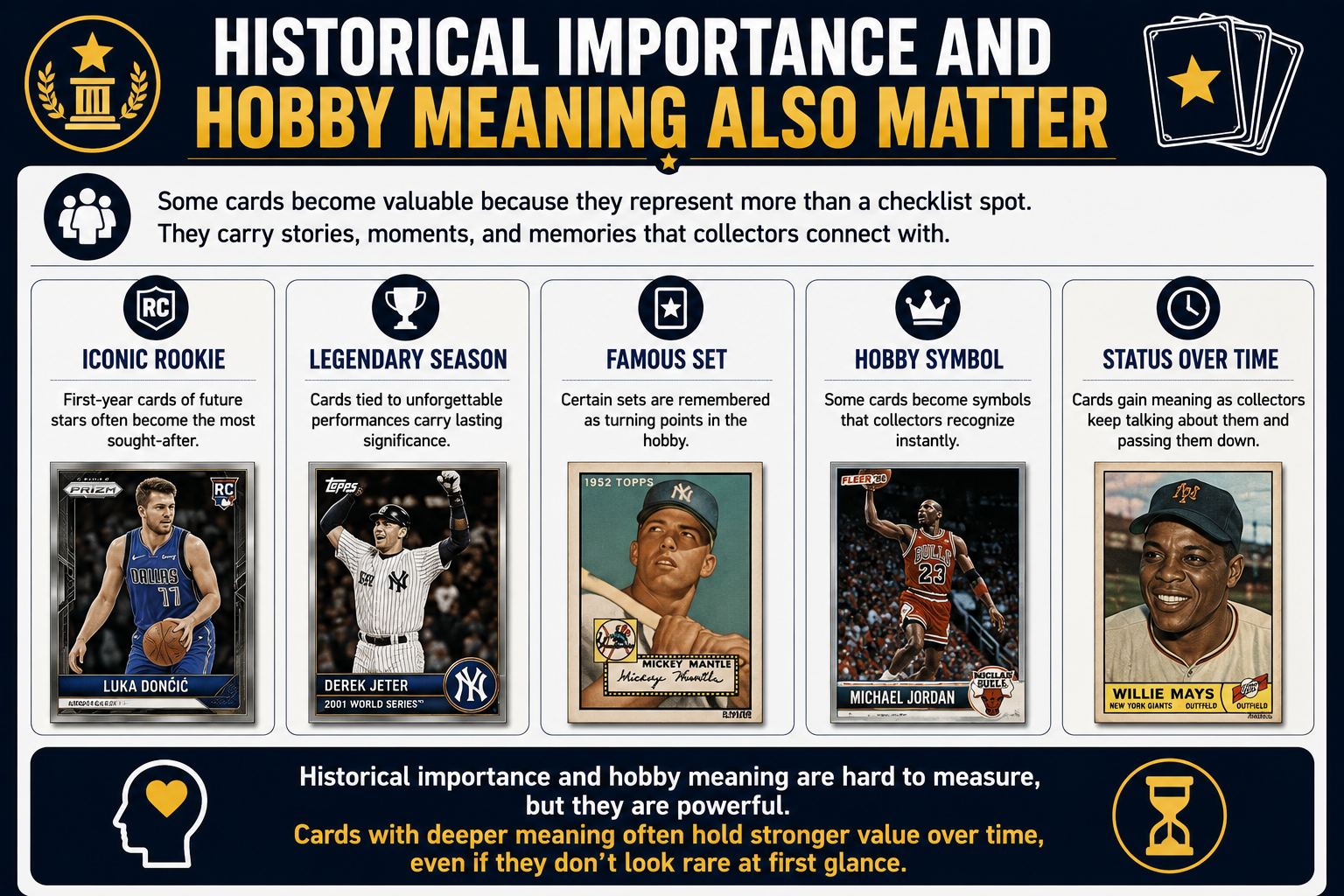
Historical Importance And Hobby Meaning Also Matter
Some cards become valuable because they represent more than a checklist spot.
Maybe it is an iconic rookie. Maybe it is tied to a legendary season. Maybe it is part of a famous set. Maybe the card has become a hobby symbol that collectors recognize instantly.
This kind of importance is harder to measure, though it is very real. Cards gain status over time when collectors keep returning to them, talking about them, and treating them like landmarks within the hobby.
That is one reason value is not always obvious from the front of the card alone. Some cards carry deeper hobby meaning than others, even if they do not look dramatically different at a glance.
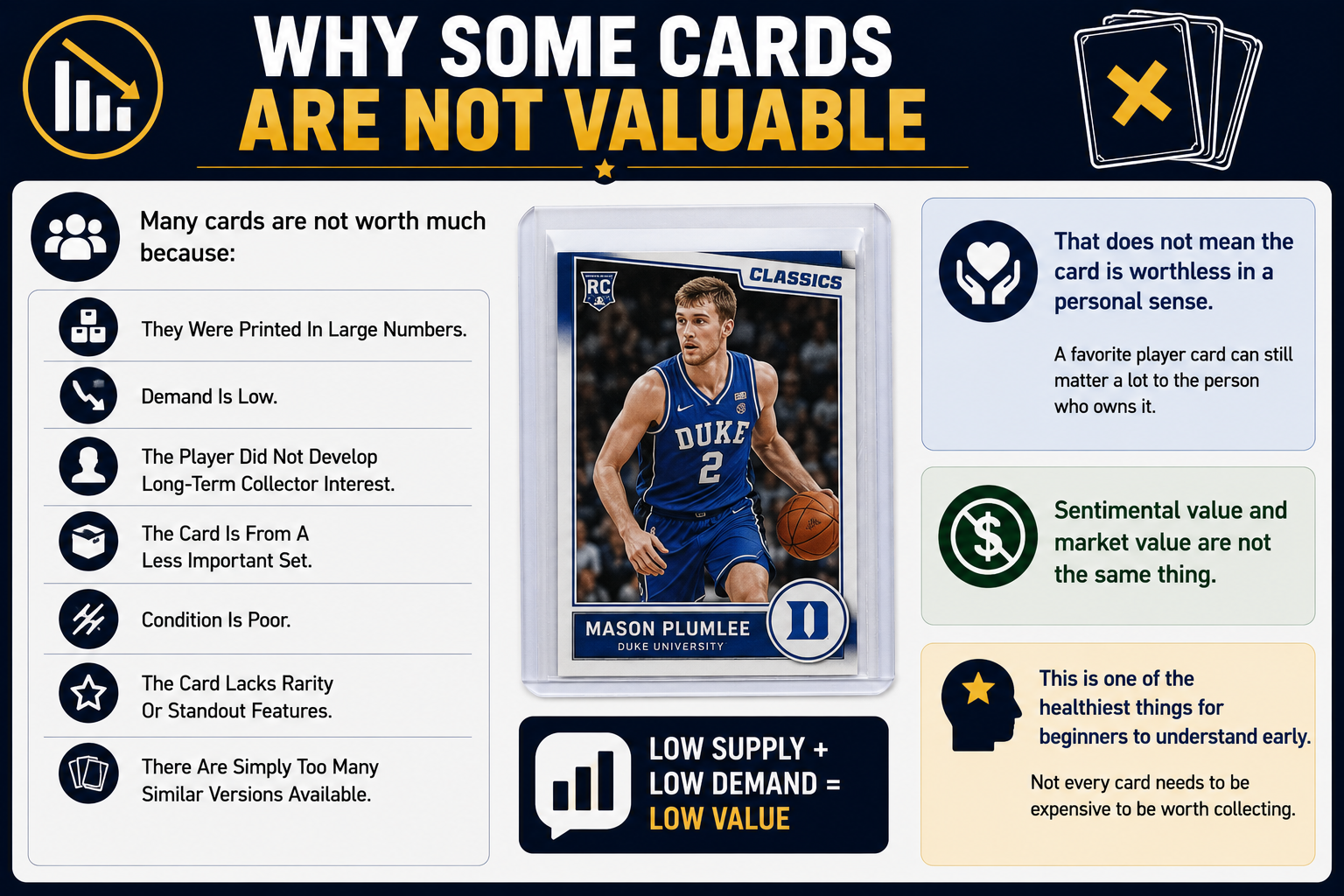
Why Some Cards Are Not Valuable
This part is just as important as understanding why some cards do become valuable.
Many cards are not worth much because:
- They Were Printed In Large Numbers.
- Demand Is Low.
- The Player Did Not Develop Long-Term Collector Interest.
- The Card Is From A Less Important Set.
- Condition Is Poor.
- The Card Lacks Rarity Or Standout Features.
- There Are Simply Too Many Similar Versions Available.
That does not mean the card is worthless in a personal sense. A favorite player card can still matter a lot to the person who owns it. Sentimental value and market value are not the same thing.
This is one of the healthiest things for beginners to understand early. Not every card needs to be expensive to be worth collecting.
Hype Can Raise Prices, But It Does Not Always Last
The hobby moves through waves of excitement. A player can get hot. A rookie can break out. A product can catch sudden buzz. Prices can jump quickly when collectors pile in.
Sometimes that momentum holds. Sometimes it fades just as fast.
That is why collectors should be careful about assuming every hot card will stay expensive forever. Short-term excitement can create temporary value spikes, especially around prospects, rookies, and trend-driven releases.
Long-term value usually has stronger roots:
- Sustained Player Success.
- Lasting Hobby Interest.
- Real Scarcity.
- Strong Set Reputation.
- Collector Trust In The Card’s Significance.
The market can move fast, but not every spike reflects lasting importance.

Why Understanding Set Structure Helps You Understand Value
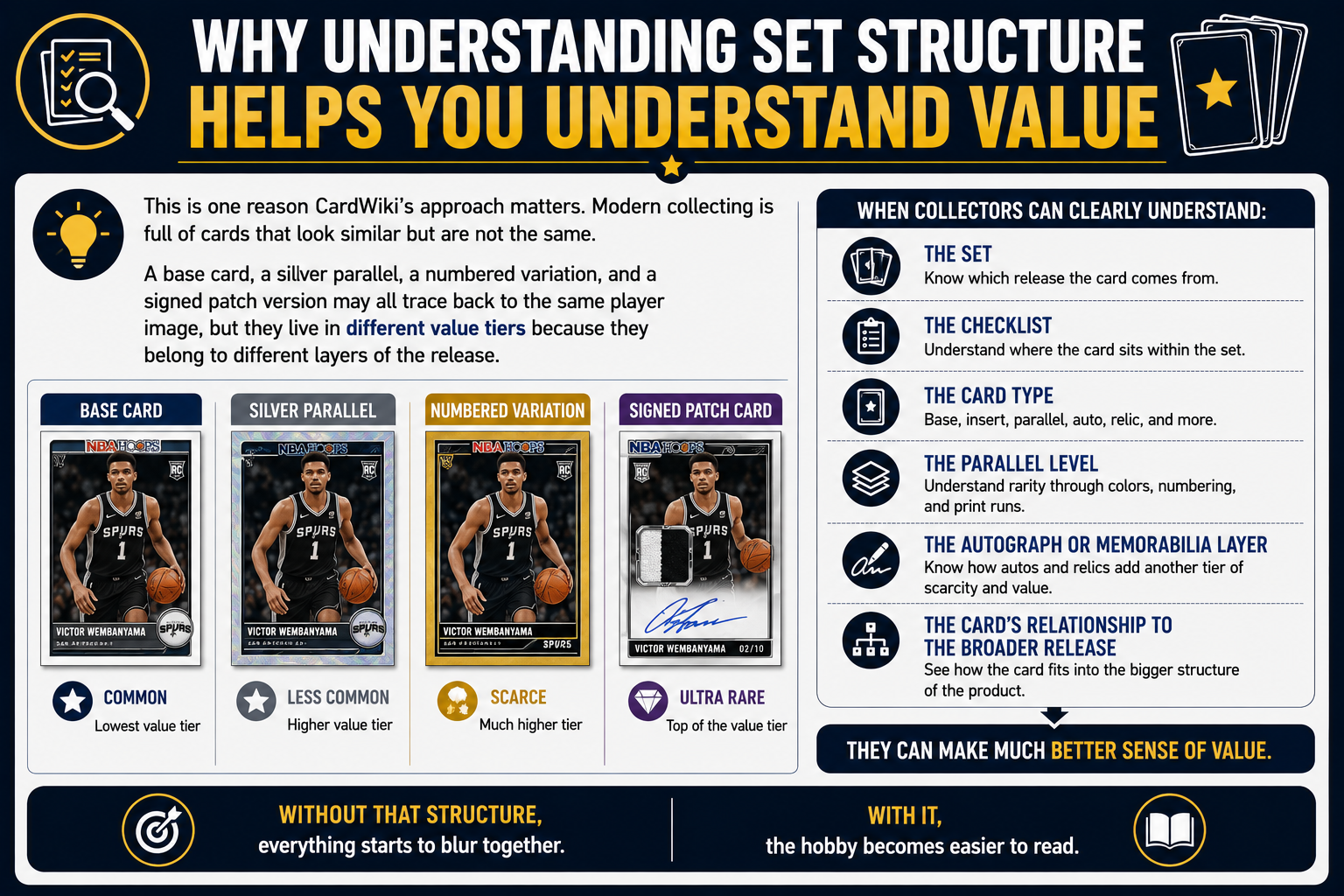
This is one reason CardWiki’s approach matters. Modern collecting is full of cards that look similar but are not the same. A base card, a silver parallel, a numbered variation, and a signed patch version may all trace back to the same player image, but they live in different value tiers because they belong to different layers of the release.
When collectors can clearly understand:
- The Set
- The Checklist
- The Card Type
- The Parallel Level
- The Autograph Or Memorabilia Layer
- The Card’s Relationship To The Broader Release
They can make much better sense of value.
Without that structure, everything starts to blur together. With it, the hobby becomes easier to read.
What Beginners Should Focus On First
If you are just getting started, try not to obsess over price alone. Learn the structure first.
Pay attention to:
- What Set The Card Came From
- Whether It Is Base Or Parallel
- Whether It Is A Rookie
- Whether It Includes An Auto Or Patch
- What Condition It Is In
- Whether Collectors Actually Chase It
That foundation will help you understand value more naturally over time.
It also helps you collect with more confidence. Instead of guessing why one card is expensive and another is not, you start seeing the pattern.

Final Thoughts
So why are some trading cards valuable and others are not?
Because value comes from context, not just appearance. The cards that stand out usually combine rarity, demand, player significance, condition, and hobby meaning in a way that collectors care about. Cards that lack those factors often stay common, even if they still look great in a binder or personal collection.
That is what makes collecting interesting. A card is never just a picture. It is part of a set, part of a release, part of a player’s story, and part of the larger hobby.
If you are learning how card value works, CardWiki gives you a simple way to explore the catalog, understand card structure, and track your collection for free.
If you want a better way to understand what you own and how cards fit into the hobby, start tracking your collection for free on CardWiki.