Types of Trading Cards Explained: Base, Parallel, Auto, and Patch
Learn the different types of trading cards including base, parallel, auto, and patch cards. A beginner;s guide to how modern trading cards are structured.

If you’re new to the hobby, a lot of card terms can sound more complicated than they really are. You’ll hear collectors talk about base cards, parallels, autos, and patches like everyone should already know the difference. In reality, most people learn this stuff one card at a time. We're building a better way to track and trade cards over here, to help you get started, here's how trading cards work.
The good news is that the core categories are pretty easy to understand once you see how they fit together. A base card is usually the standard version. A parallel is a variation of that card. An auto adds a signature. A patch includes a piece of memorabilia. Those four terms show up constantly because they sit at the center of how modern trading cards are structured.
That structure matters more than ever. Modern releases often include large base sets, deep parallel trees, and multiple versions of what looks like the same card at first glance. CardWiki’s public catalog is built around that exact problem: helping collectors make sense of sets, card identities, and variation layers in a more consistent way.
So if you’ve ever wondered what these card types actually mean, here’s a beginner-friendly breakdown.
What Are the Main Types of Trading Cards?
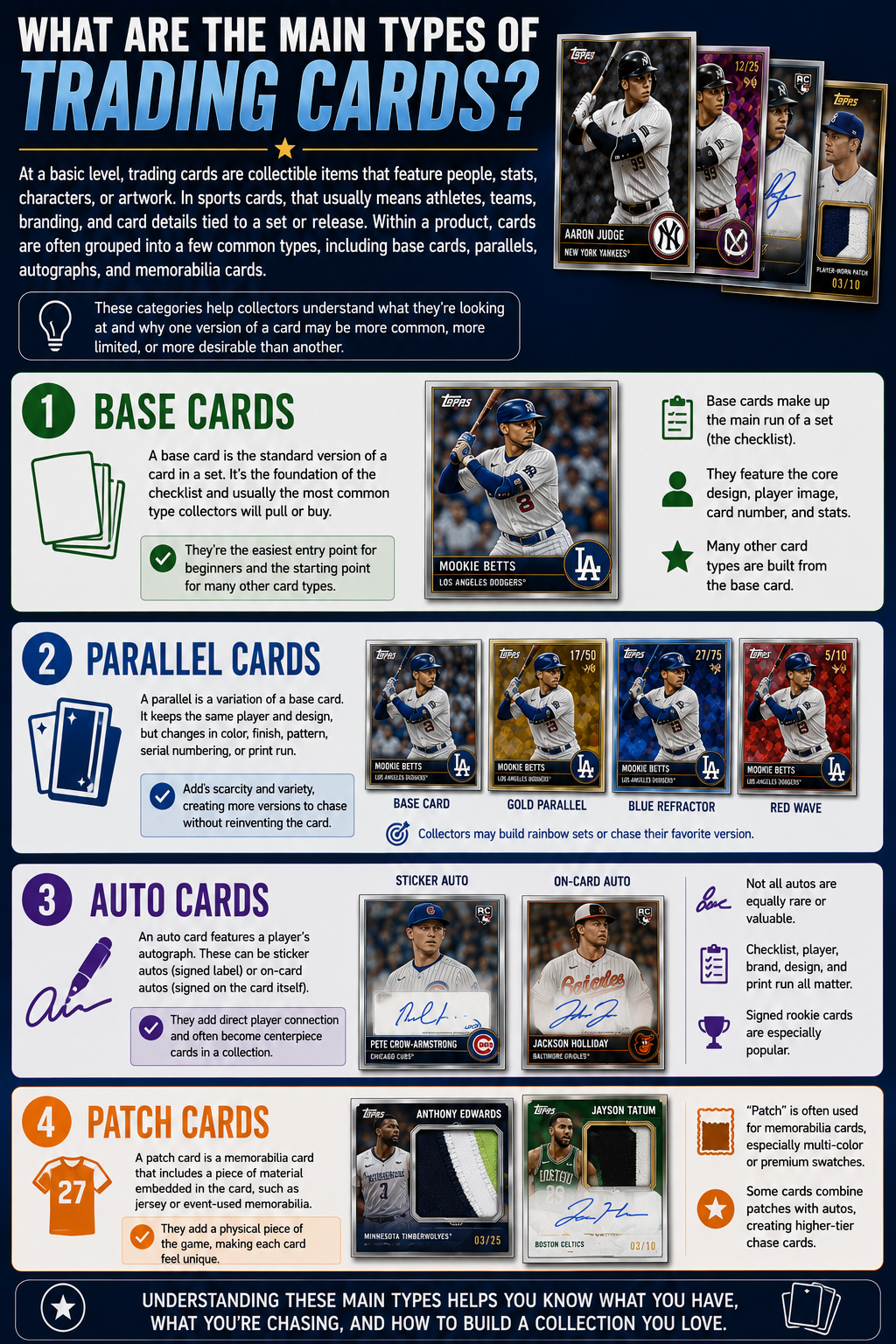
At a basic level, trading cards are collectible items that feature people, stats, characters, or artwork. In sports cards, that usually means athletes, teams, branding, and card details tied to a set or release. Within a product, cards are often grouped into a few common types, including base cards, parallels, autographs, and memorabilia cards.
These categories help collectors understand what they’re looking at and why one version of a card may be more common, more limited, or more desirable than another.
Base Cards
A base card is the standard version of a card in a set. It’s the foundation of the checklist and usually the most common type collectors will pull or buy. If a set has 100 cards, the base set is the main run those cards come from. CardWiki’s beginner content defines base cards as the standard cards in a set, which is the cleanest way to think about them.
For beginners, base cards are often the easiest entry point into the hobby. They let you collect favorite players, teams, and sets without needing to chase rare versions right away. They’re also useful because many other card types are built from them.
In a lot of modern products, the base card acts like the template. The player image, layout, card number, and design start there. Then the hobby builds layers on top of that.
Parallel Cards
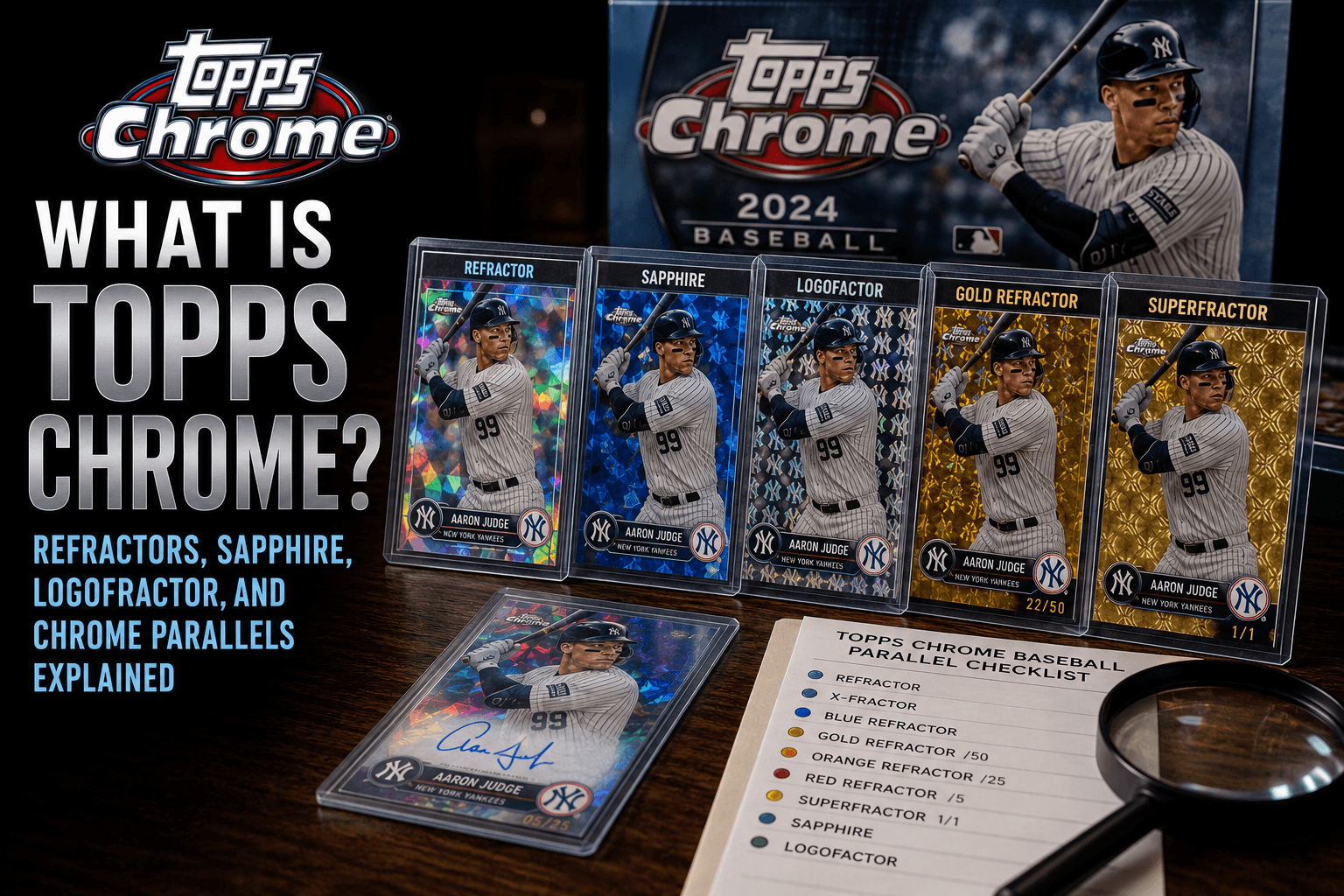
A parallel is a variation of a base card. It usually keeps the same core design, player, and card identity, though something about it changes. That change might be the color border, foil finish, background pattern, serial numbering, or print run. CardWiki describes parallels as variations of a base card, often with different colors or limited print runs.
This is where modern collecting starts to feel a little more complex.
Two cards can look almost identical at first glance, though one might be a standard base card and the other a numbered gold parallel, a refractor-style version, or a short-print variation tied to the same core card. CardWiki’s catalog article points out that parallel hierarchies are not always clear across the hobby, which is one reason structured card identity matters so much.
Parallels are popular because they add scarcity and variety. They give collectors more versions to chase without reinventing the card completely. They also create a lot of the visual excitement in modern products. Some collectors love building rainbow-style runs of the same card across many parallel versions. Others just want one clean version of a favorite player.
Auto Cards
An auto card is a trading card with an autograph. In hobby shorthand, “auto” almost always means autograph. These can be sticker autos, where the player signed a label that was later placed on the card, or on-card autos, where the player signed the card itself.
Autos tend to get a lot of attention because they add direct player connection. Even collectors who don’t chase every rare card often like having at least a few signed pieces in their collection. A base rookie card is interesting. A signed rookie card often feels like a bigger centerpiece.
Not every auto is equally rare or valuable, of course. The checklist, player, brand, design, and print run all matter. Still, the reason auto cards stand out is simple: they offer something more personal than a standard printed card.
Patch Cards
A patch card is a type of memorabilia card that includes a piece of material embedded into the card. That material may come from a jersey, warm-up gear, or another player-worn or event-used item, depending on how the card is described by the manufacturer. In simpler terms, memorabilia cards as cards that include pieces of jerseys, which is the easiest starting point for understanding the category.
Collectors often use “patch” casually for memorabilia cards in general, though some hobbyists use the word more specifically for cards that contain a multi-color or visually distinctive swatch instead of a plain single-color fabric piece.
Patch cards stand out because they add a physical element to the card. Instead of only featuring a photo or printed design, they include a piece of something tied to the athlete. That makes them feel different right away.
As with autos, not every patch card carries the same weight. Some are more common. Some are more premium. Some combine memorabilia with autographs, which creates another tier collectors often chase aggressively.
How These Card Types Fit Together
One of the easiest ways to understand the hobby is to think of these card types as layers rather than isolated categories.
-A base card is the standard starting point.
-A parallel is a modified version of that base card.
-An auto adds a signature.
-A patch adds memorabilia.
Sometimes those layers combine. You can have a parallel auto. You can have a patch auto. You can have a numbered rookie auto patch card. That layering is part of what makes modern products exciting and confusing at the same time.
Today’s hobby includes large base sets, extensive parallel trees, and variant layers that make modern cards complex. That’s exactly why collectors need better structure and clearer card identity.
Why Some Cards Cost So Much More Than Others
Once you understand the categories, price differences start making more sense.
A common base card is usually cheaper because more copies exist. A limited parallel may cost more because it is scarcer. An auto can add demand because of the signature. A patch card can add interest because of the memorabilia element. When multiple premium features show up on one card, the price can jump again.
That’s why two cards of the same player can have wildly different prices. One may be a regular base card. The other may be a low-numbered parallel autograph patch from the same release. They may share a name and photo, but they are not the same kind of collectible.
Why Beginners Get Confused
This is where a lot of new collectors hit a wall.
Modern sets can include huge checklists, multiple series, and deep parallel trees. CardWiki’s beginner content says modern releases can get complicated quickly, and that’s true for almost everyone at first.
A collector might think they have one version of a card, then realize there are ten versions with different finishes, numbering, or inserts tied to the same player and set. Even experienced collectors still run into confusion around naming conventions and variations, according to CardWiki’s starter guide.
That confusion is normal. It’s also one of the biggest reasons structured catalogs matter. When the information around cards is organized well, it becomes easier to tell what is base, what is parallel, what includes an auto, and what belongs in a memorabilia category.
A Simple Way to Remember the Differences
Here’s an easy shorthand:
Base = the regular version.
Parallel = a variation of the regular version.
Auto = a signed card.
Patch = a memorabilia card with embedded material.
Once you remember those four buckets, a lot of product descriptions become easier to read. You don’t need to master every release on day one. You just need a working sense of the card language collectors use all the time.
Why This Matters for Building a Collection
Knowing these terms helps you with your sports collecting more confidently.
It helps you understand what you’re buying. It helps you compare cards more accurately. It helps you avoid mixing up a common version with a scarcer one. It also helps when you’re organizing your collection, building a want list, or trying to identify exactly what card you pulled.
That’s part of CardWiki’s bigger goal. Our platform is building a structured public catalog where cards, sets, parallels, and variants have clear identities, with evidence trails and confidence scoring to support records. It also lets users track private holdings with a free account while the product continues growing in public beta.
For beginners, that kind of structure removes a lot of unnecessary friction.
Final Thoughts
Trading cards can look complicated fast, though the main categories are more approachable than they seem.
A base card is the standard version. A parallel is a variation. An auto includes a signature. A patch includes memorabilia. Once those building blocks click, the hobby starts to make a lot more sense.
You do not need to know every product or every variation to get started. You just need to understand the basics well enough to recognize what you’re looking at and what kind of card you want to collect.
If you’re starting your collection, CardWiki gives you a free way to track your cards, explore a growing public catalog, and make sense of how modern trading cards fit together. Get Started Today!