What Does Serial Numbered Mean In Trading Cards?
Learn what serial numbered means in trading cards, why numbered cards matter, and how collectors use them to understand rarity, value, and card identity.

If you've spent any time around modern trading cards, you've probably heard collectors talk about numbered cards.
Someone pulls a card and immediately flips it over looking for a fraction like 15/99, 3/25, or even 1/1. Suddenly everyone is paying attention.
Why?
Because those numbers tell a story about rarity.
Serial numbering is one of the easiest ways collectors can understand how many copies of a specific card exist. It helps separate common versions from limited versions and plays a major role in card identity, scarcity, and value.
That doesn't mean every numbered card is valuable. It also doesn't mean every valuable card is numbered. What serial numbering does provide is a clear piece of information that collectors can use when evaluating a card.
If you're new to the hobby, here's everything you need to know about what serial numbered means in trading cards.
What Does Serial Numbered Mean?
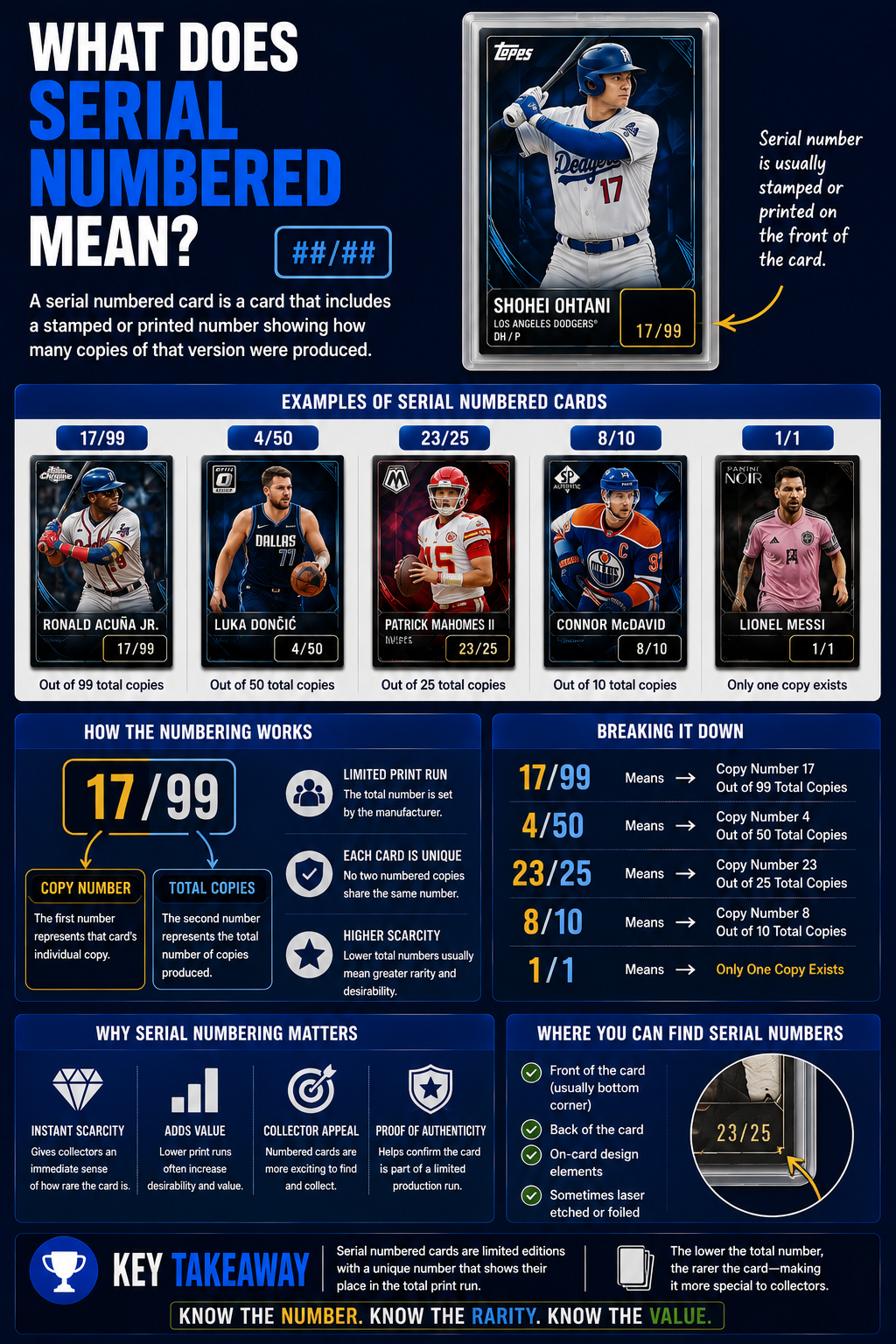
A serial numbered card is a card that includes a stamped or printed number showing how many copies of that version were produced.
The numbering is usually displayed as a fraction.
Examples include:
- 17/99
- 4/50
- 23/25
- 8/10
- 1/1
The first number represents that card's individual copy.
The second number represents the total number of copies produced.
For example:
- 17/99 Means Copy Number 17 Out Of 99 Total Copies
- 4/50 Means Copy Number 4 Out Of 50 Total Copies
- 1/1 Means Only One Copy Exists
This numbering system gives collectors an immediate sense of scarcity.
Why Are Cards Serial Numbered?
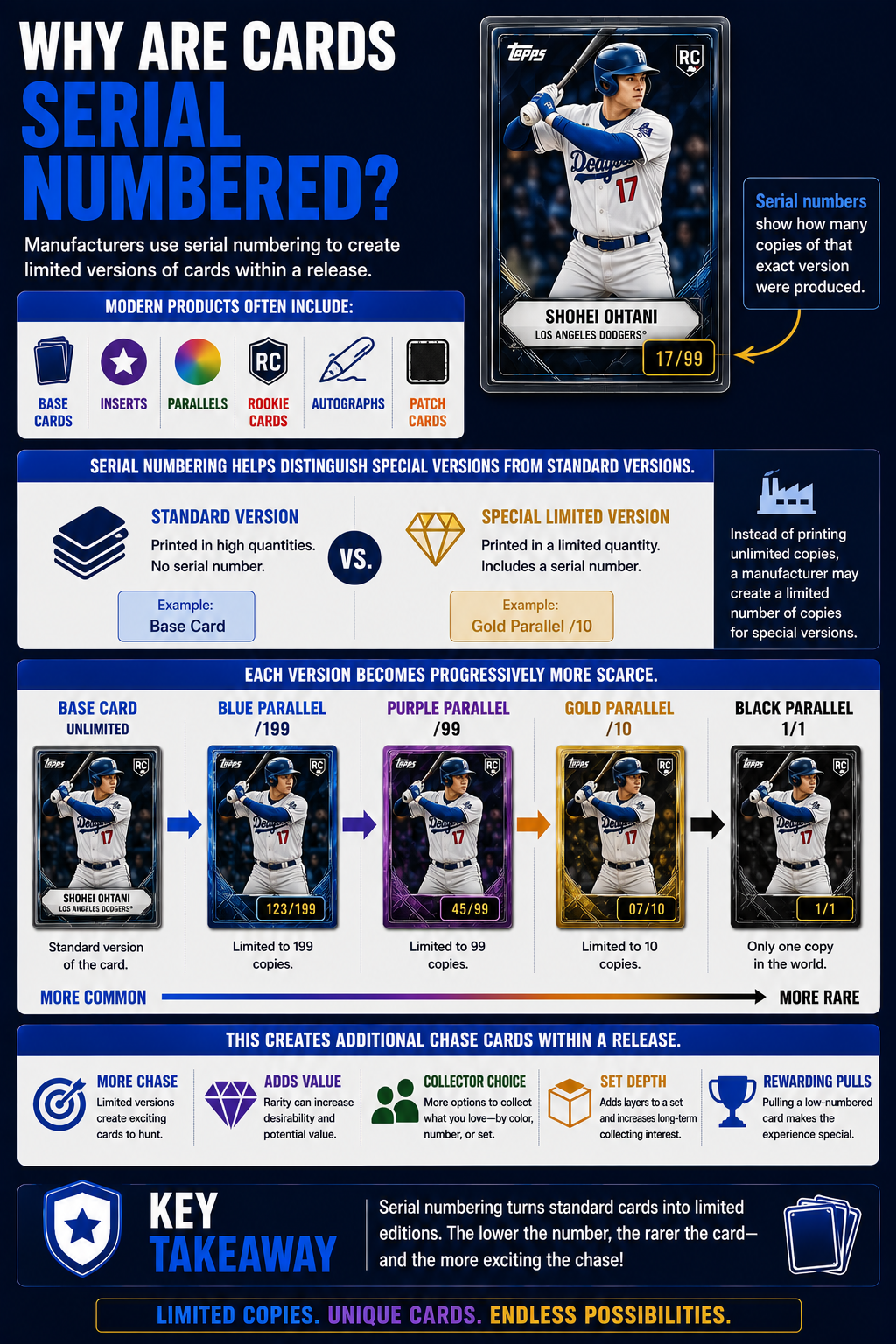
Manufacturers use serial numbering to create limited versions of cards within a release.
Modern products often include:
- Base Cards
- Inserts
- Parallels
- Rookie Cards
- Autographs
- Patch Cards
Serial numbering helps distinguish special versions from standard versions.
Instead of printing unlimited copies, a manufacturer may create:
- Blue Parallel /199
- Purple Parallel /99
- Gold Parallel /10
- Black Parallel 1/1
Each version becomes progressively more scarce.
This creates additional chase cards within a release and gives collectors more ways to pursue rare cards.
How To Read A Serial Number
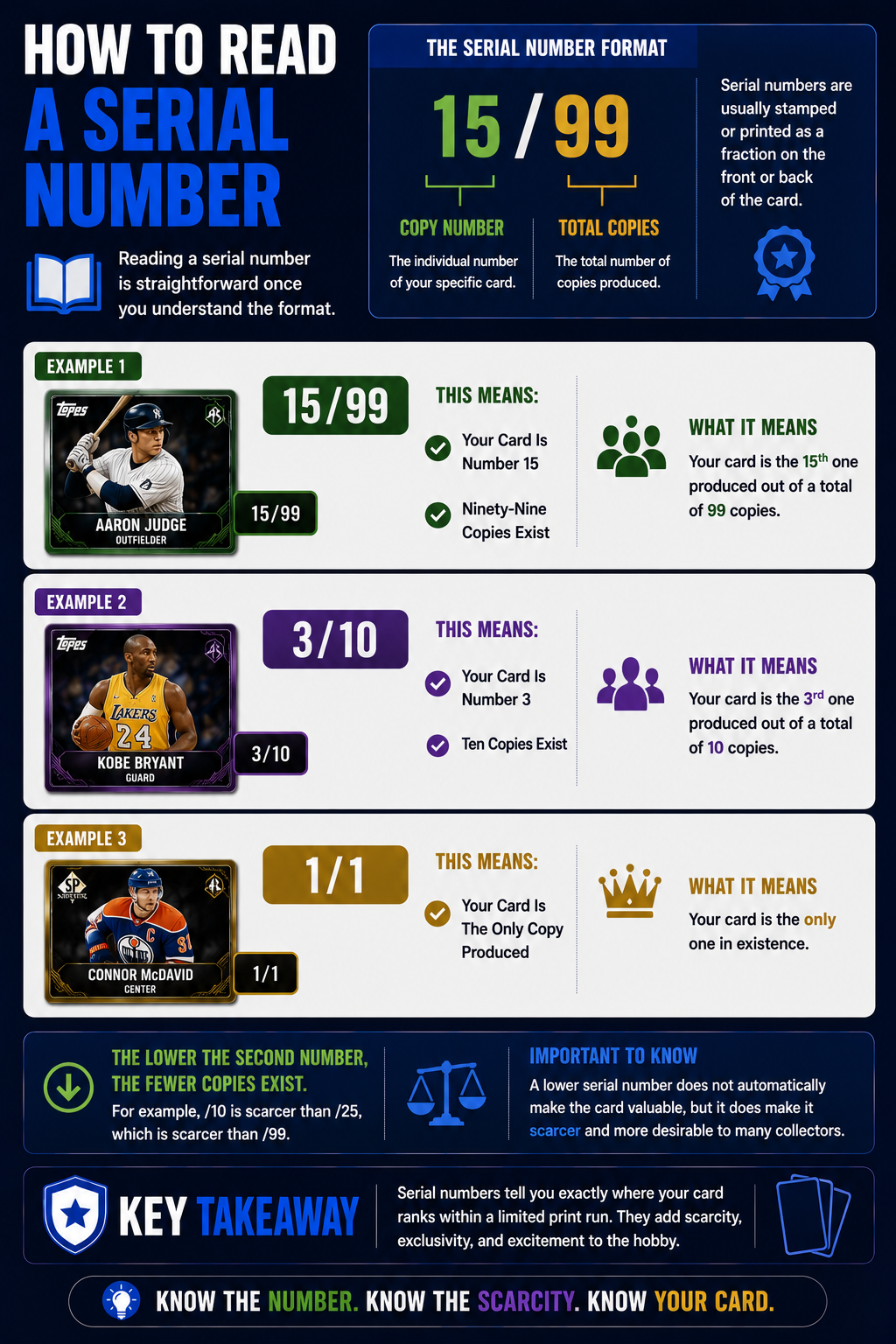
Reading a serial number is straightforward once you understand the format.
Example:
15/99
This means:
- Your Card Is Number 15
- Ninety-Nine Copies Exist
Example:
3/10
This means:
- Your Card Is Number 3
- Ten Copies Exist
Example:
1/1
This means:
- Your Card Is The Only Copy Produced
The lower the second number, the fewer copies exist.
That does not automatically make the card valuable, but it does make it scarcer.
Serial Number Vs Card Number
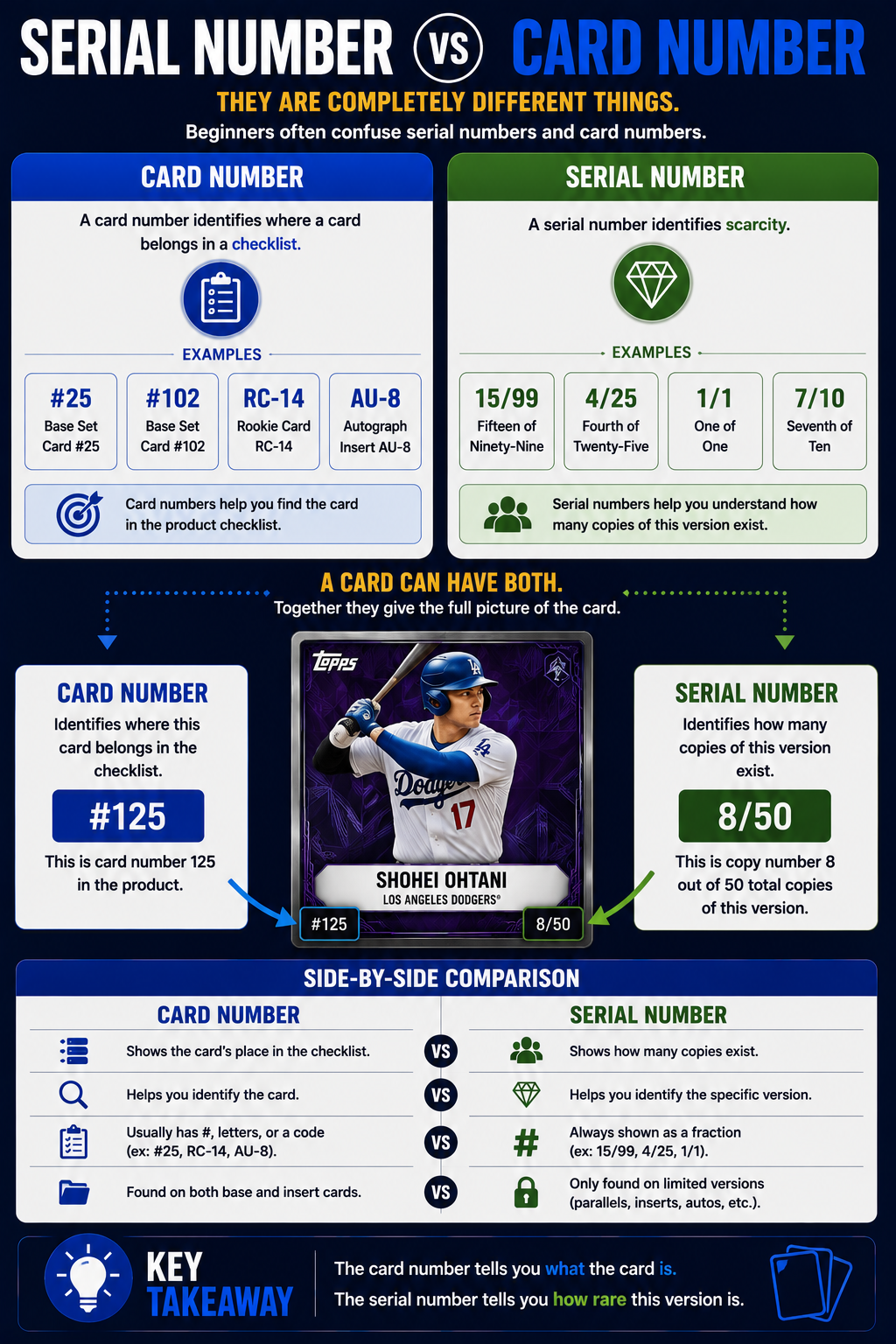
Beginners often confuse serial numbers and card numbers.
They are completely different things.
A card number identifies where a card belongs in a checklist.
Examples:
- #25
- #102
- RC-14
- AU-8
A serial number identifies scarcity.
Examples:
- 15/99
- 4/25
- 1/1
A card can have both.
For example:
- Card Number: #125
- Serial Number: 8/50
The card number helps identify the card.
The serial number helps identify the specific version.
Why Numbered Cards Matter
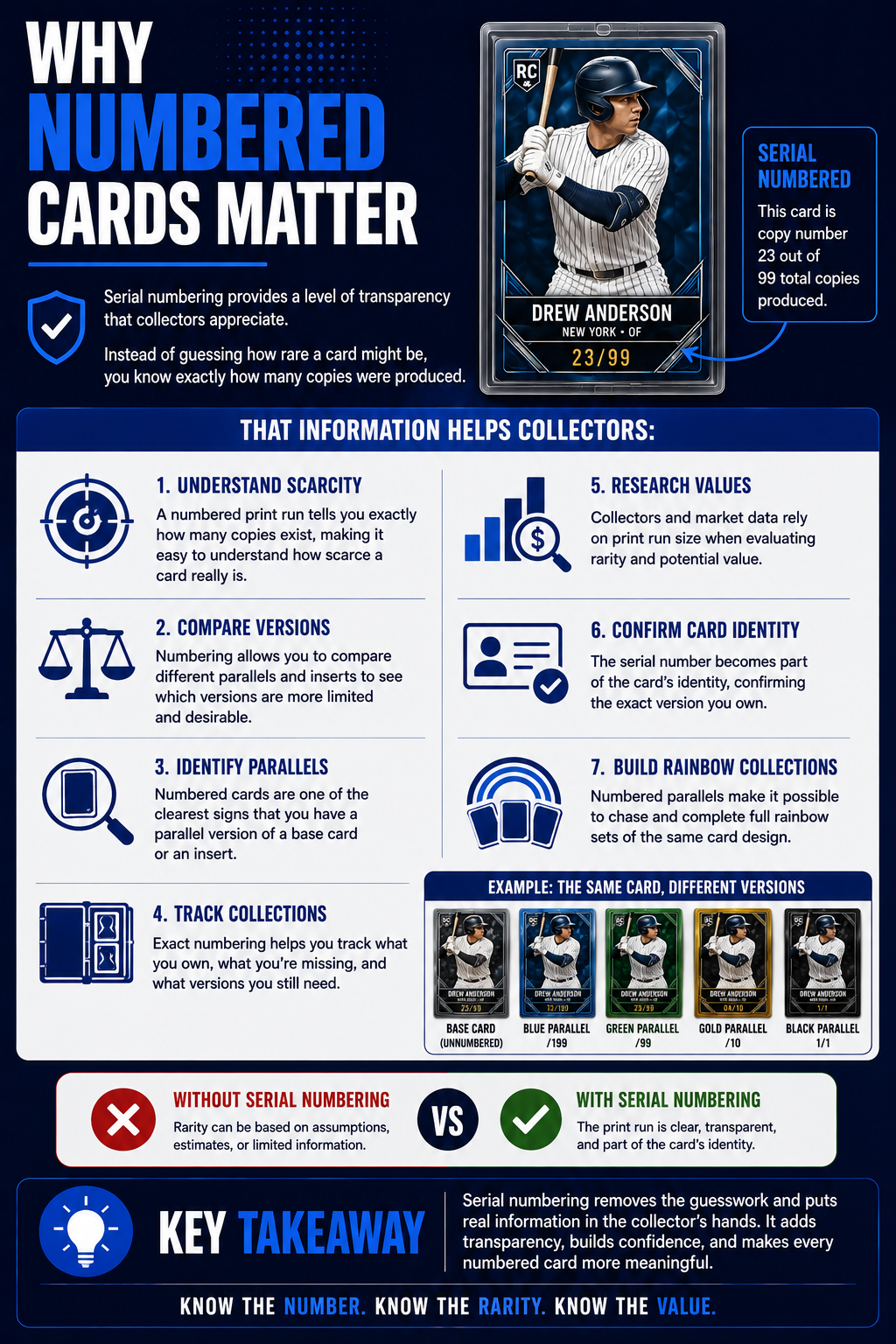
Serial numbering provides a level of transparency that collectors appreciate.
Instead of guessing how rare a card might be, you know exactly how many copies were produced.
That information helps collectors:
- Understand Scarcity
- Compare Versions
- Identify Parallels
- Track Collections
- Research Values
- Confirm Card Identity
- Build Rainbow Collections
Without serial numbering, rarity can be harder to evaluate.
With serial numbering, the print run becomes part of the card's identity.
Are Numbered Cards Always Valuable?
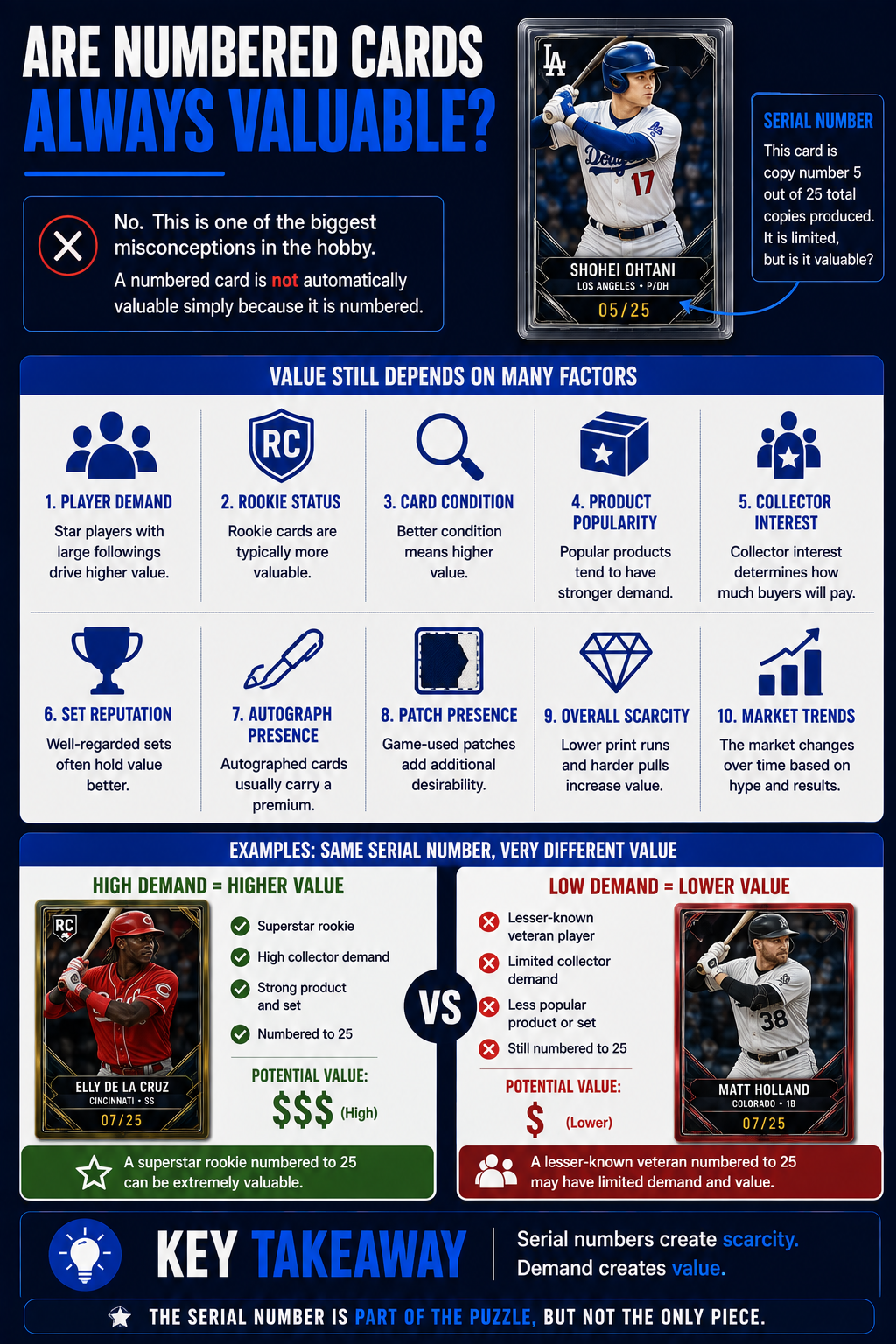
No.
This is one of the biggest misconceptions in the hobby.
A numbered card is not automatically valuable simply because it is numbered.
Value still depends on:
- Player Demand
- Rookie Status
- Card Condition
- Product Popularity
- Collector Interest
- Set Reputation
- Autograph Presence
- Patch Presence
- Overall Scarcity
For example:
- A Superstar Rookie Numbered To 25 May Be Extremely Valuable
- A Lesser-Known Veteran Numbered To 25 May Have Limited Demand
The serial number helps create scarcity, but demand still drives value.
What Is A 1/1 Card?
A one-of-one card is the rarest form of serial numbered card.
It is marked:
- 1/1
This means only one copy exists.
Many modern products include special one-of-one versions featuring:
- Unique Foils
- Black Parallels
- Gold Vinyl Designs
- Special Printing Plates
- Premium Materials
Because only one copy exists, collectors often view 1/1 cards as the ultimate version of a card.
That does not guarantee a huge price tag, but scarcity can create strong demand when the player is desirable.

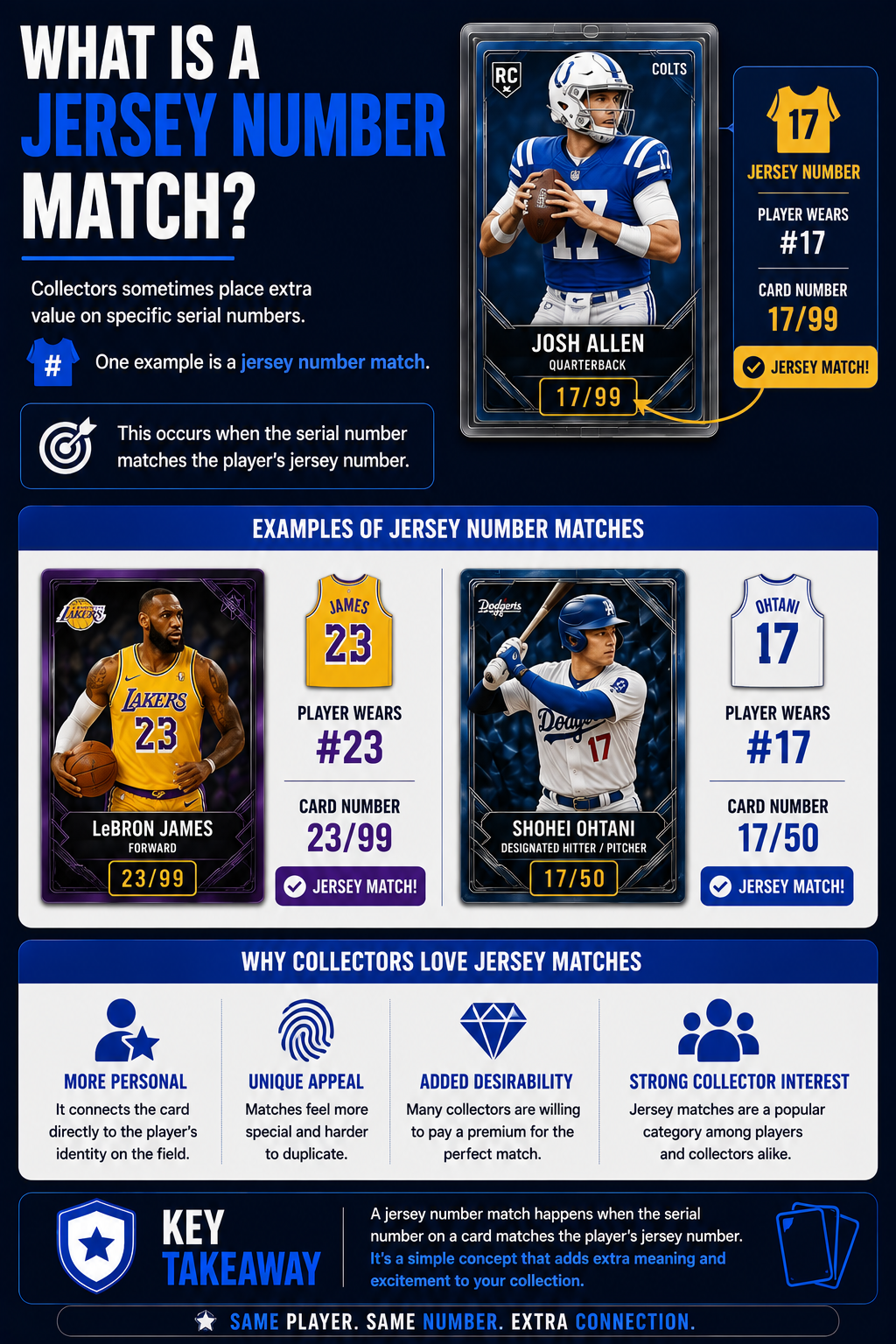
What Is A Jersey Number Match?
Collectors sometimes place extra value on specific serial numbers.
One example is a jersey number match.
This occurs when the serial number matches the player's jersey number.
Examples:
- Card Numbered 17/99 For A Player Who Wears #17
- Card Numbered 23/99 For A Player Who Wears #23
Many collectors find jersey matches especially appealing because they feel more personal and unique.
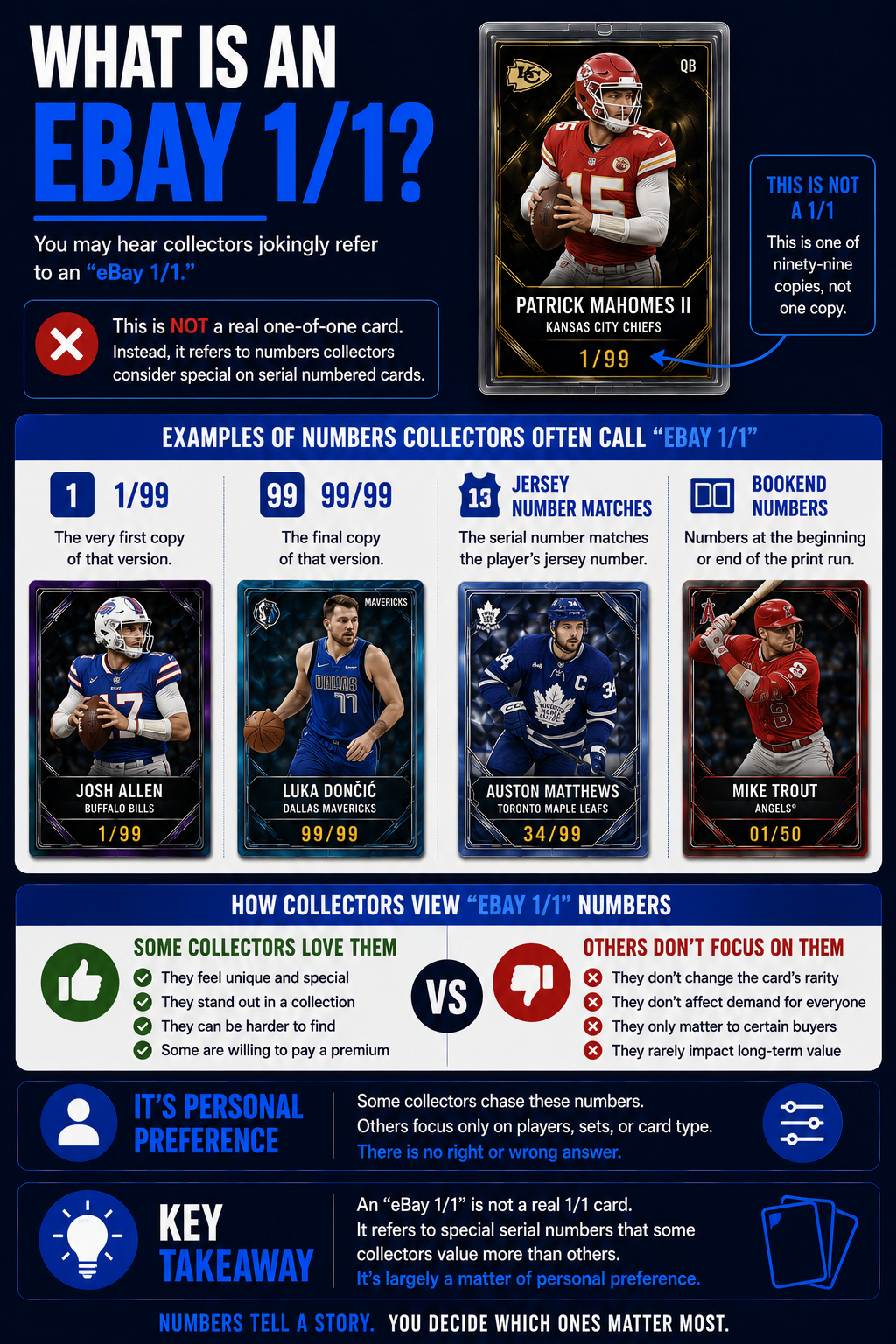
What Is An eBay 1/1?
You may hear collectors jokingly refer to an "eBay 1/1."
This is not a real one-of-one card.
Instead, it refers to numbers collectors consider special, such as:
- 1/99
- 99/99
- Jersey Number Matches
- Bookend Numbers
Some collectors pay premiums for these numbers while others do not place much importance on them.
It is largely a matter of personal preference.
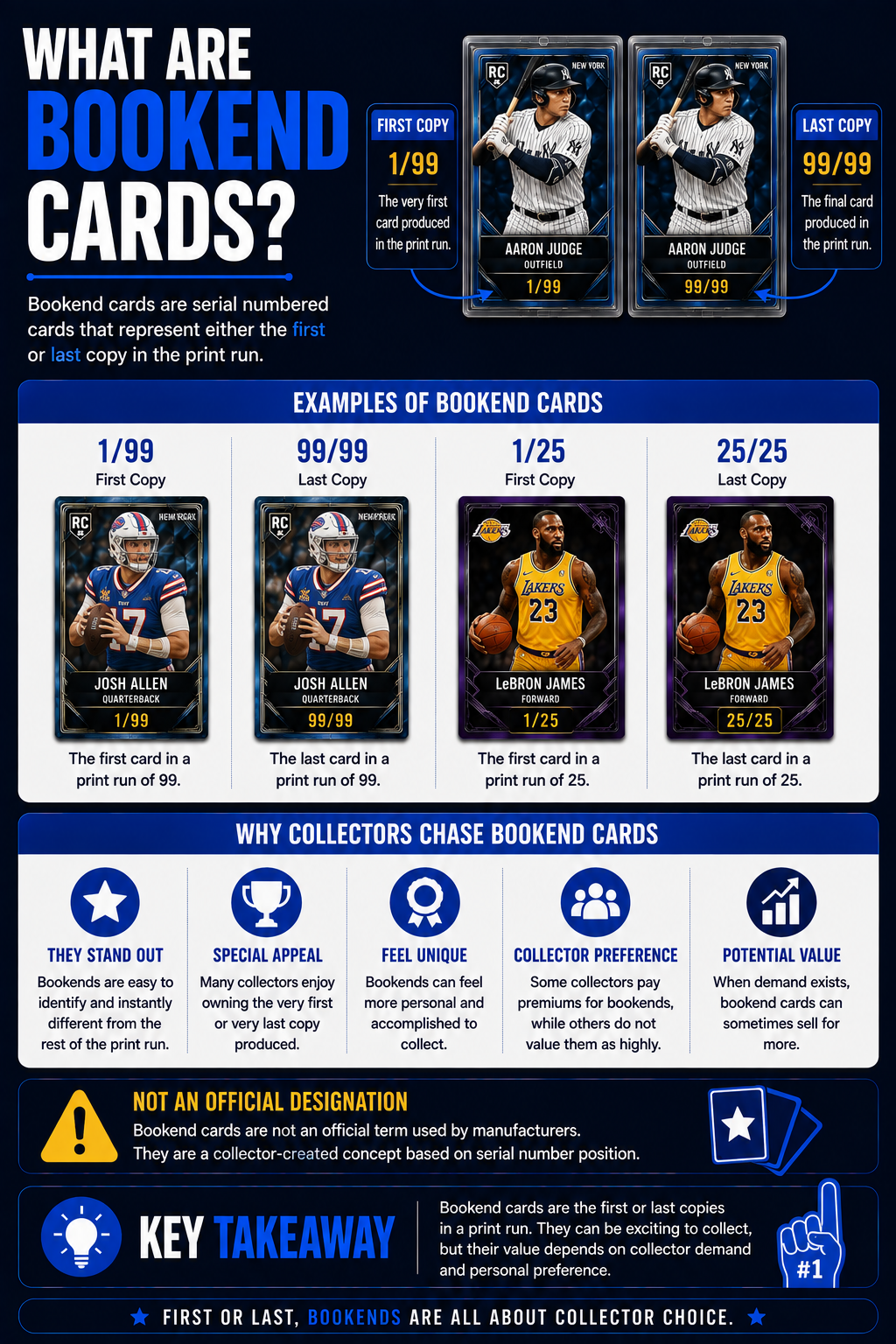
What Are Bookend Cards?
Bookend cards are serial numbered cards that represent either the first or last copy in the print run.
Examples:
- 1/99
- 99/99
- 1/25
- 25/25
Some collectors enjoy chasing bookends because they stand out from the rest of the print run.
Again, this is more of a collector preference than an official designation.
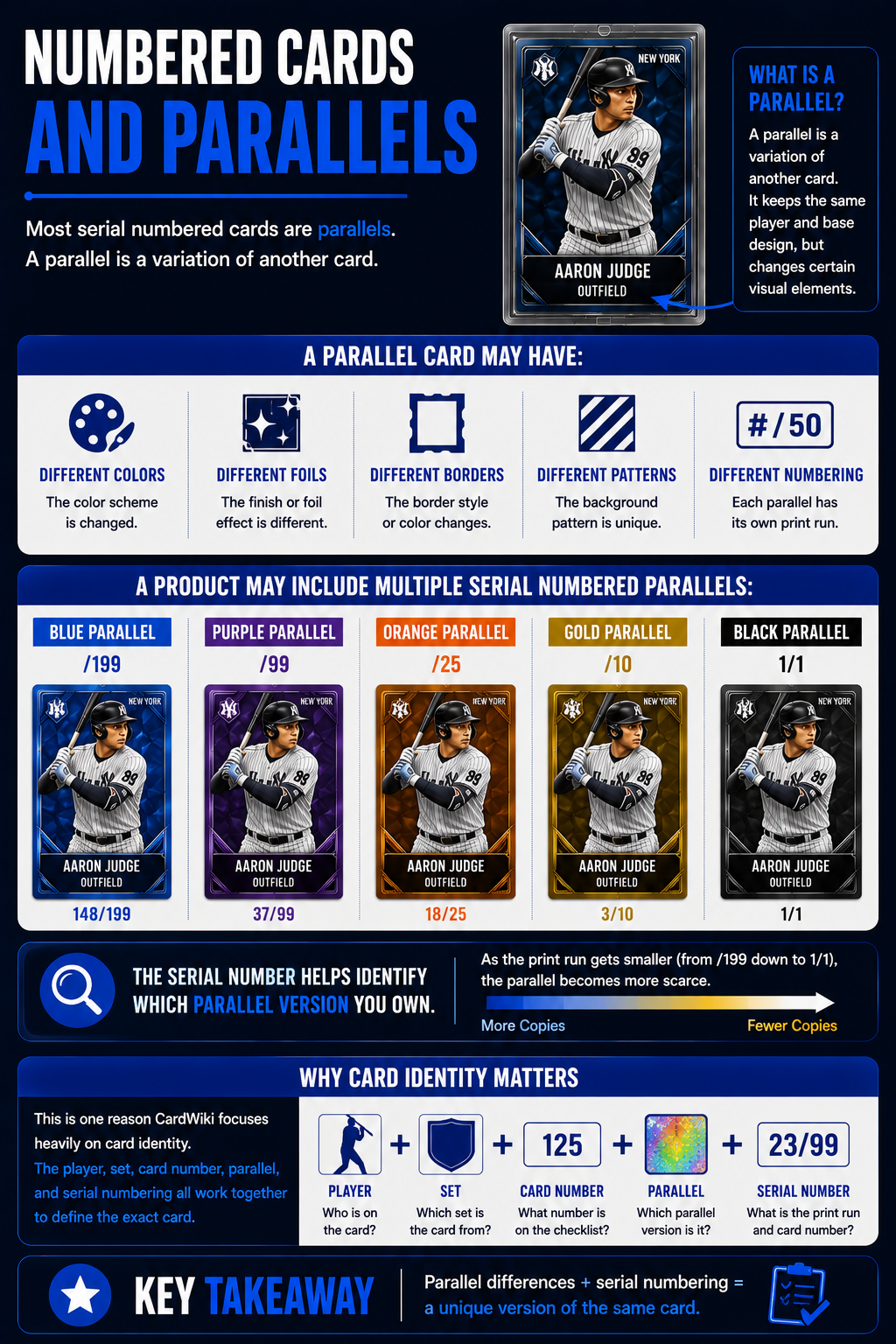
Numbered Cards And Parallels
Most serial numbered cards are parallels.
A parallel is a variation of another card.
The card may have:
- Different Colors
- Different Foils
- Different Borders
- Different Patterns
- Different Numbering
A product may include:
- Blue Parallel /199
- Purple Parallel /99
- Orange Parallel /25
- Gold Parallel /10
- Black Parallel 1/1
The serial number helps identify which parallel version you own.
This is one reason CardWiki focuses heavily on card identity. The player, set, card number, parallel, and serial numbering all work together to define the exact card.
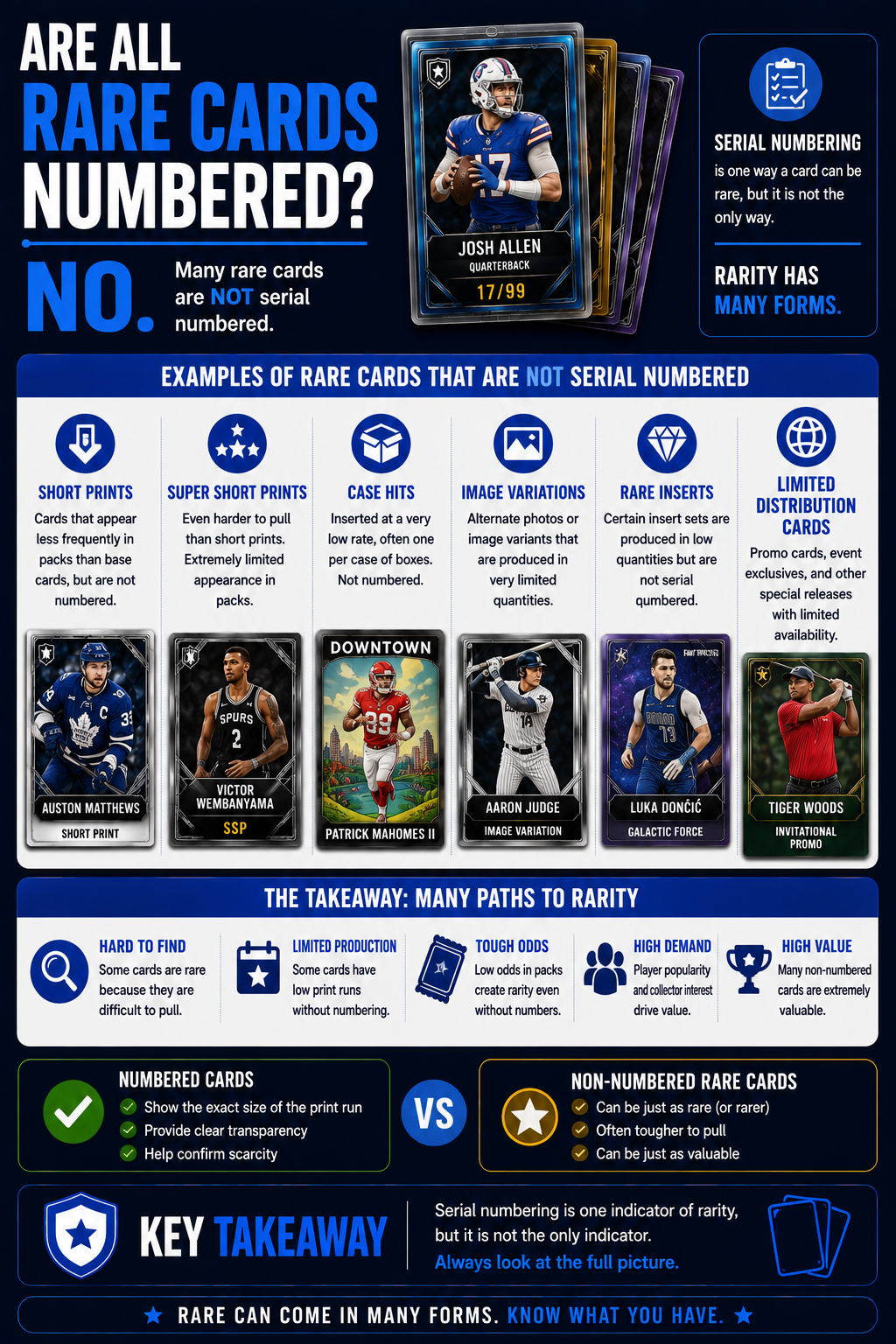
Are All Rare Cards Numbered?
No.
Many rare cards are not serial numbered.
Examples may include:
- Short Prints
- Super Short Prints
- Case Hits
- Image Variations
- Rare Inserts
- Limited Distribution Cards
These cards can still be extremely valuable even without numbering.
Serial numbering is one indicator of rarity, not the only indicator.
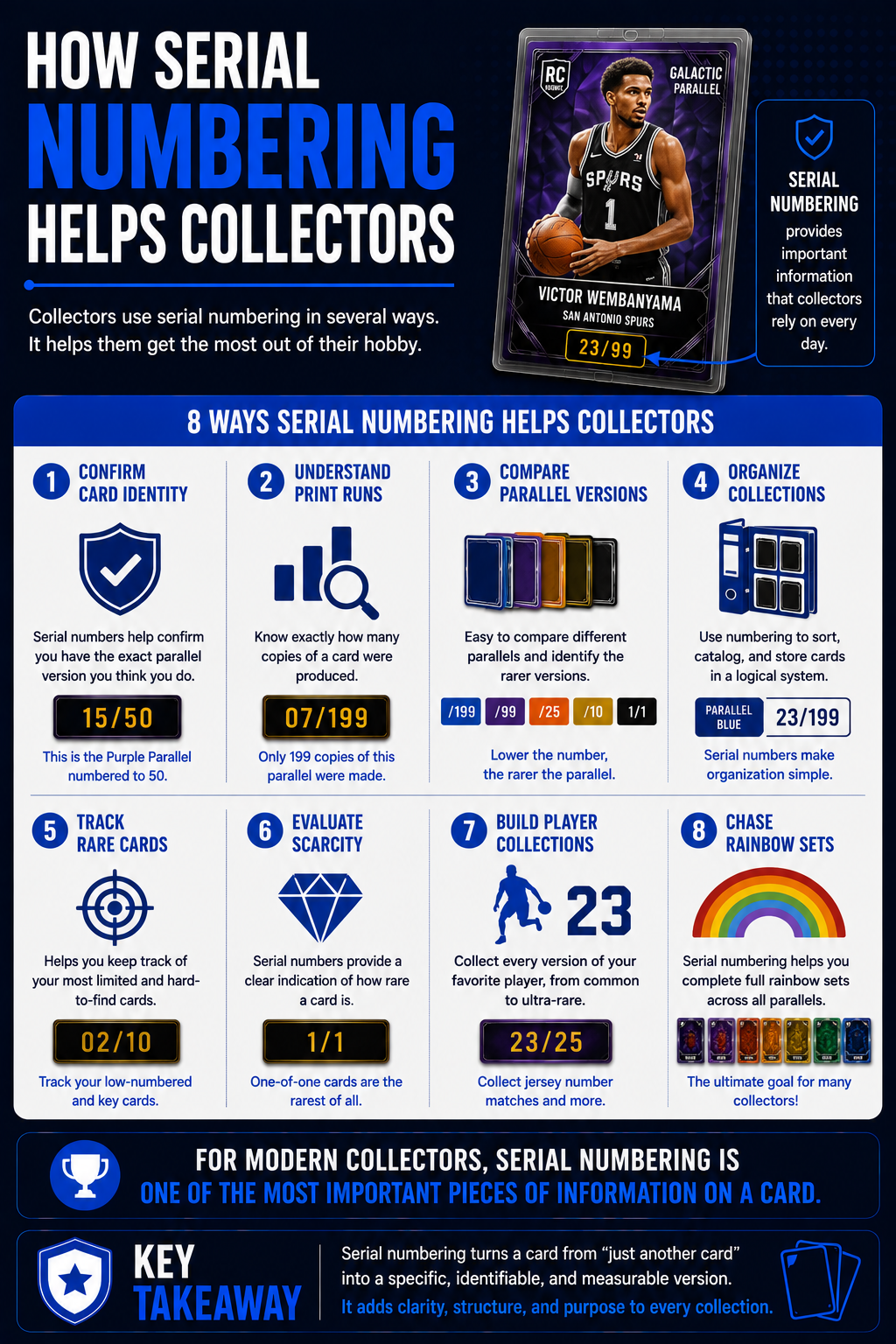
How Serial Numbering Helps Collectors
Collectors use serial numbering in several ways.
It helps them:
- Confirm Card Identity
- Understand Print Runs
- Compare Parallel Versions
- Organize Collections
- Track Rare Cards
- Evaluate Scarcity
- Build Player Collections
- Chase Rainbow Sets
For modern collectors, serial numbering is one of the most important pieces of information on a card.
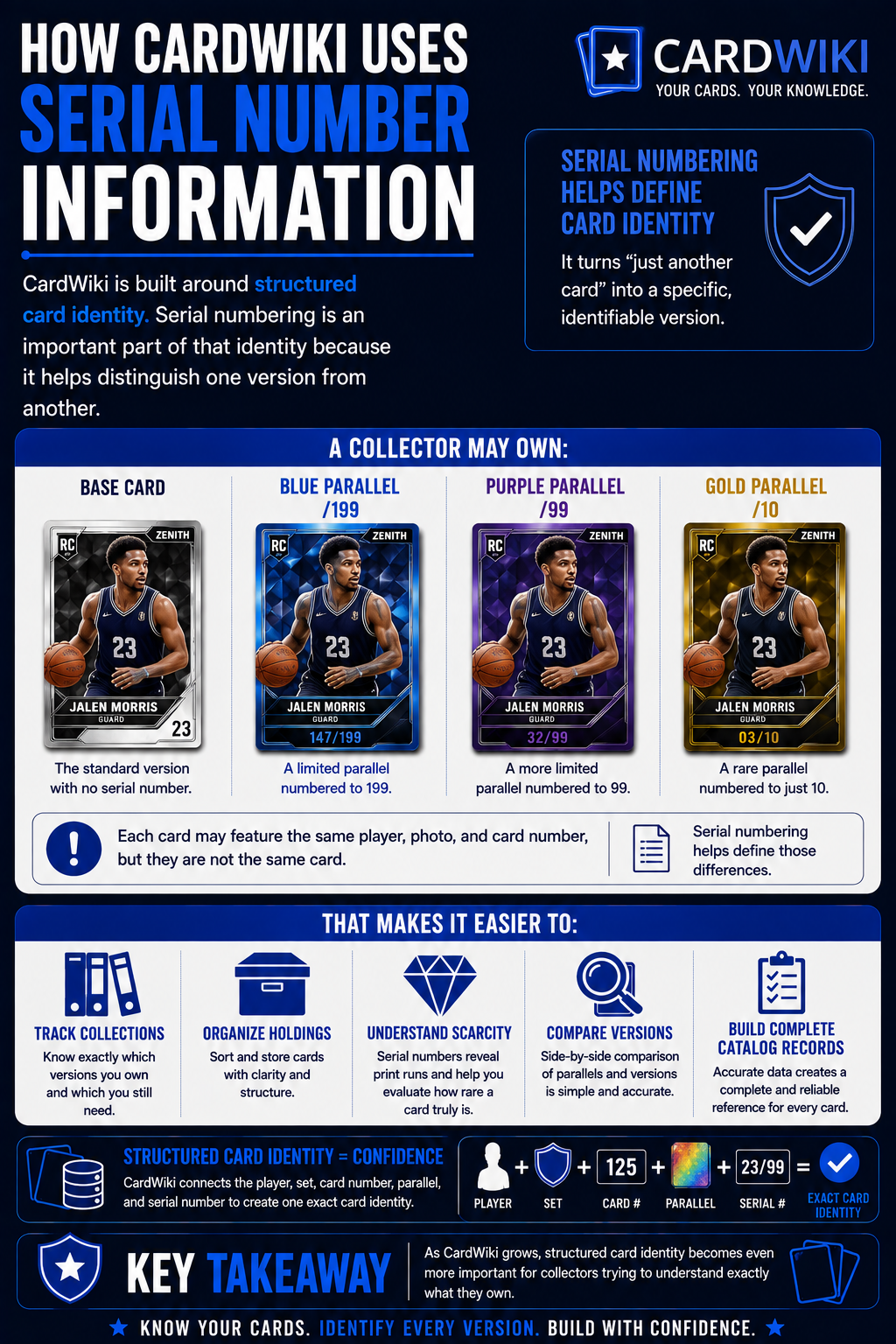
How CardWiki Uses Serial Number Information
CardWiki is built around structured card identity.
Serial numbering is an important part of that identity because it helps distinguish one version from another.
A collector may own:
- A Base Card
- A Blue Parallel /199
- A Purple Parallel /99
- A Gold Parallel /10
Each card may feature the same player, photo, and card number, but they are not the same card.
Serial numbering helps define those differences.
That makes it easier to:
- Track Collections
- Organize Holdings
- Understand Scarcity
- Compare Versions
- Build Complete Catalog Records
As CardWiki grows, structured card identity becomes even more important for collectors trying to understand exactly what they own.
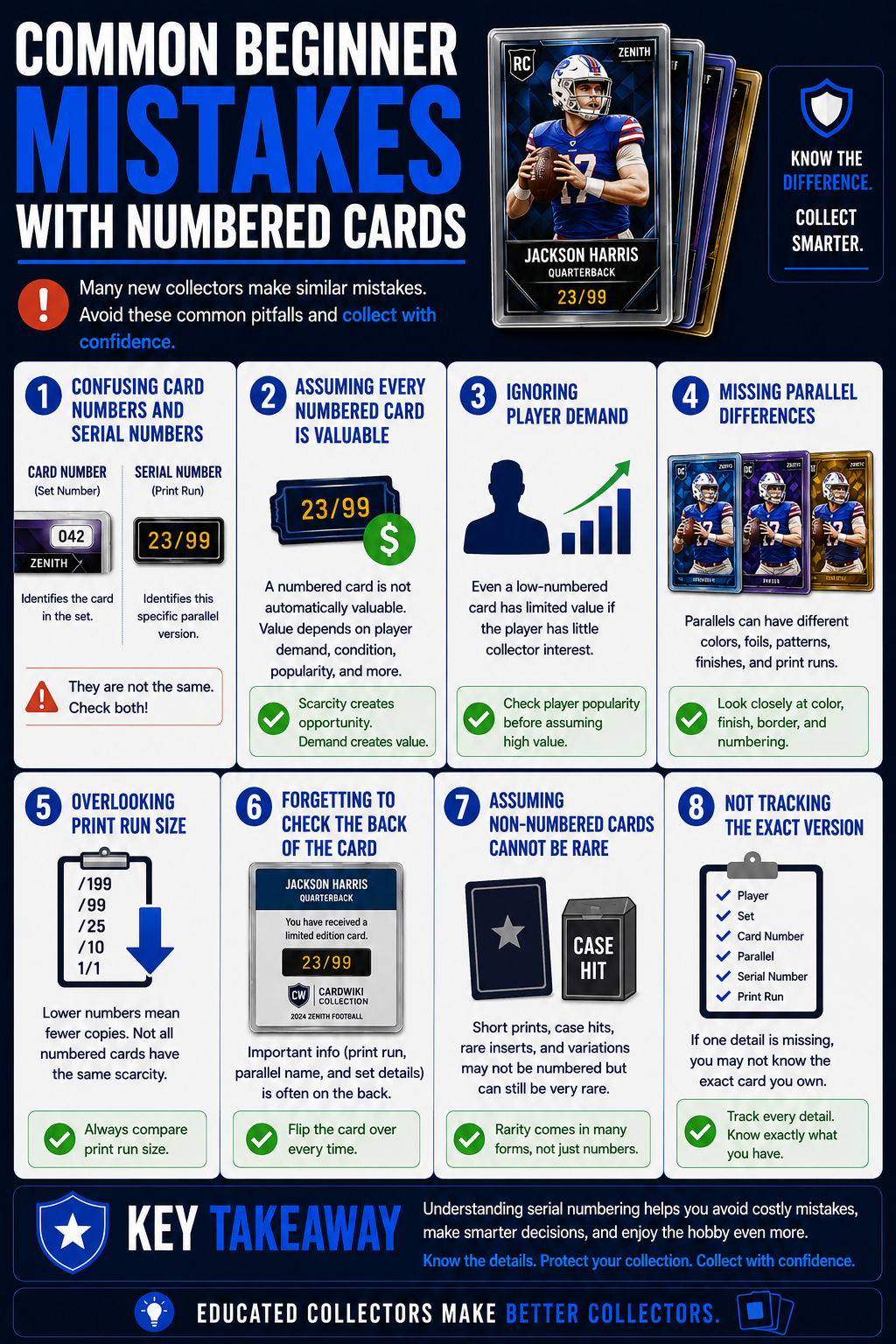
Common Beginner Mistakes With Numbered Cards
Many new collectors make similar mistakes.
Common mistakes include:
- Confusing Card Numbers And Serial Numbers
- Assuming Every Numbered Card Is Valuable
- Ignoring Player Demand
- Missing Parallel Differences
- Overlooking Print Run Size
- Forgetting To Check The Back Of The Card
- Assuming Non-Numbered Cards Cannot Be Rare
- Not Tracking The Exact Version
Learning how serial numbering works helps avoid these mistakes and makes sports collecting more enjoyable.
Final Thoughts
So, what does serial numbered mean in trading cards?
It means the card is part of a limited print run and includes a number showing how many copies exist.
A serial number helps collectors understand scarcity, identify parallels, compare versions, and track cards more accurately.
While numbering alone does not determine value, it provides important context that collectors use every day.
Whether you pull a card numbered to 999, 99, 25, 10, or even a one-of-one, that number becomes part of the card's identity and helps tell its story within the hobby.
If you want a better way to track card versions, parallels, and numbered cards, CardWiki can help you explore structured catalog records and manage your collection with more confidence.
FAQs
What Does Serial Numbered Mean In Trading Cards?
A serial numbered card includes a number showing how many copies of that specific version were produced.
What Does 15/99 Mean On A Trading Card?
It means your card is copy number 15 out of a total print run of 99 cards.
Are Numbered Cards Rare?
Generally, yes. Numbered cards are usually scarcer than standard base cards, though rarity depends on the size of the print run.
Are Numbered Cards Valuable?
Not always. Value depends on player demand, rarity, condition, product popularity, and collector interest.
What Is A 1/1 Card?
A 1/1 card is a one-of-one card, meaning only a single copy exists.
What Is A Jersey Number Match?
A jersey number match occurs when the serial number matches the player's jersey number.
What Is The Difference Between A Card Number And A Serial Number?
A card number identifies the card within a checklist. A serial number identifies how many copies of that version exist.
Can A Card Be Rare Without Being Numbered?
Yes. Short prints, case hits, image variations, and other special cards can be rare even without serial numbering.