
Hobby Box Vs Retail Box Vs Blaster Vs Mega Box: What Collectors Should Know
Learn the differences between hobby boxes, retail boxes, blaster boxes, and mega boxes so you can better understand trading card product configurations.

Walk into almost any card shop or retail store and you'll quickly notice something confusing.
The same product may be available in several different boxes.
One shelf might have hobby boxes. Another has blaster boxes. The big-box retailer carries retail boxes and mega boxes. Online stores may also offer jumbo boxes, hanger boxes, value packs, and factory sets.
At first glance they all appear to contain the same cards.
They do not.
Understanding product configurations is one of the most important skills a collector can develop. The box you buy influences pull rates, exclusive parallels, autographs, inserts, numbered cards, and even the overall collecting experience.
Configuration does not change the identity of an individual card, but it absolutely changes how collectors acquire those cards.
This guide explains the differences between hobby boxes, retail products, blaster boxes, mega boxes, and why CardWiki treats configuration as its own structured piece of product information to help card collectors make the most of their experience.
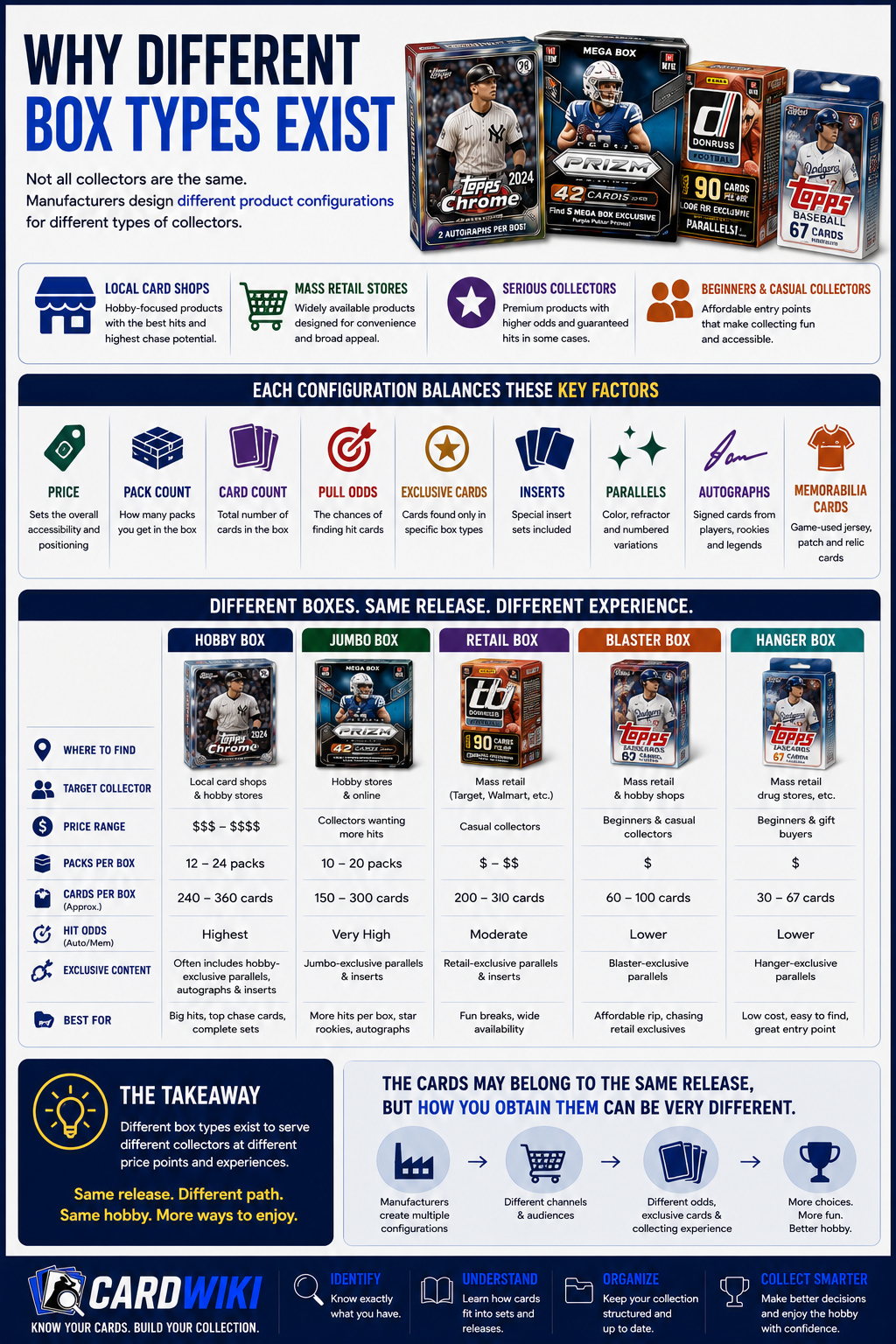
Why Different Box Types Exist
Manufacturers design different product configurations for different types of collectors.
Some products are designed for local card shops.
Others are made for mass retail stores.
Some target serious collectors looking for guaranteed hits.
Others are meant to be affordable entry points for beginners.
Each configuration balances:
- Price
- Pack Count
- Card Count
- Pull Odds
- Exclusive Cards
- Inserts
- Parallels
- Autographs
- Memorabilia Cards
The cards may belong to the same release, but how you obtain them can be very different.
What Is A Hobby Box?
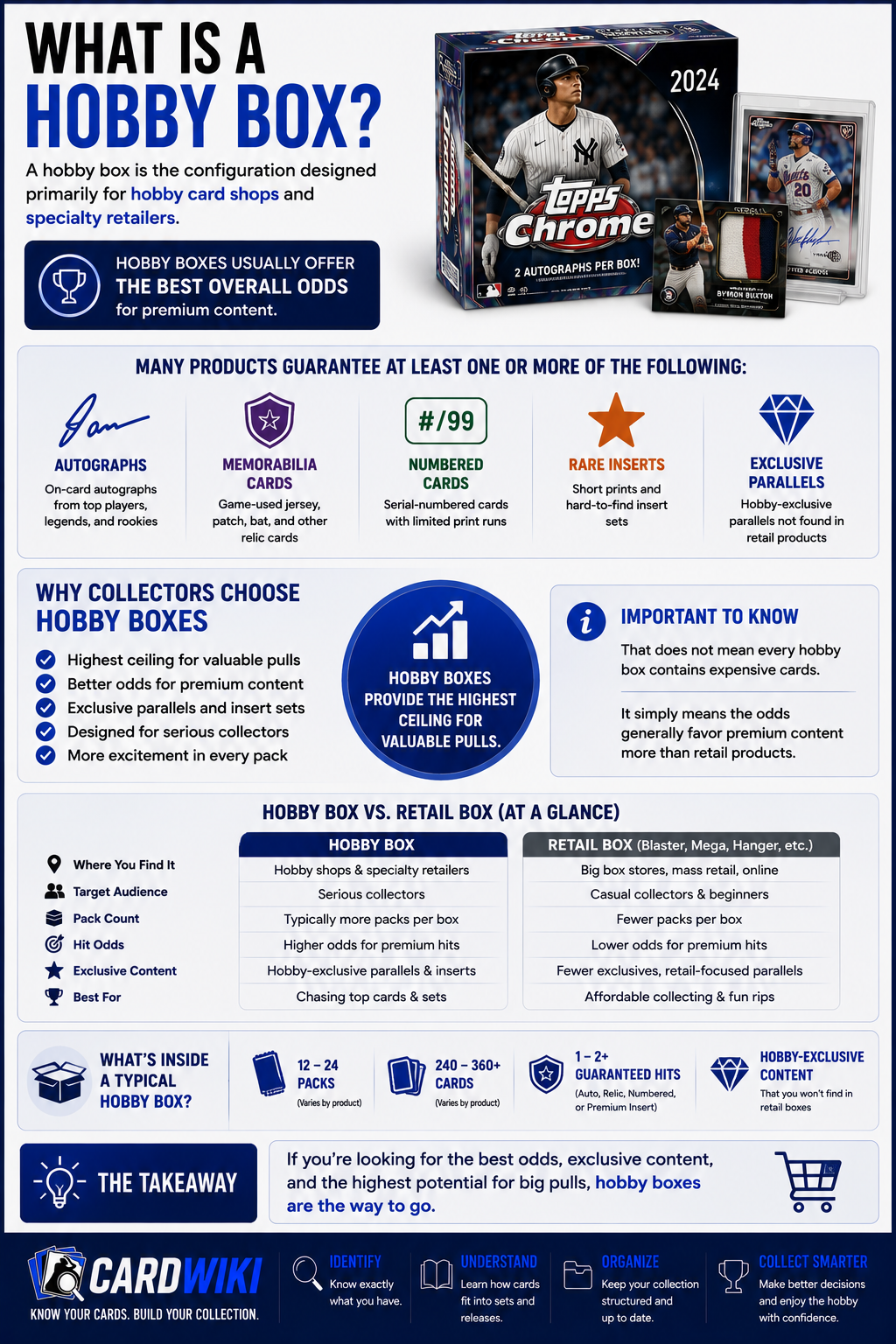
A hobby box is the configuration designed primarily for hobby card shops and specialty retailers.
Hobby boxes usually offer the best overall odds for premium content.
Many products guarantee at least one or more of the following:
- Autographs
- Memorabilia Cards
- Numbered Cards
- Rare Inserts
- Exclusive Parallels
Collectors often choose hobby boxes because they provide the highest ceiling for valuable pulls.
That does not mean every hobby box contains expensive cards.
It simply means the odds generally favor premium content more than retail products.
What Is A Retail Box?
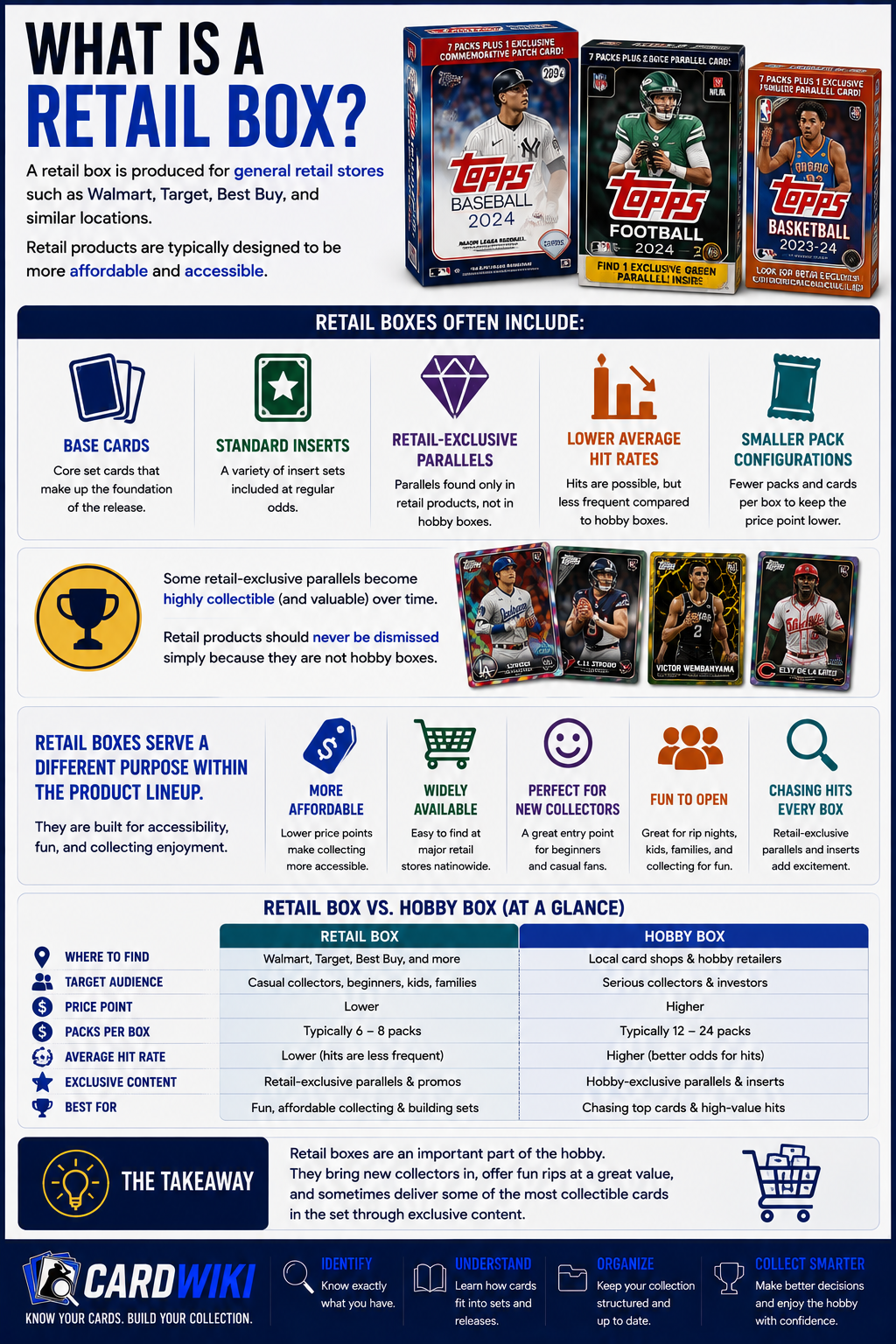
A retail box is produced for general retail stores such as Walmart, Target, Best Buy, and similar locations.
Retail products are typically designed to be more affordable and accessible.
Retail boxes often include:
- Base Cards
- Standard Inserts
- Retail-Exclusive Parallels
- Lower Average Hit Rates
- Smaller Pack Configurations
Some retail-exclusive parallels become highly collectible, so retail products should never be dismissed simply because they are not hobby boxes.
Retail boxes serve a different purpose within the product lineup.
What Is A Blaster Box?
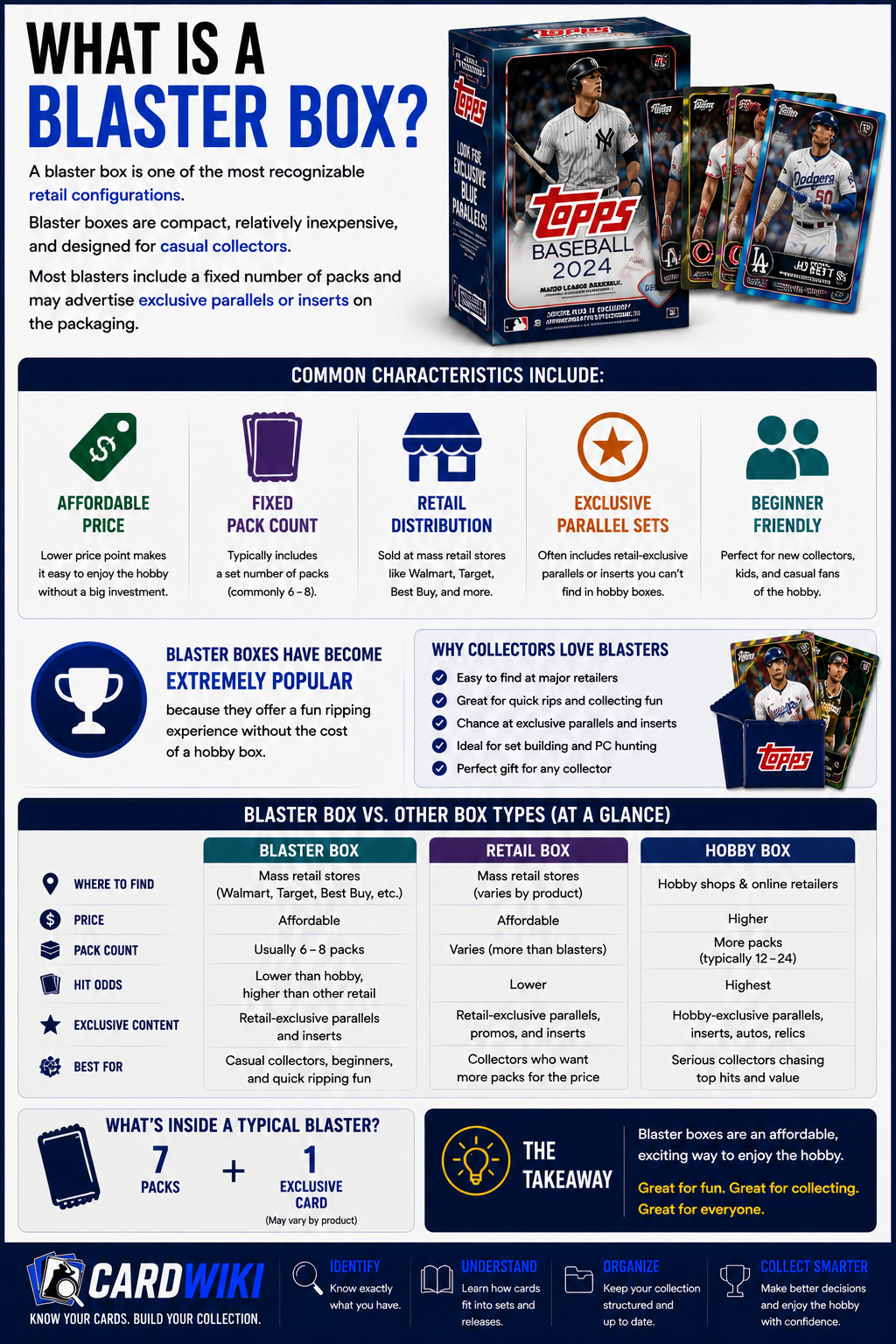
A blaster box is one of the most recognizable retail configurations.
Blaster boxes are compact, relatively inexpensive, and designed for casual collectors.
Most blasters include a fixed number of packs and may advertise exclusive parallels or inserts on the packaging.
Common characteristics include:
- Affordable Price
- Fixed Pack Count
- Retail Distribution
- Exclusive Parallel Sets
- Beginner Friendly
Blaster boxes have become extremely popular because they offer a fun ripping experience without the cost of a hobby box.
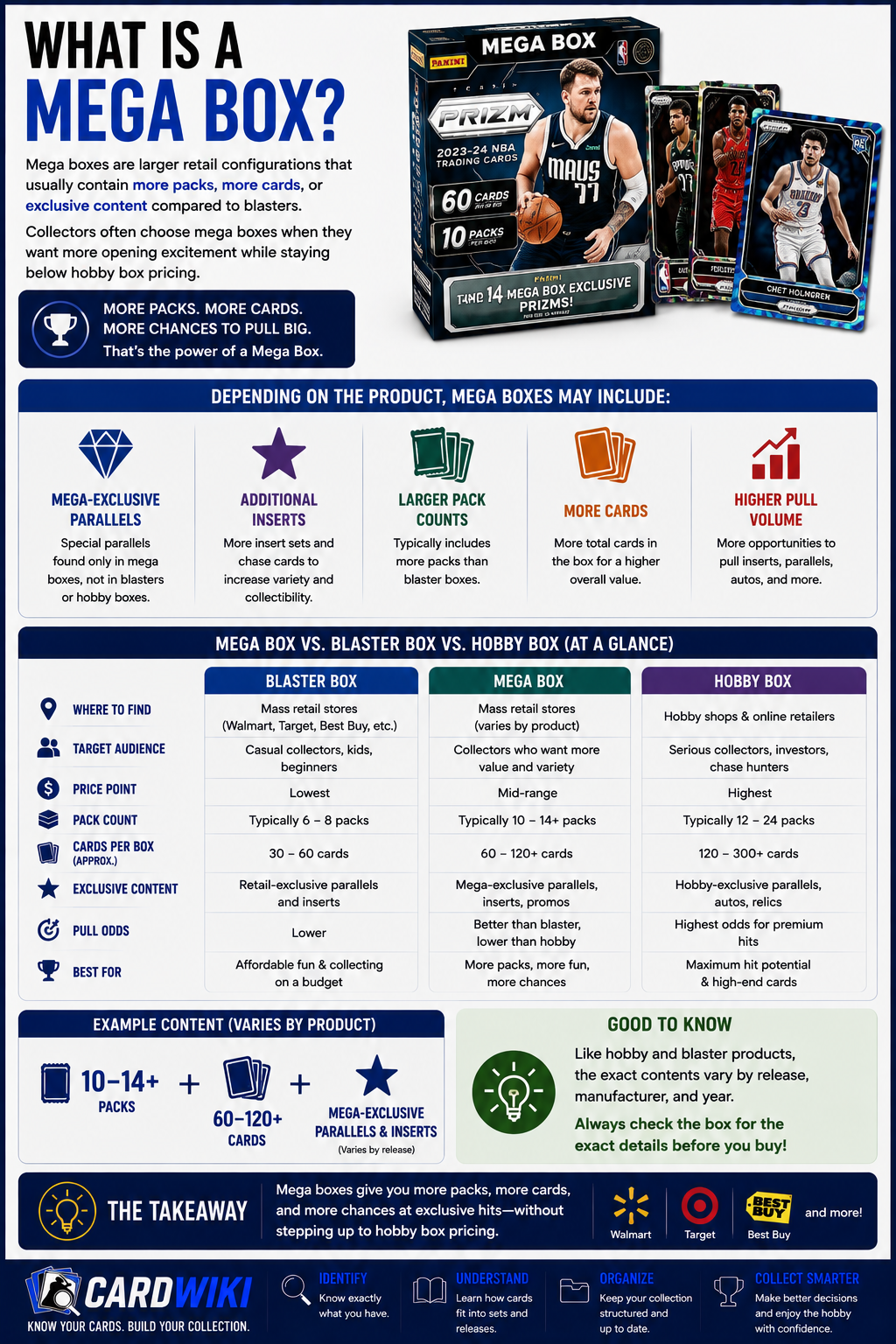
What Is A Mega Box?
Mega boxes are larger retail configurations that usually contain more packs, more cards, or exclusive content compared to blasters.
Depending on the product, mega boxes may include:
- Mega-Exclusive Parallels
- Additional Inserts
- Larger Pack Counts
- More Cards
- Higher Pull Volume
Collectors often choose mega boxes when they want more opening excitement while staying below hobby box pricing.
Like hobby and blaster products, the exact contents vary by release.
Hobby Box Vs Retail Box
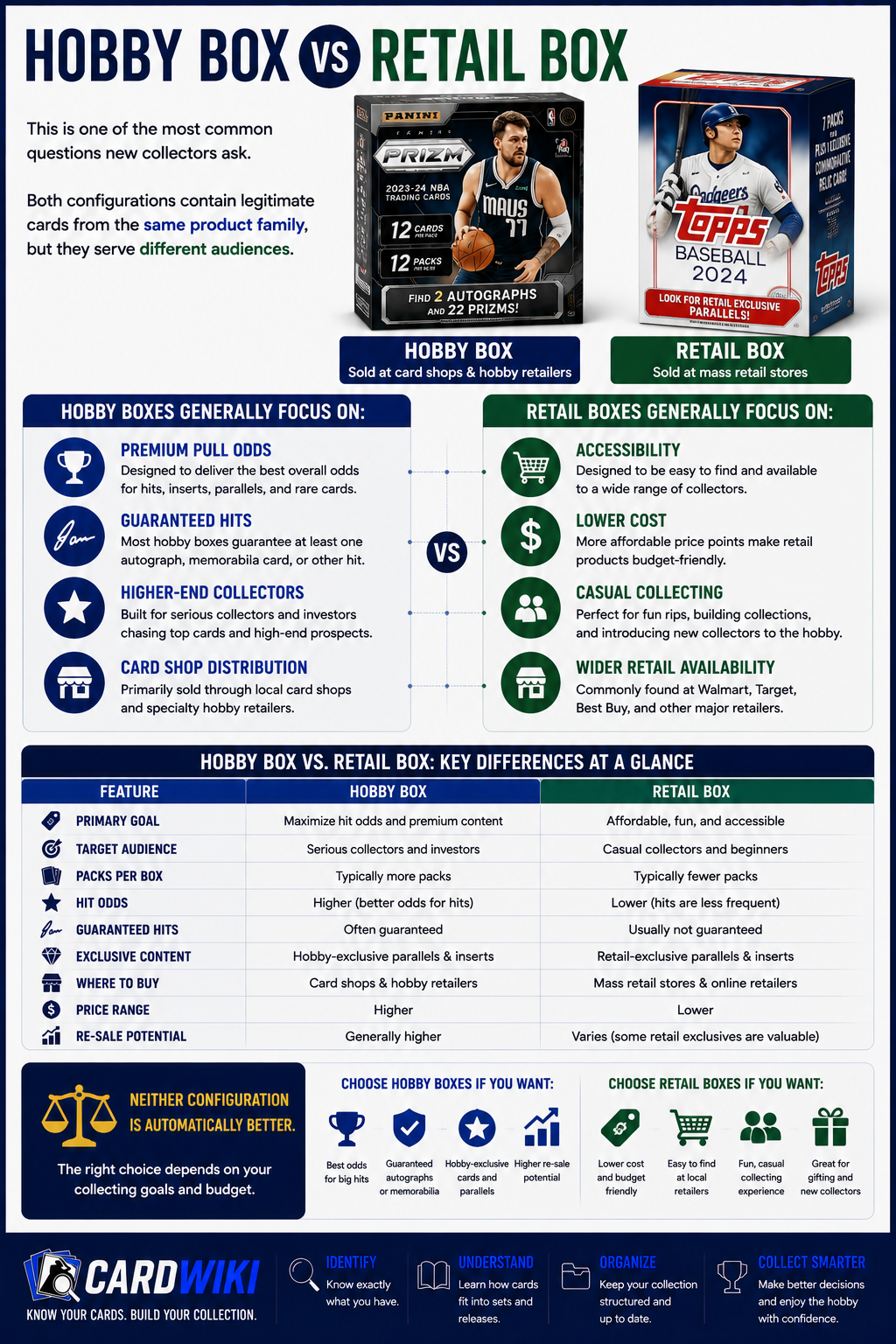
This is one of the most common questions new collectors ask.
Both configurations contain legitimate cards from the same product family, but they serve different audiences.
Hobby boxes generally focus on:
- Premium Pull Odds
- Guaranteed Hits
- Higher-End Collectors
- Card Shop Distribution
Retail boxes generally focus on:
- Accessibility
- Lower Cost
- Casual Collecting
- Wider Retail Availability
Neither configuration is automatically better.
The right choice depends on your collecting goals and budget.
Hobby Box Vs Blaster
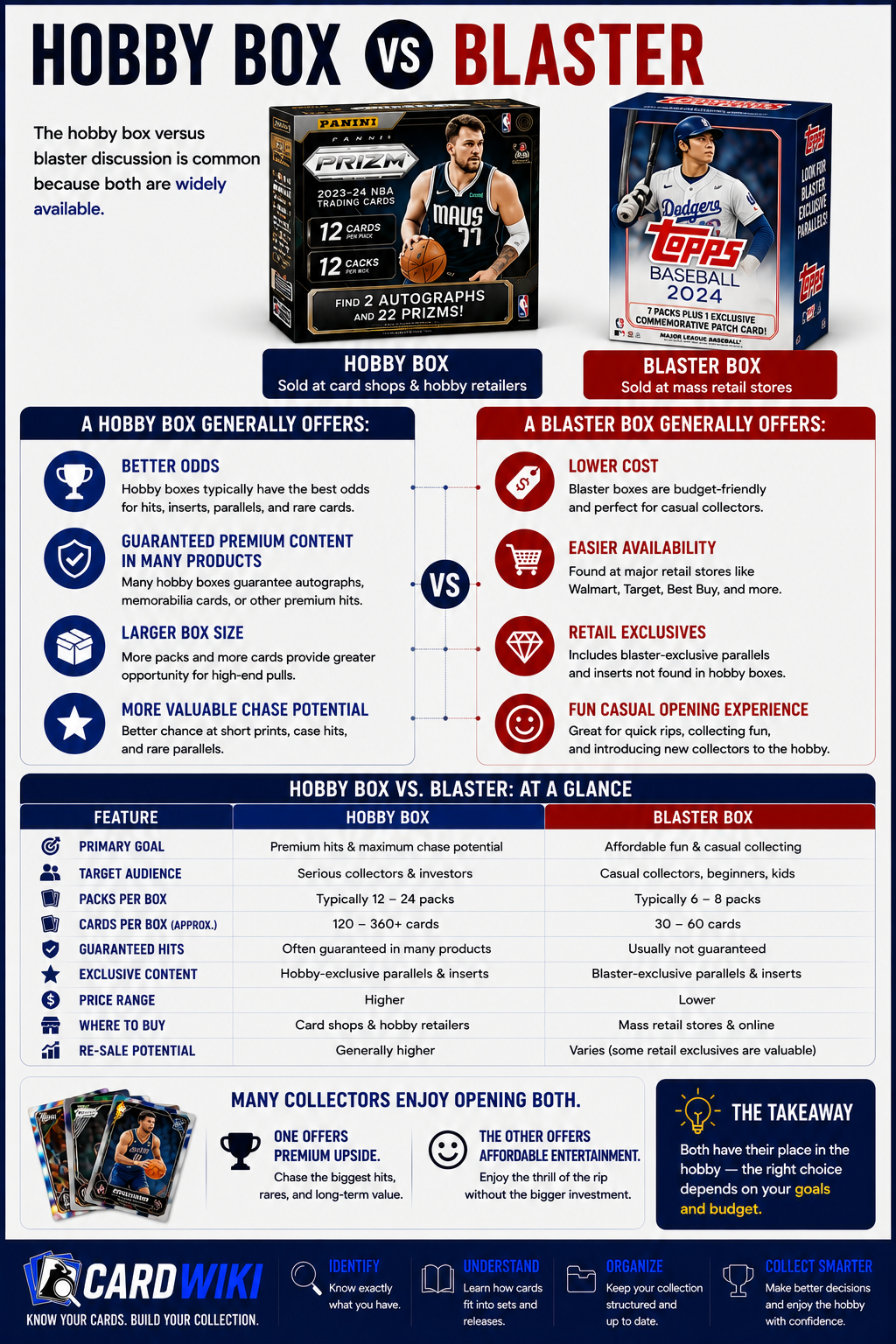
The hobby box versus blaster discussion is common because both are widely available.
A hobby box generally offers:
- Better Odds
- Guaranteed Premium Content In Many Products
- Larger Box Size
- More Valuable Chase Potential
A blaster box generally offers:
- Lower Cost
- Easier Availability
- Retail Exclusives
- Fun Casual Opening Experience
Many collectors enjoy opening both.
One offers premium upside.
The other offers affordable entertainment.
Blaster Box Vs Mega Box
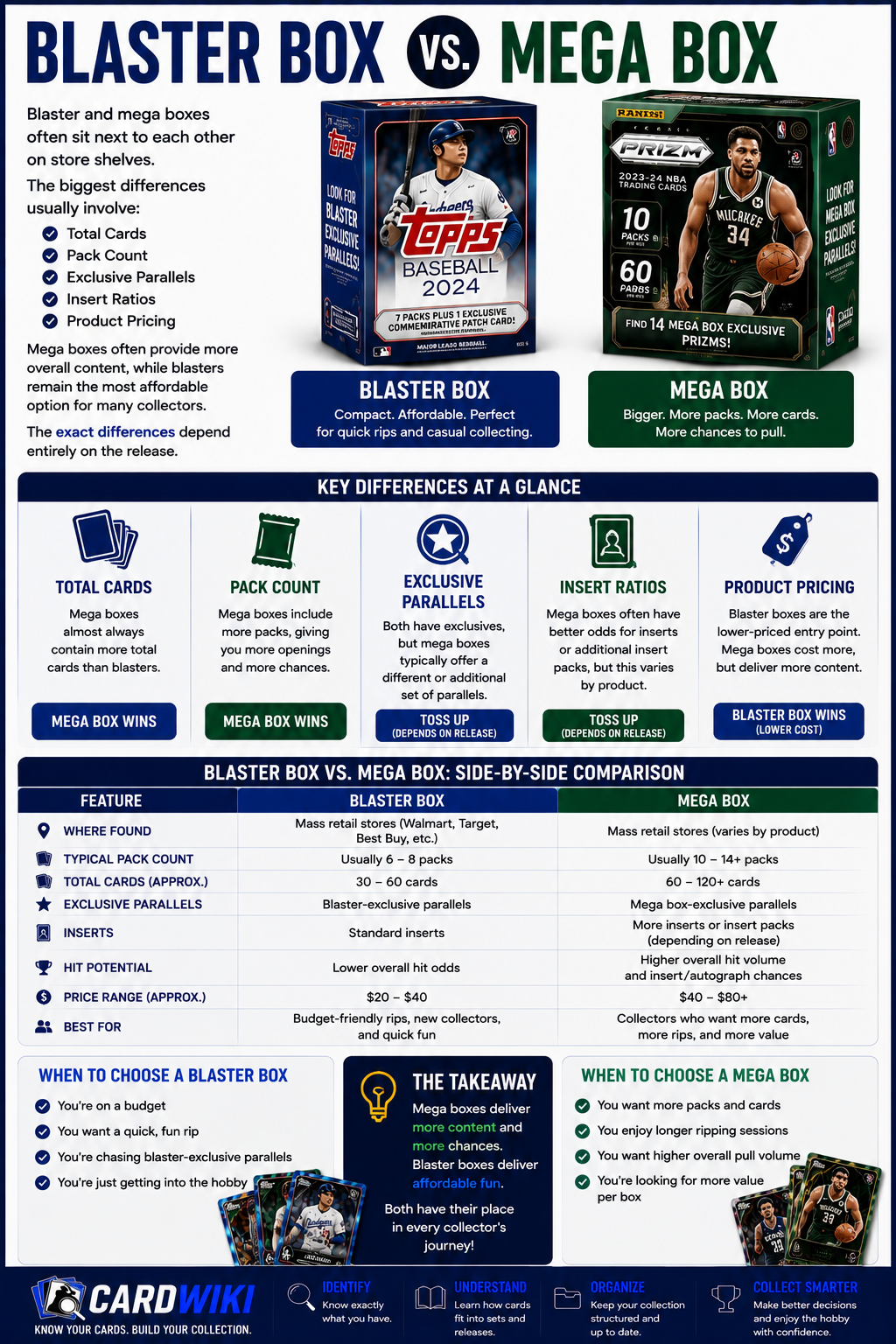
Blaster and mega boxes often sit next to each other on store shelves.
The biggest differences usually involve:
- Total Cards
- Pack Count
- Exclusive Parallels
- Insert Ratios
- Product Pricing
Mega boxes often provide more overall content, while blasters remain the most affordable option for many collectors.
The exact differences depend entirely on the release.
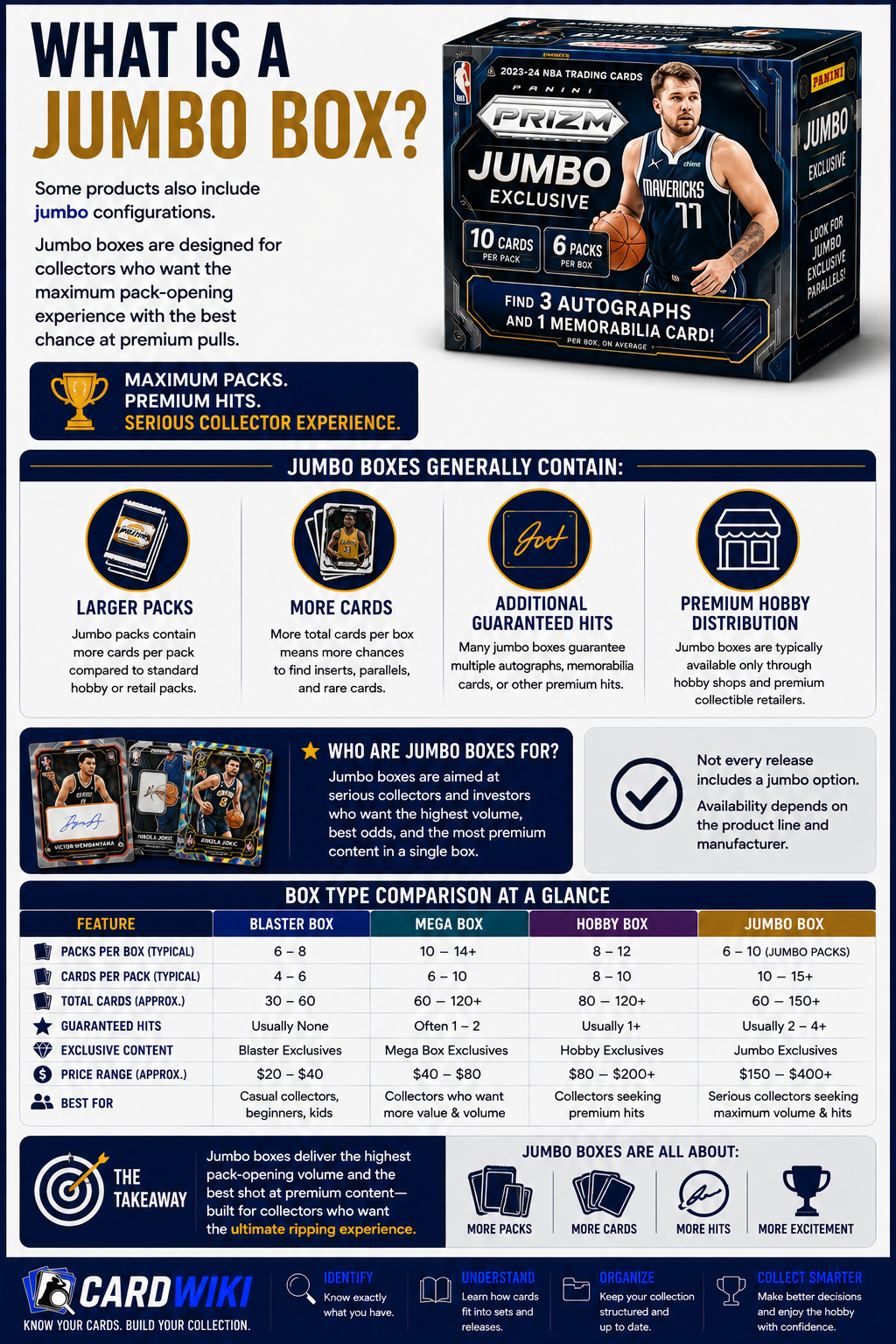
What Is A Jumbo Box?
Some products also include jumbo configurations.
Jumbo boxes generally contain:
- Larger Packs
- More Cards
- Additional Guaranteed Hits
- Premium Hobby Distribution
Jumbo boxes are usually aimed at serious collectors who want maximum pack-opening volume.
Not every release includes a jumbo option.
What Is A Hanger Box?
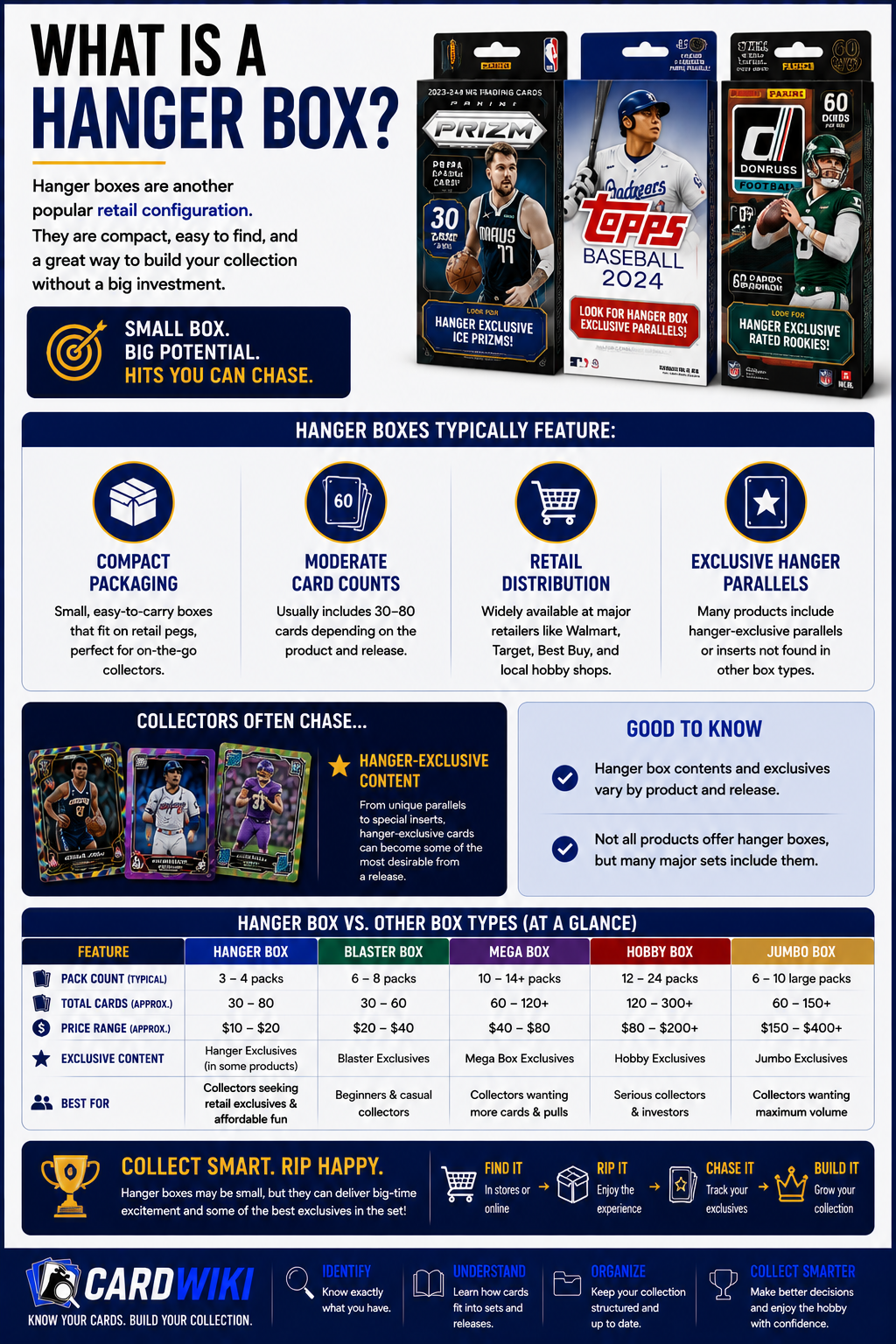
Hanger boxes are another popular retail configuration.
These products typically feature:
- Compact Packaging
- Moderate Card Counts
- Retail Distribution
- Exclusive Hanger Parallels In Some Products
Collectors often chase hanger-exclusive content depending on the release.
What Is A Fat Pack?
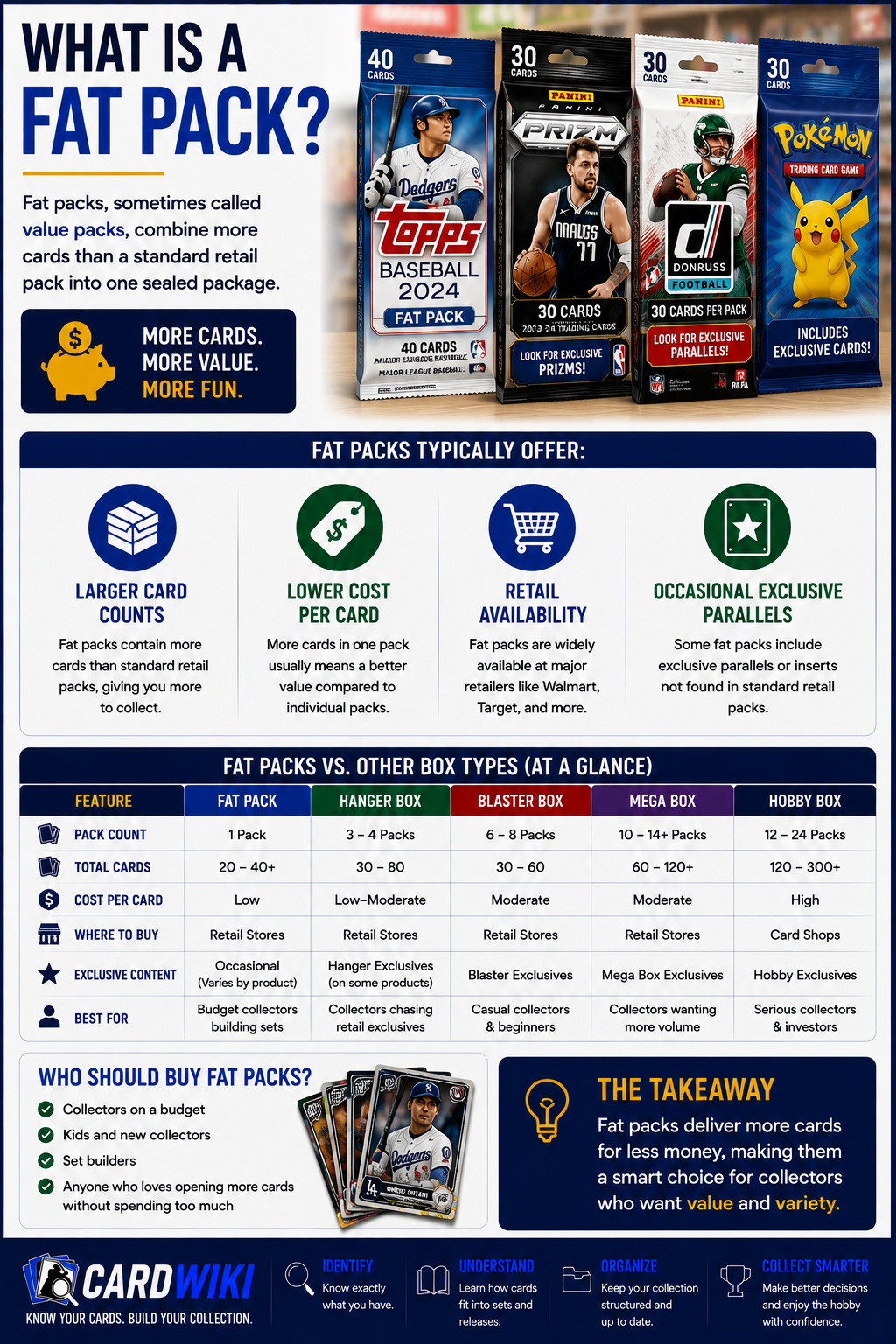
Fat packs, sometimes called value packs, combine more cards than a standard retail pack into one sealed package.
They typically offer:
- Larger Card Counts
- Lower Cost Per Card
- Retail Availability
- Occasional Exclusive Parallels
Fat packs are often a budget-friendly way to build a base collection.
Do Different Boxes Contain Different Cards?
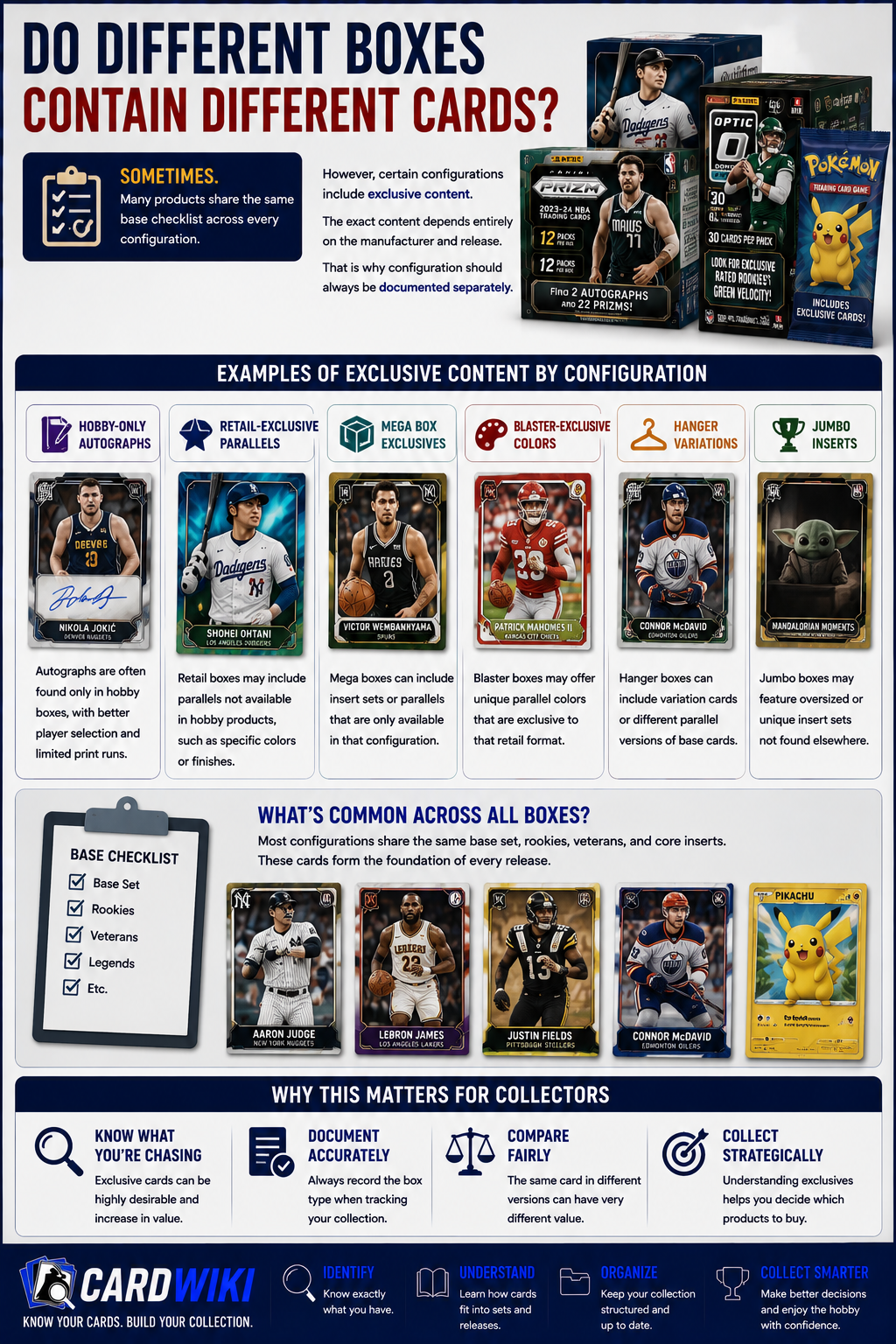
Sometimes.
Many products share the same base checklist across every configuration.
However, certain configurations include exclusive content.
Examples may include:
- Hobby-Only Autographs
- Retail-Exclusive Parallels
- Mega Box Exclusives
- Blaster-Exclusive Colors
- Hanger Variations
- Jumbo Inserts
The exact content depends entirely on the manufacturer and release.
That is why configuration should always be documented separately.
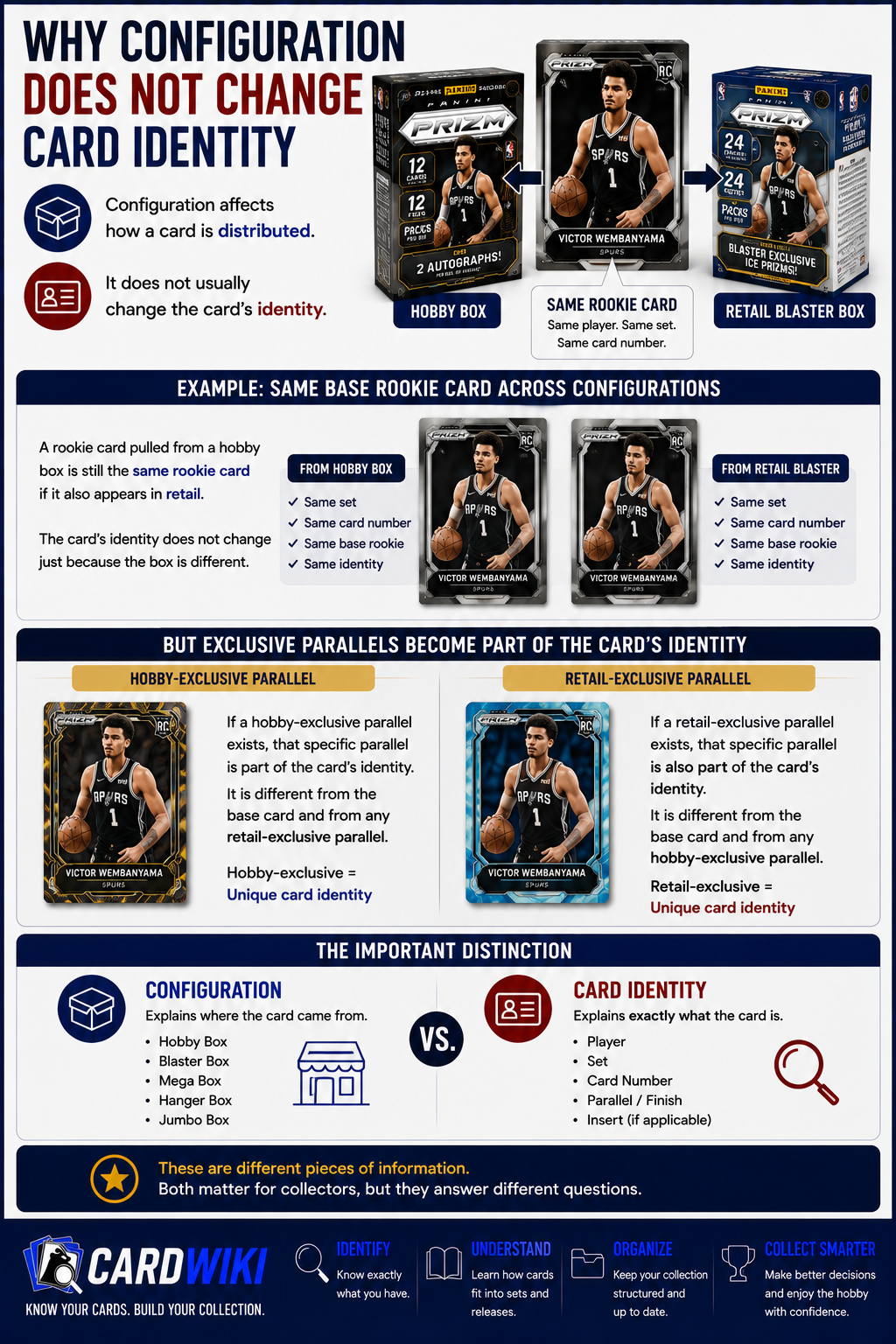
Why Configuration Does Not Change Card Identity
Configuration affects how a card is distributed.
It does not usually change the card's identity.
For example, a rookie card pulled from a hobby box is still the same rookie card if it also appears in retail.
However, if a hobby-exclusive parallel or retail-exclusive parallel exists, that exclusive parallel becomes part of the card's identity.
The important distinction is:
Configuration explains where the card came from.
Card identity explains exactly what the card is.
Those are different pieces of information.
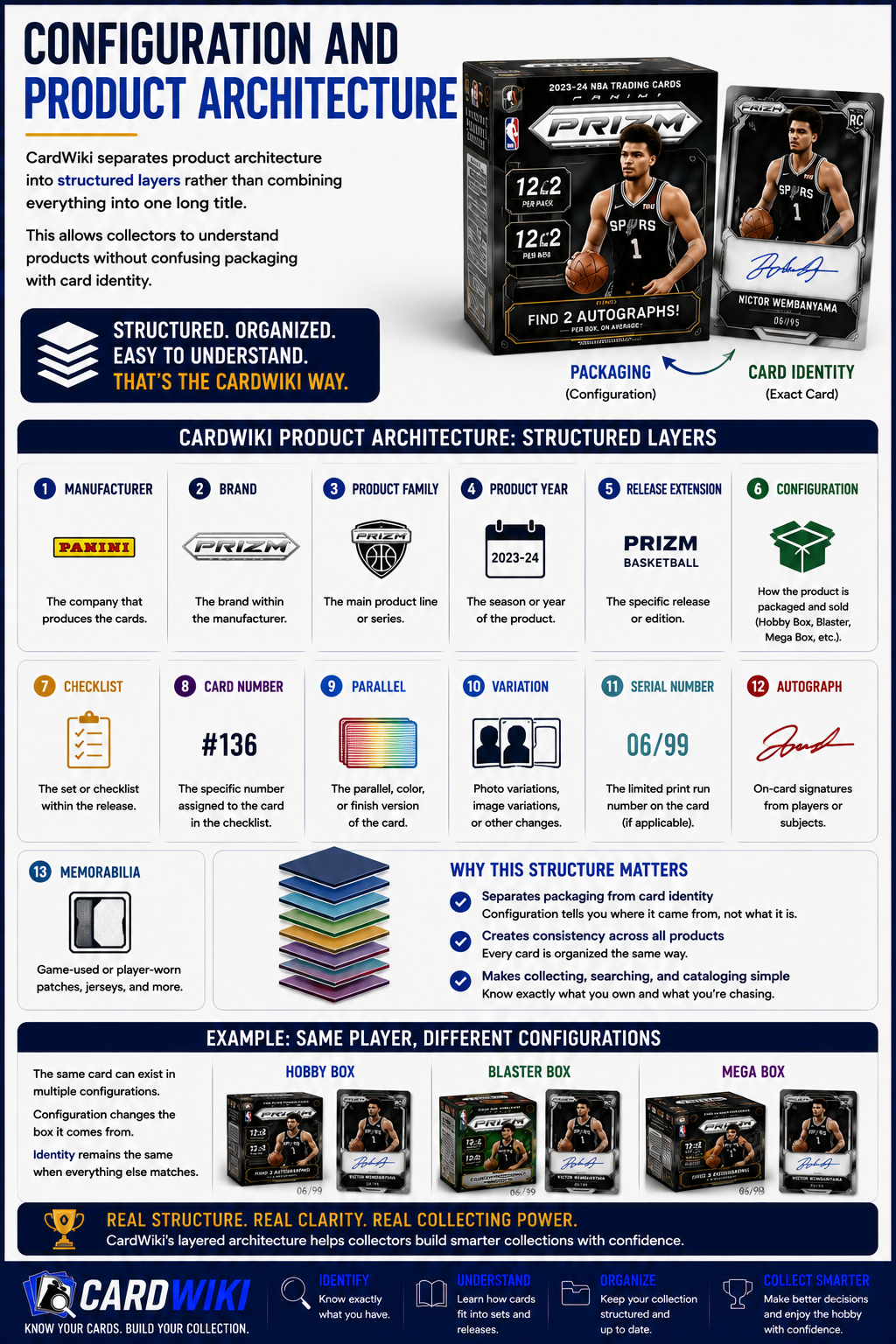
Configuration And Product Architecture
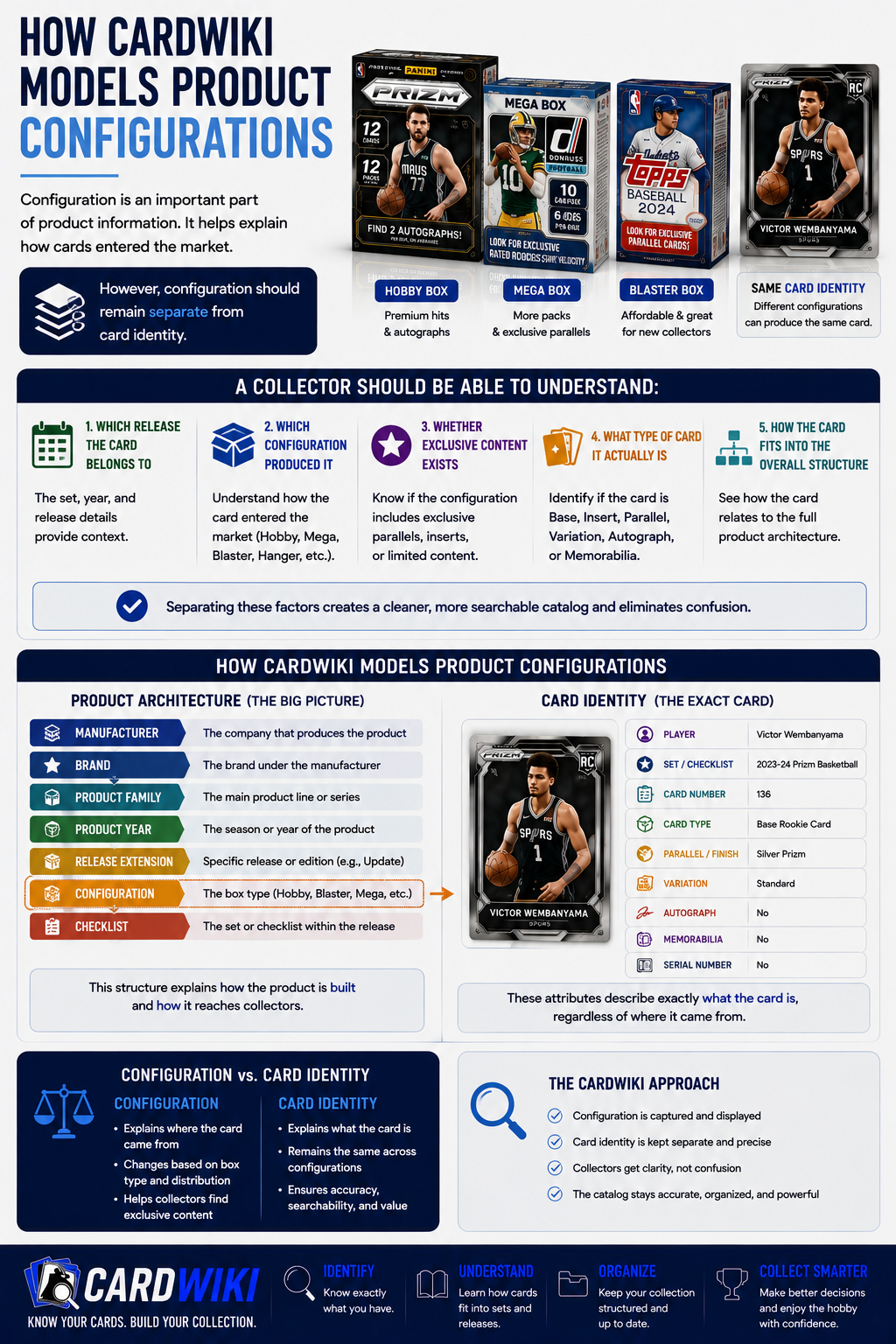
CardWiki separates product architecture into structured layers rather than combining everything into one long title.
Those layers may include:
- Manufacturer
- Brand
- Product Family
- Product Year
- Release Extension
- Configuration
- Checklist
- Card Number
- Parallel
- Variation
- Serial Number
- Autograph
- Memorabilia
This allows collectors to understand products without confusing packaging with card identity.
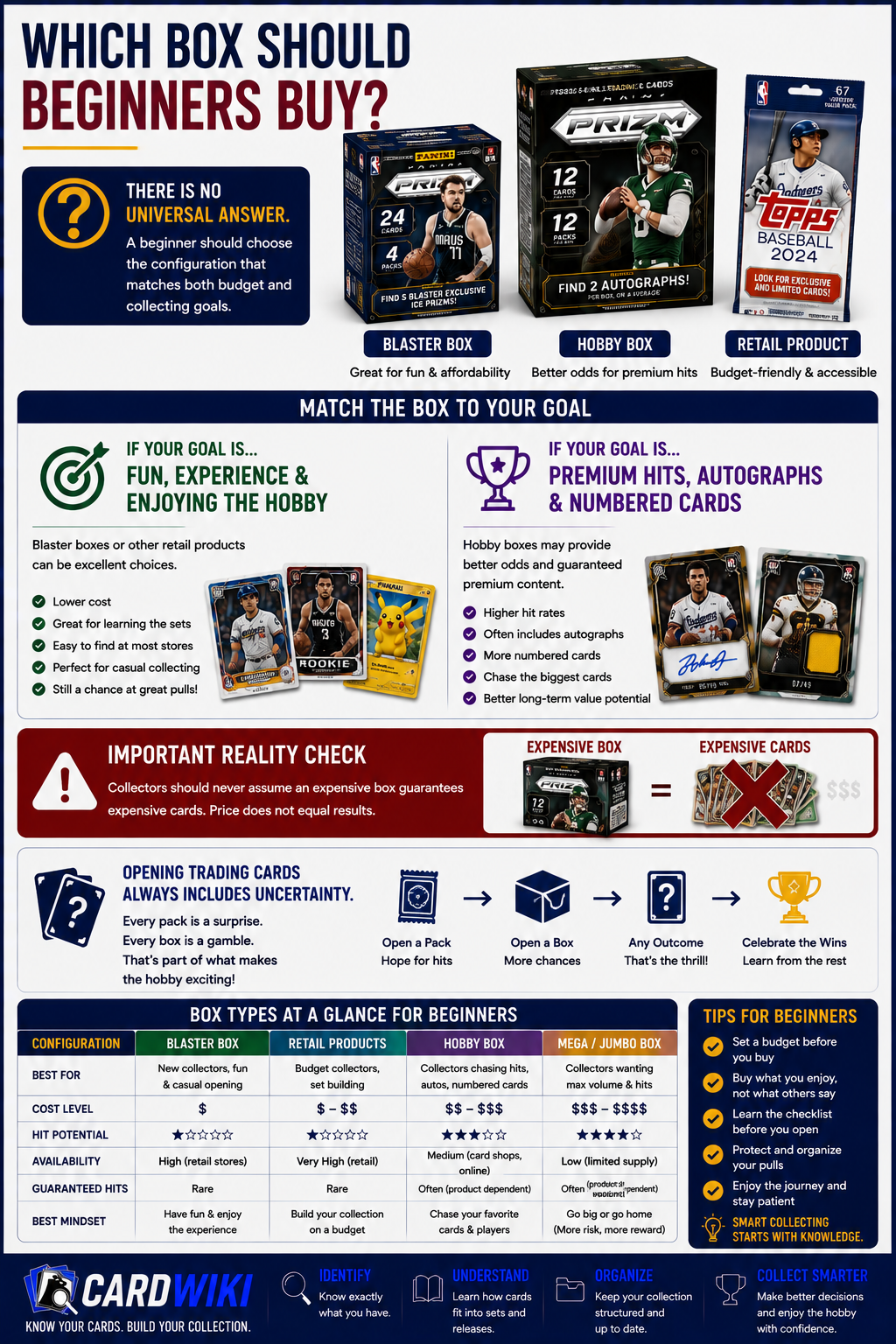
Which Box Should Beginners Buy?
There is no universal answer.
A beginner should choose the configuration that matches both budget and collecting goals.
If your goal is simply opening packs and enjoying the hobby, blaster boxes or retail products can be excellent choices.
If you are specifically chasing premium hits, autographs, or numbered cards, hobby boxes may provide better odds.
Collectors should never assume an expensive box guarantees expensive cards.
Opening trading cards always includes uncertainty.
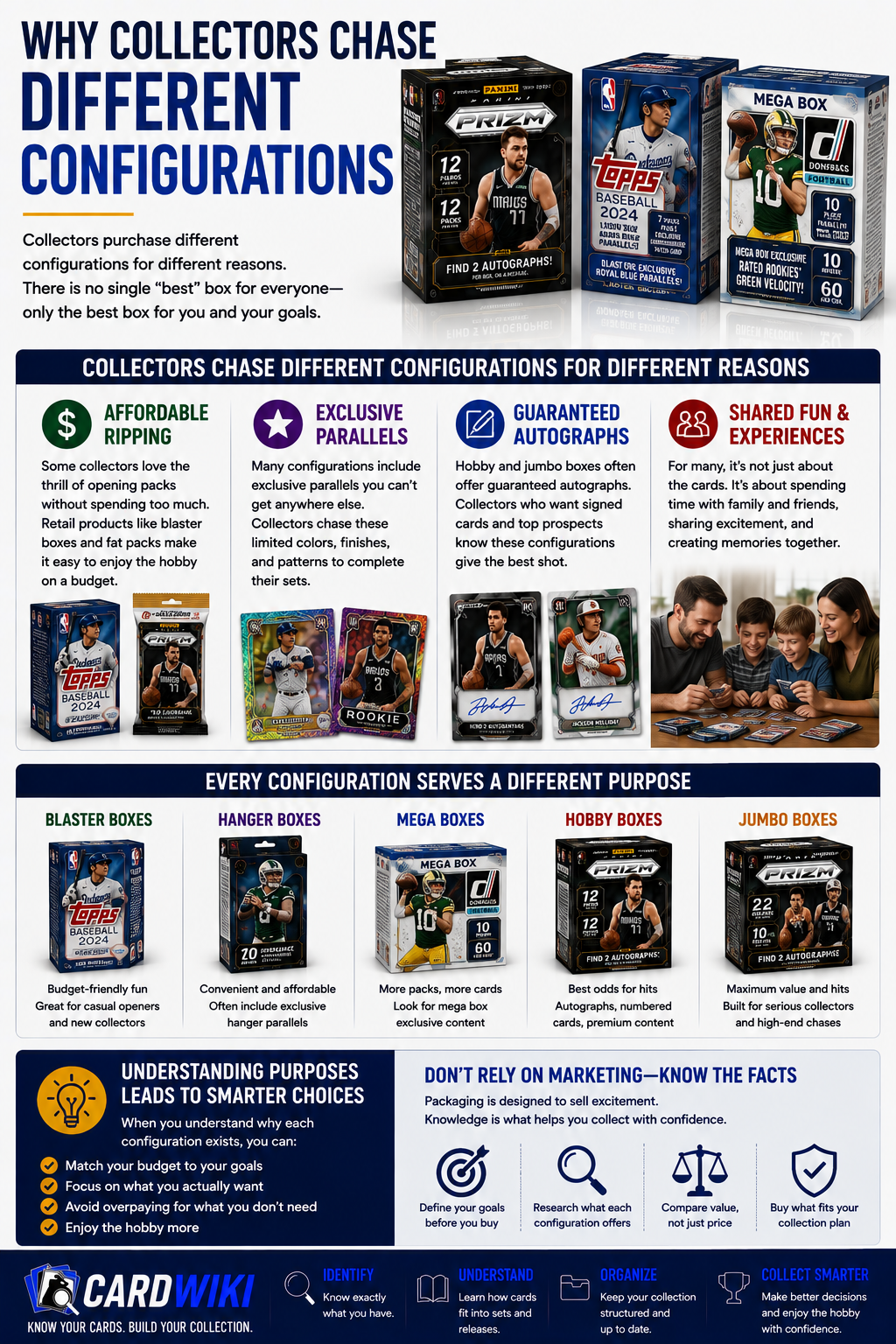
Why Collectors Chase Different Configurations
Collectors purchase different configurations for different reasons.
Some enjoy affordable ripping.
Some chase exclusive parallels.
Some prefer guaranteed autographs.
Others simply enjoy opening packs with family and friends.
Every configuration serves a different purpose.
Understanding those purposes helps collectors make informed decisions instead of relying on marketing language.
How CardWiki Models Product Configurations
Configuration is an important part of product information.
It helps explain how cards entered the market.
However, configuration should remain separate from card identity.
A collector should be able to understand:
- Which Release The Card Belongs To
- Which Configuration Produced It
- Whether Exclusive Content Exists
- Whether The Card Is Base, Insert, Parallel, Variation, Autograph, Or Memorabilia
- How The Card Fits Into The Overall Product Structure
Separating those factors creates a cleaner, more searchable catalog.
Final Thoughts
Hobby boxes, retail boxes, blaster boxes, mega boxes, jumbo boxes, and hanger products all play important roles within modern trading card releases.
Each serves a different audience, offers different pull experiences, and may include unique exclusive content.
The key is understanding that configuration describes how cards are packaged and distributed.
It does not automatically define the identity of the card itself.
That distinction helps collectors organize collections more accurately, understand product releases more clearly, and make better purchasing decisions.
As CardWiki continues building a structured trading card catalog, separating release architecture from product configuration helps ensure every card can be identified with precision.
Want to better understand the products behind your collection? CardWiki helps collectors explore releases, configurations, checklists, parallels, variations, and card identities through a structured catalog built for modern collecting.
FAQs
What Is A Hobby Box?
A hobby box is a premium product configuration typically sold through hobby card shops that often includes better odds for autographs, memorabilia cards, numbered cards, and exclusive parallels.
What Is A Blaster Box?
A blaster box is an affordable retail product designed for casual collectors and often includes exclusive retail parallels and inserts.
What Is The Difference Between A Hobby Box And A Blaster?
Hobby boxes generally offer better pull odds and premium content, while blaster boxes focus on affordability and retail accessibility.
What Is A Mega Box?
A mega box is a larger retail configuration that usually contains more cards or exclusive parallels than a standard blaster box.
Are Retail Boxes Worth Buying?
Yes. Retail boxes often contain exclusive parallels and provide an affordable way to enjoy opening packs.
Do Hobby Boxes Guarantee Autographs?
Many hobby products include guaranteed autographs or memorabilia cards, but guarantees vary by release and manufacturer.
Does The Box Type Change The Card?
Usually no. Configuration explains where a card was pulled, while card identity is determined by the card itself.
Why Does CardWiki Separate Product Configuration From Card Identity?
Separating configuration from card identity creates a more accurate catalog, improves searchability, and helps collectors understand exactly what they own.
This article naturally supports internal linking opportunities to your existing posts on trading card releases, card sets, base vs insert vs parallel, variations, serial numbered cards, checklists, how to identify a trading card, and how to tell what set a trading card is from.


